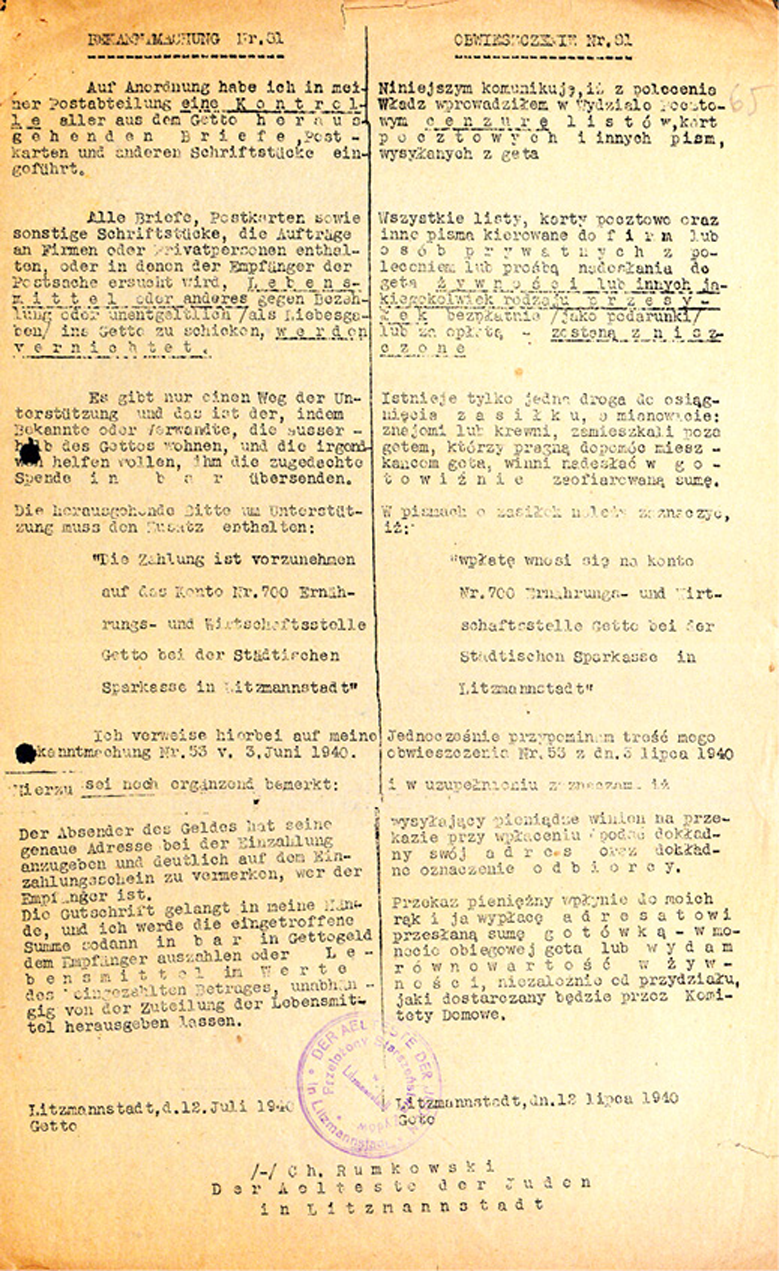
Announcement on the introduction of censorship
(Archiwum Państwowe w Łodzi)
Information about the introduction of controls on outgoing letters, postcards and other printed matter from the ghetto by order of the German authorities appeared on July 12, 1940 (Announcement No. 81). Initially, it was forbidden to ask for food to be sent to the ghetto. Orders for food shipments from companies were also to be destroyed. The only form of support remained sending money to a special ghetto account. Employees
of the newly established Censorship Office were responsible for
monitoring correspondence.
Announcement on the introduction of censorship
(Archiwum Państwowe w Łodzi)
The lists of Postal Department employees do not specify censor positions. One censor's name is known - Jona Milewski. Cards that passed through censorship were marked with censor numbers, usually put next to the sender's address. It is difficult to assess what percentage of shipments were stopped. The preserved material makes it possible to trace the reasons for censor interference, taking several forms:
In order to provide assistance to people who did not speak German, two letter-writing offices were opened in February 1941 for domestic and foreign purposes. Detailed rules were also developed to be followed by people writing letters on their own.
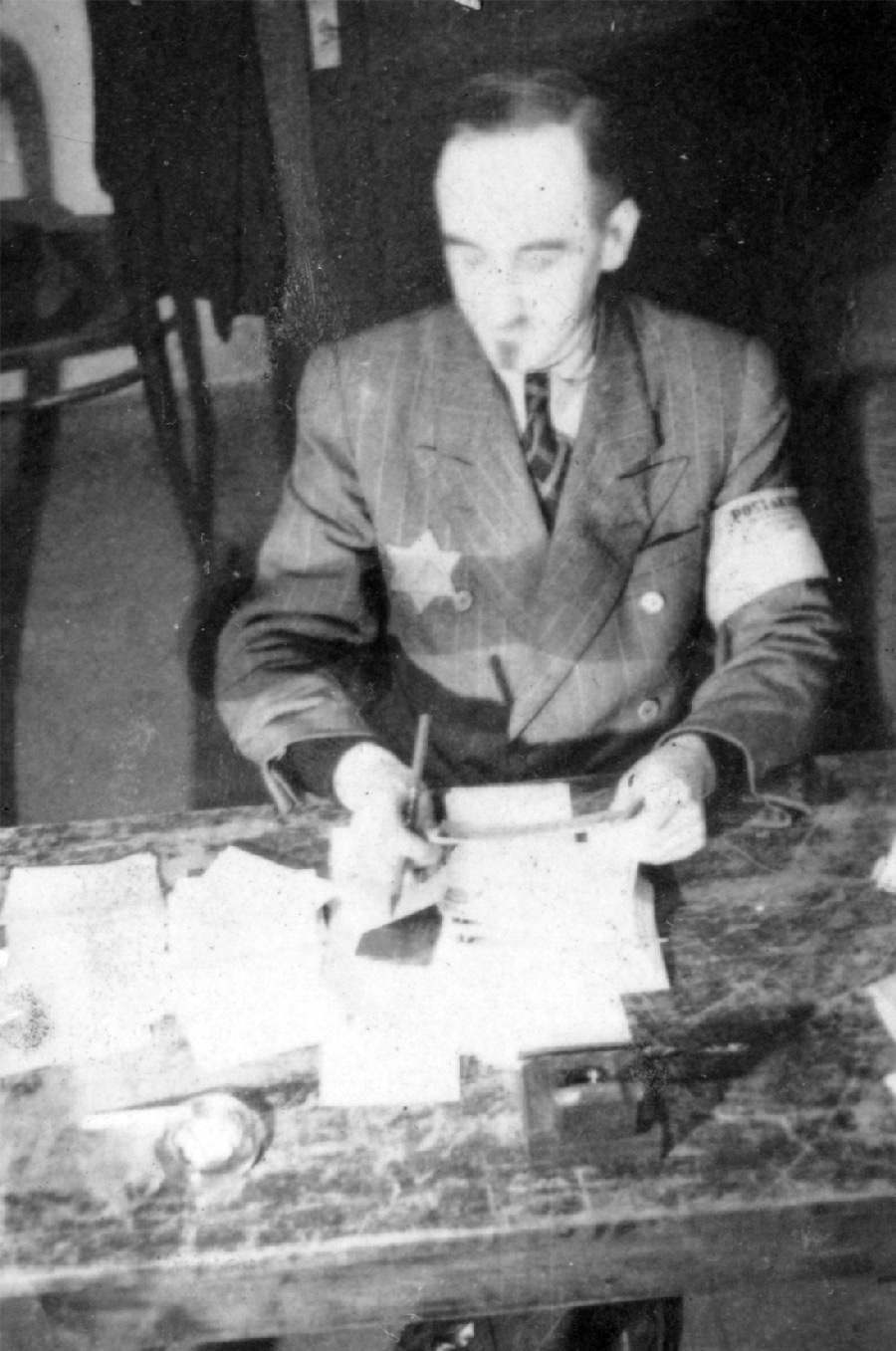
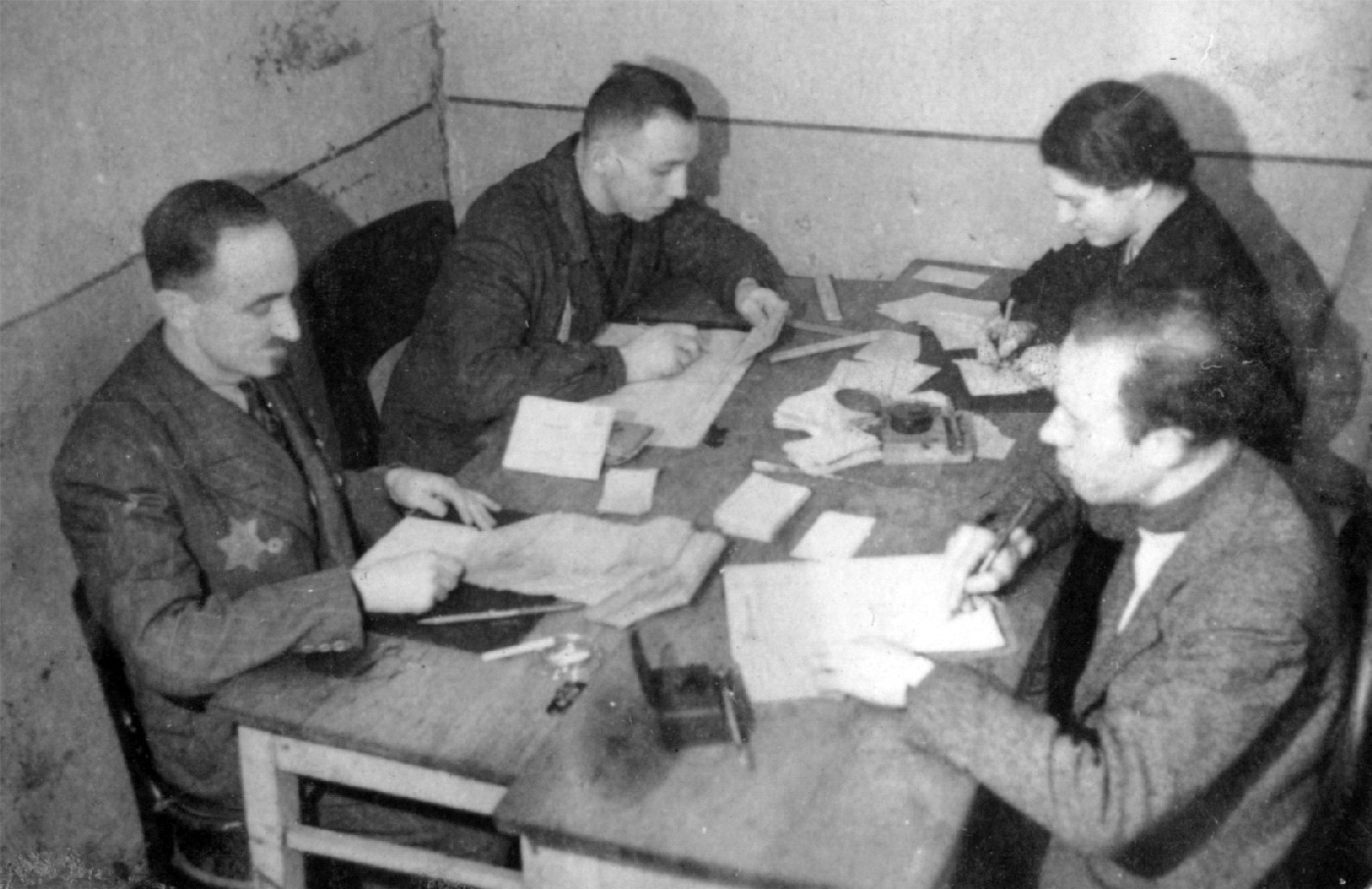
Censors office
(Archiwum Państwowe w Łodzi)
Correspondence rules were given to Reich and Protectorate Jews, who were given permission to use the post office on December 4, 1941.
Ghetto Chronicle, December 4, 1941.
"New arrivals can already use the post office. As of today, according to the authorities' permission, the newly settled population in the ghetto, that is, after a period of more than six weeks from the arrival of the first transport, can use the local post office on an equal footing with the rest of the ghetto population. The general rationing of postal circulation is included in the following regulations: only postcards are allowed in private circulation. The content can only be about personal matters - descriptions are not allowed. Individually, only pensions can be requested to be sent. Transfers can only be requested through the Bank of the Superior Jewish Elders. It must be written clearly and legibly. [...] Applications to the authorities for exit permits are not permitted. Inquiries to the Red Cross with response only at the window, direct correspondence with the Red Cross not permitted. Sending address: Litzmannstadt-Getto, in foreign correspondence the sender's address should not be given (to be filled in by the postal clerk). Correspondence overseas and to Switzerland not permitted. Indirect correspondence not permitted. Do not use abbreviations in foreign correspondence, as well as do not ask for packages or money in this correspondence. Do not write in the margins. A certificate of the fact of remaining in the ghetto is issued by the Registrar's Office, and from the following Sunday by the Department for the Newly Settled. Money orders should be handled only through the local Bank. Due to the opening of postal traffic for the newly settled, throughout today there was an unbelievable crowd in the post offices and huge queues of shoppers formed in front of the offices. About 20,000 postcards were sold during the day. In the last week the post office received a very considerable number of money orders for “Germans,” mostly amounting to small sums of 10 to 25 mk, rarely and up to 100 mk. During the past month, parcels of a total weight of about 2,000 kg arrived in the ghetto mostly from Portugal.”

Rules of the postal services prepared for deportees from the Reich and the Protectorate.
(Archiwum Państwowe w Łodzi)
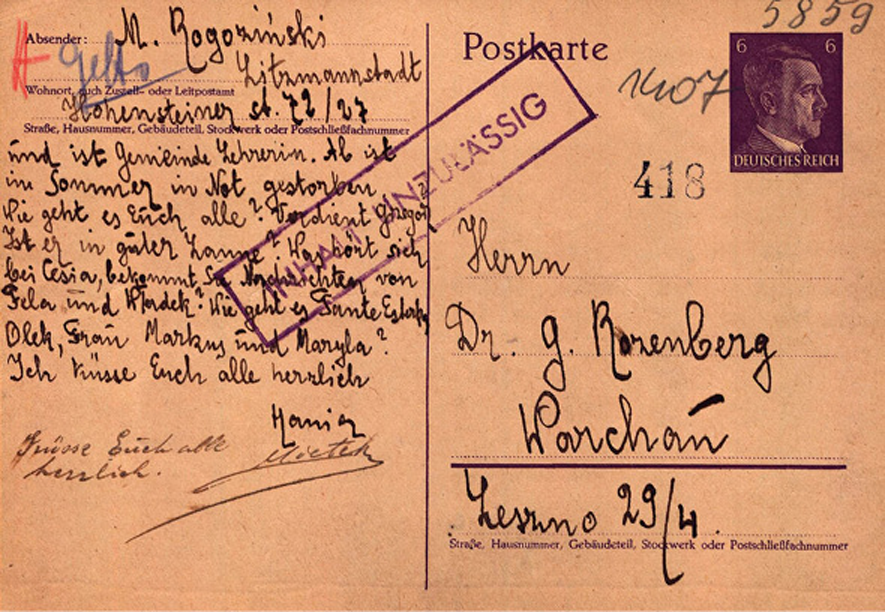

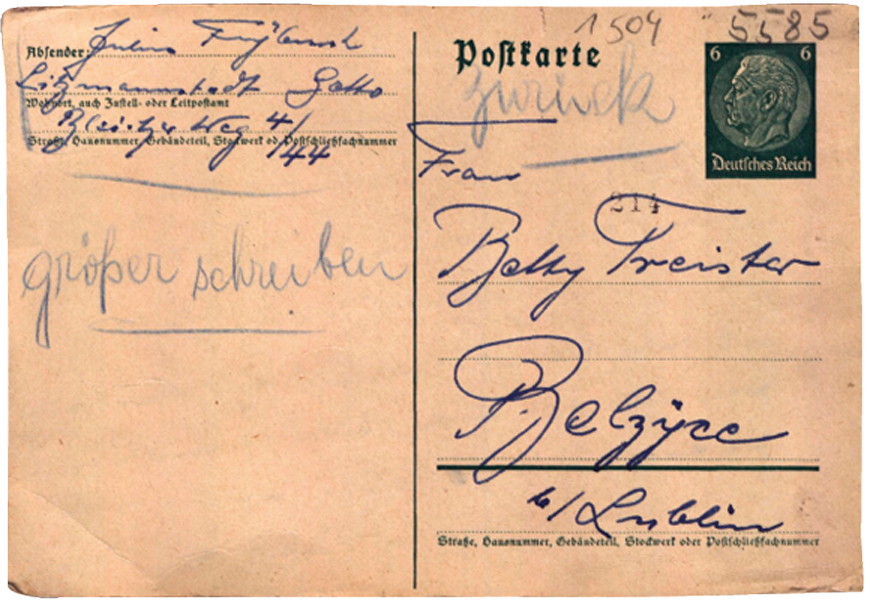

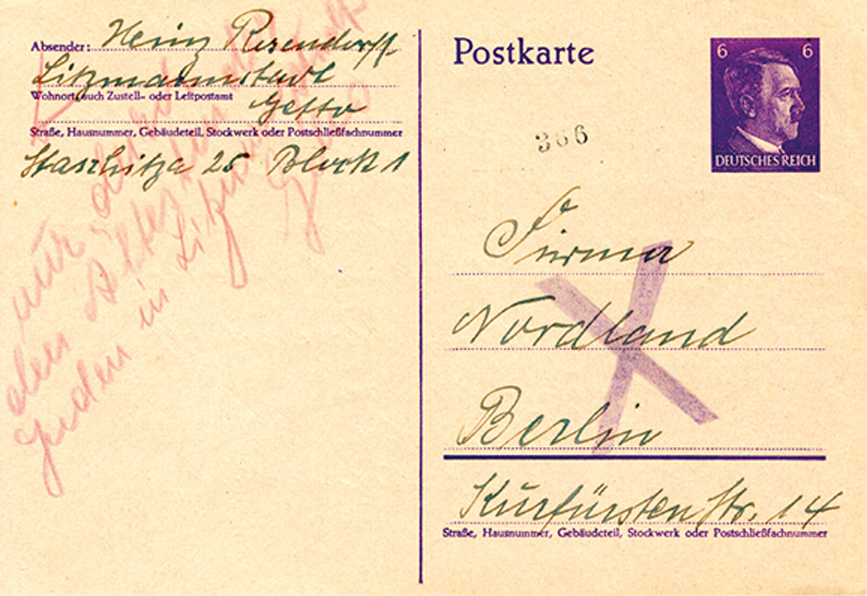
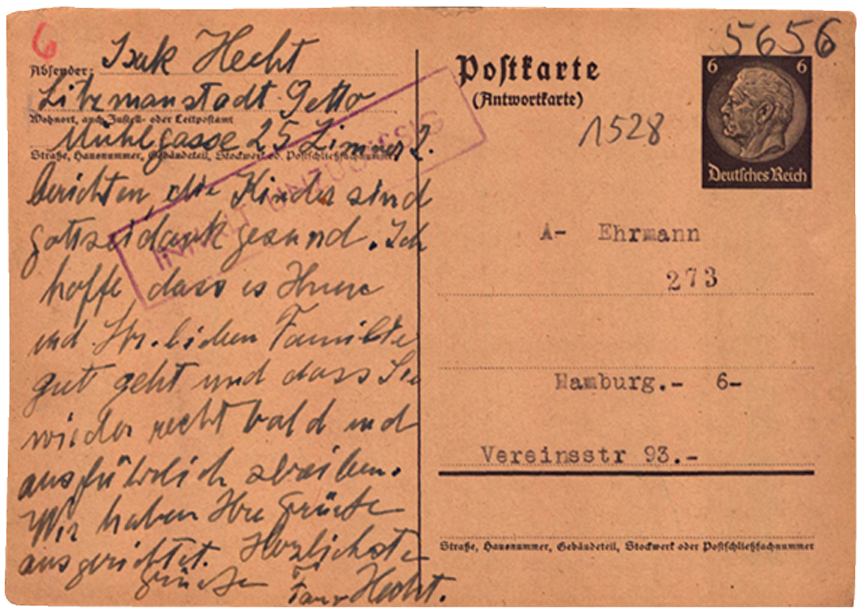
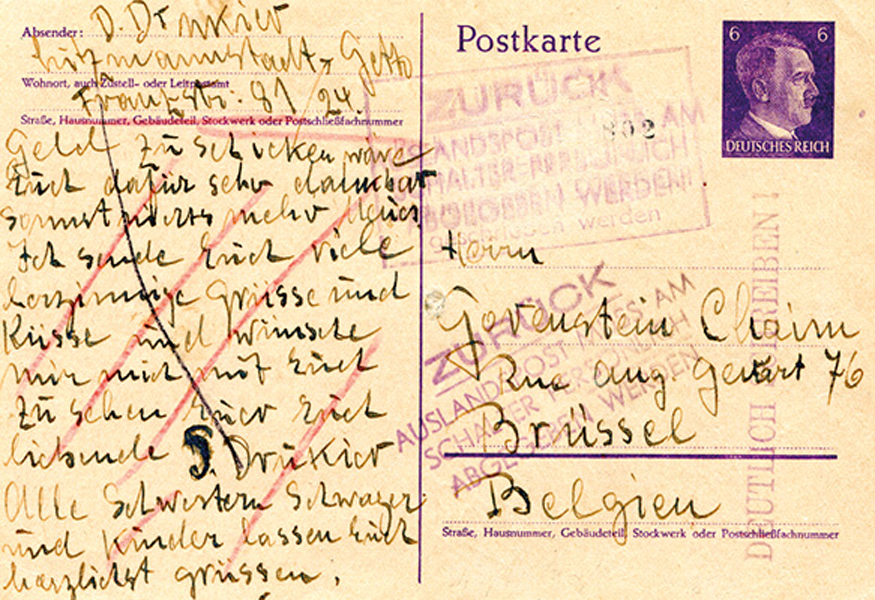
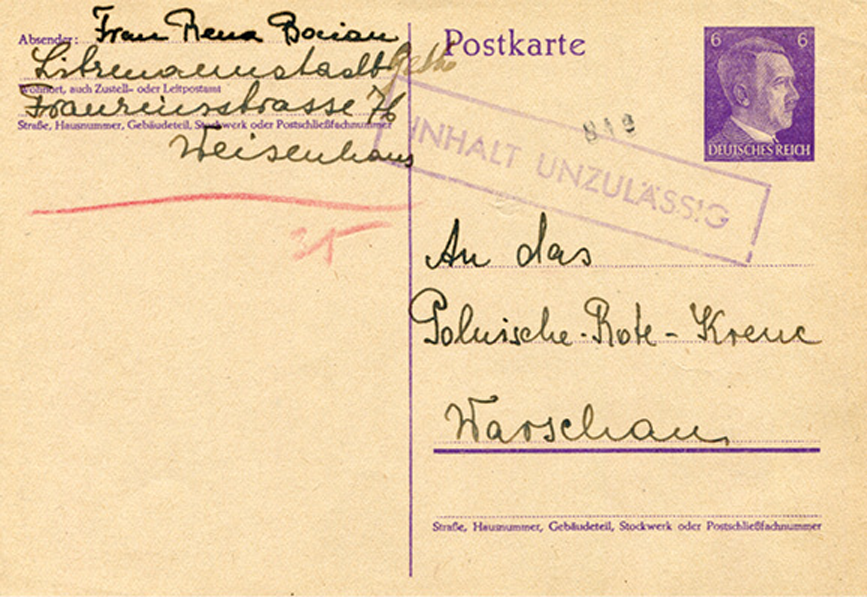
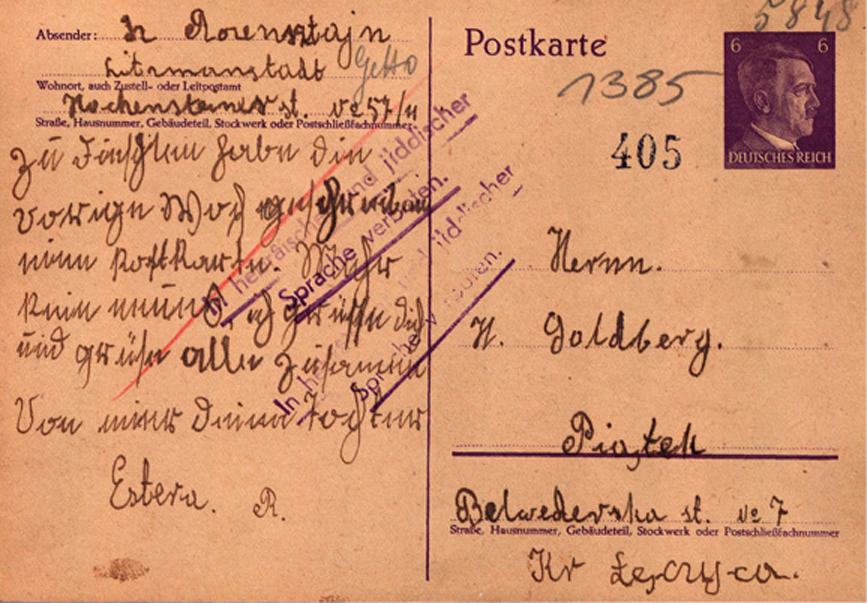
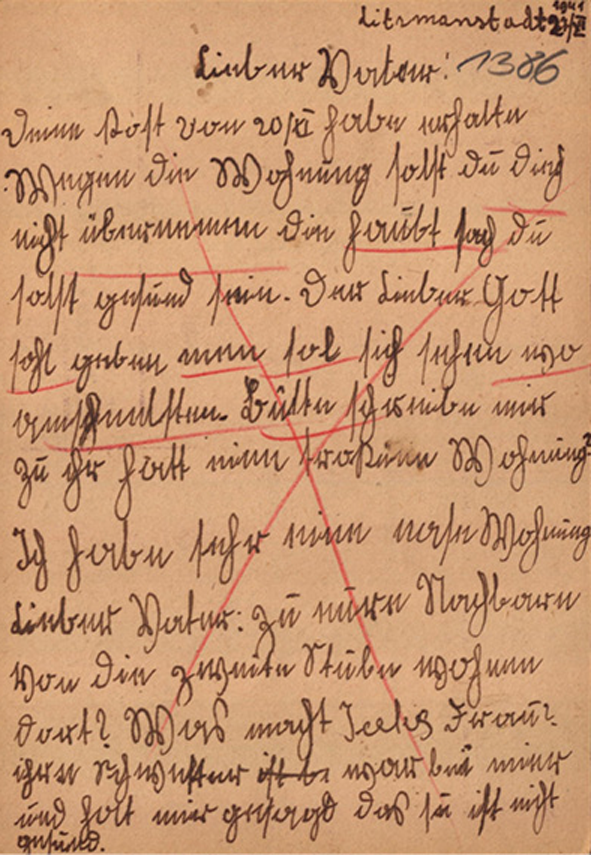
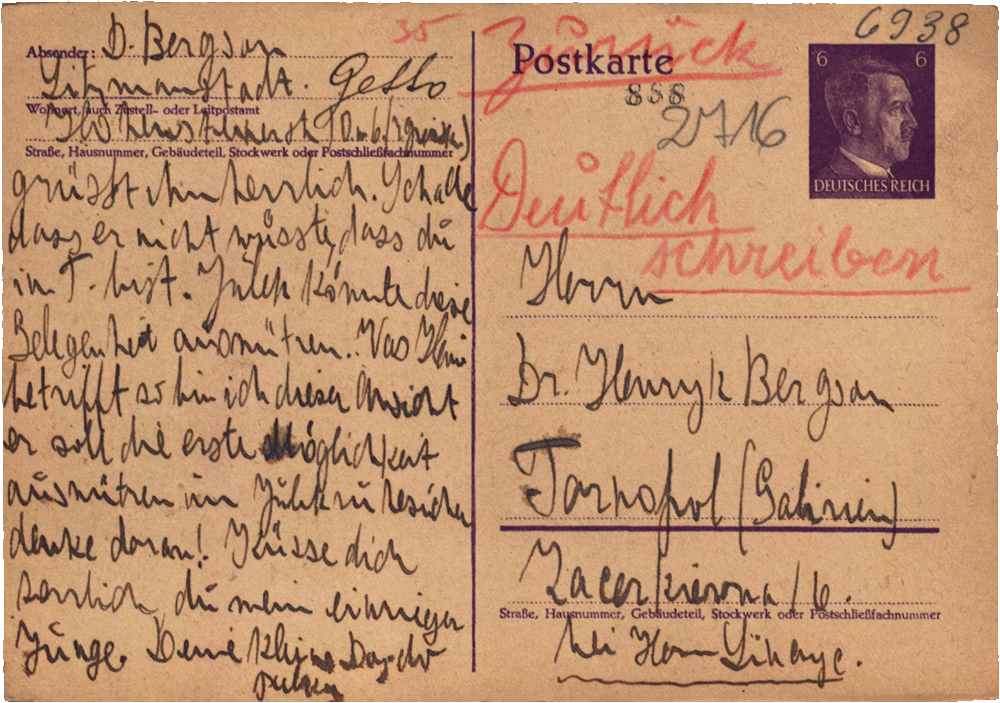
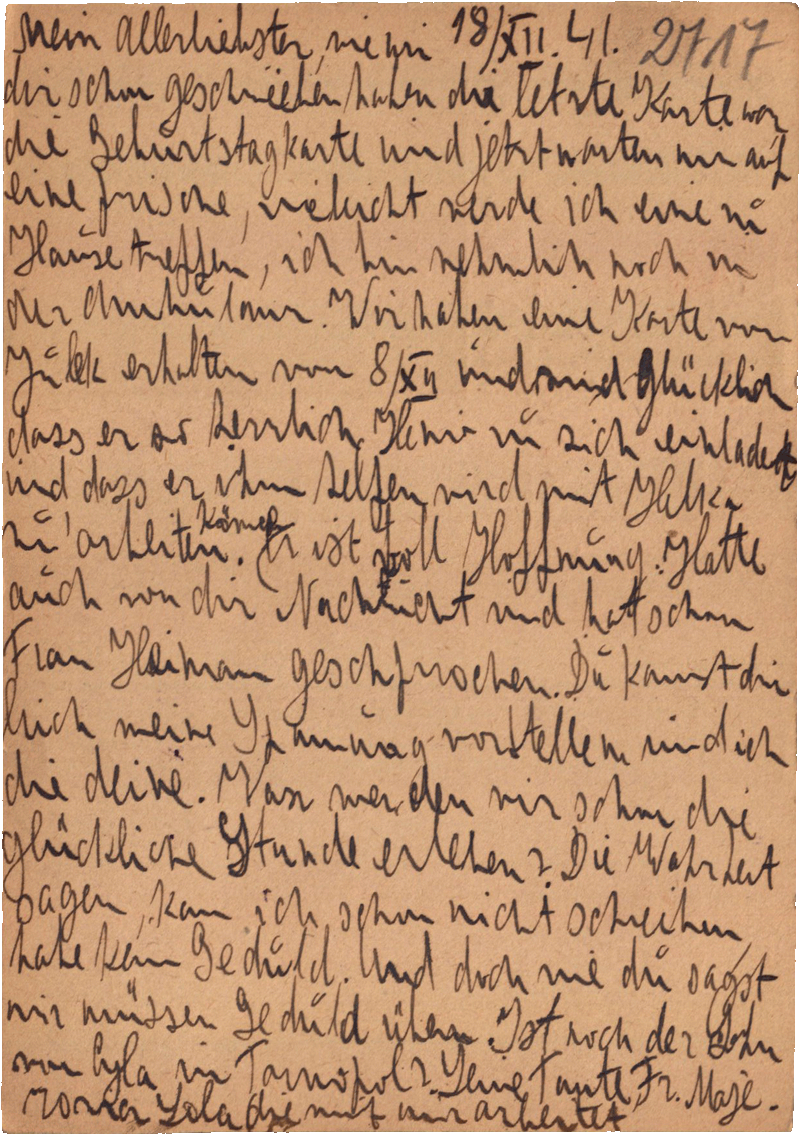
Postcards stopped by the censor
(Spungen Family Fundation), (Archiwum Państwowe w Łodzi)