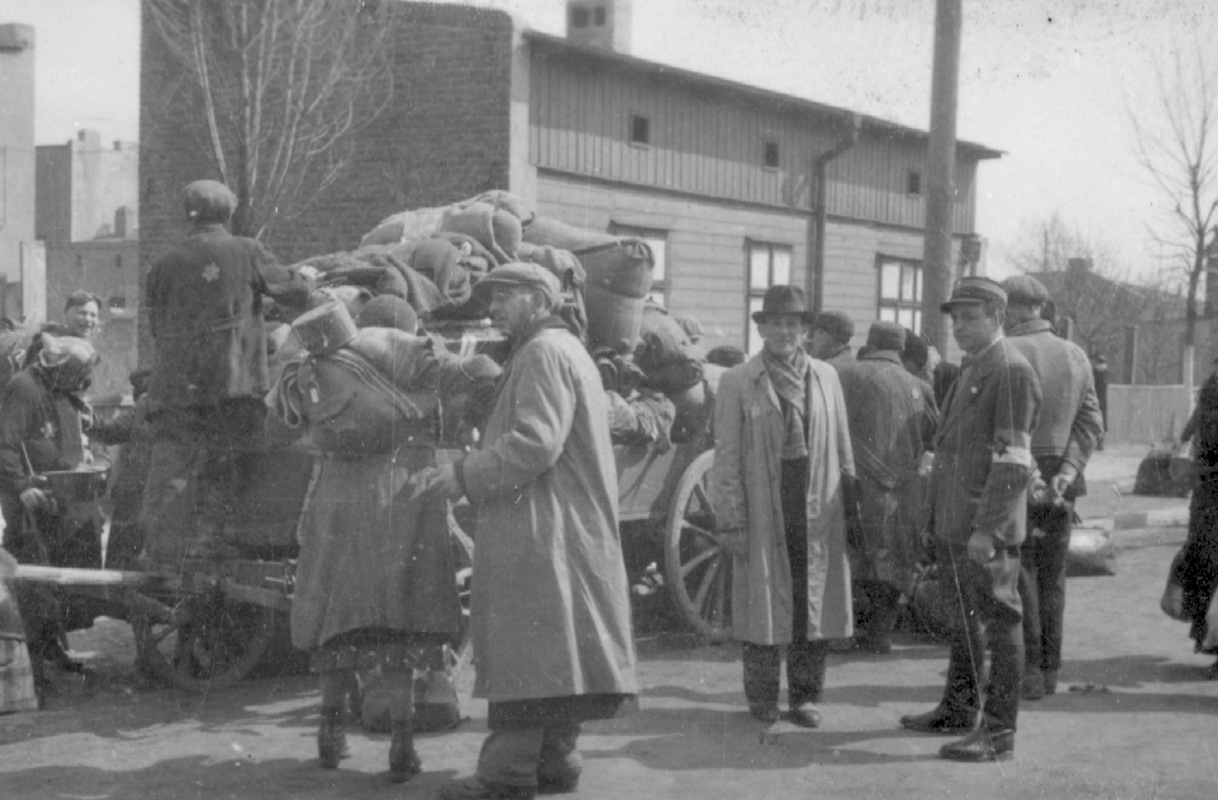
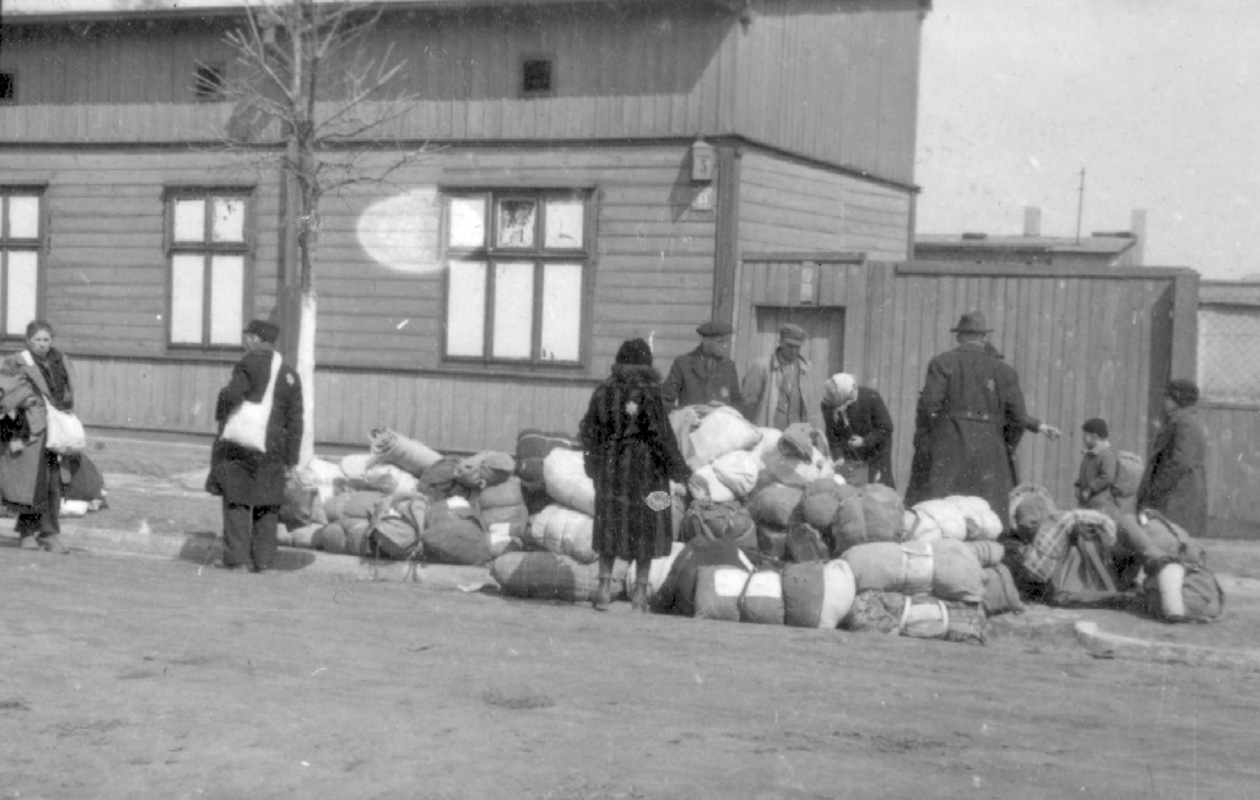

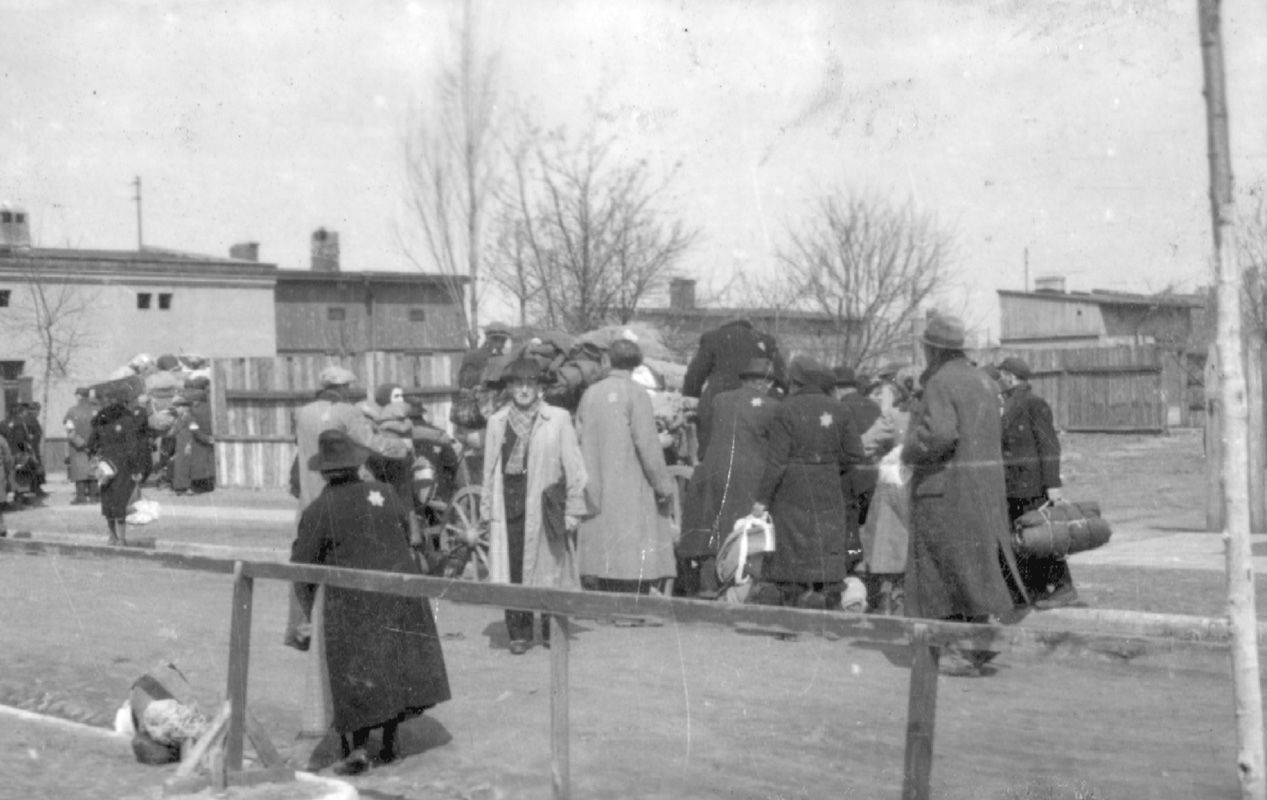
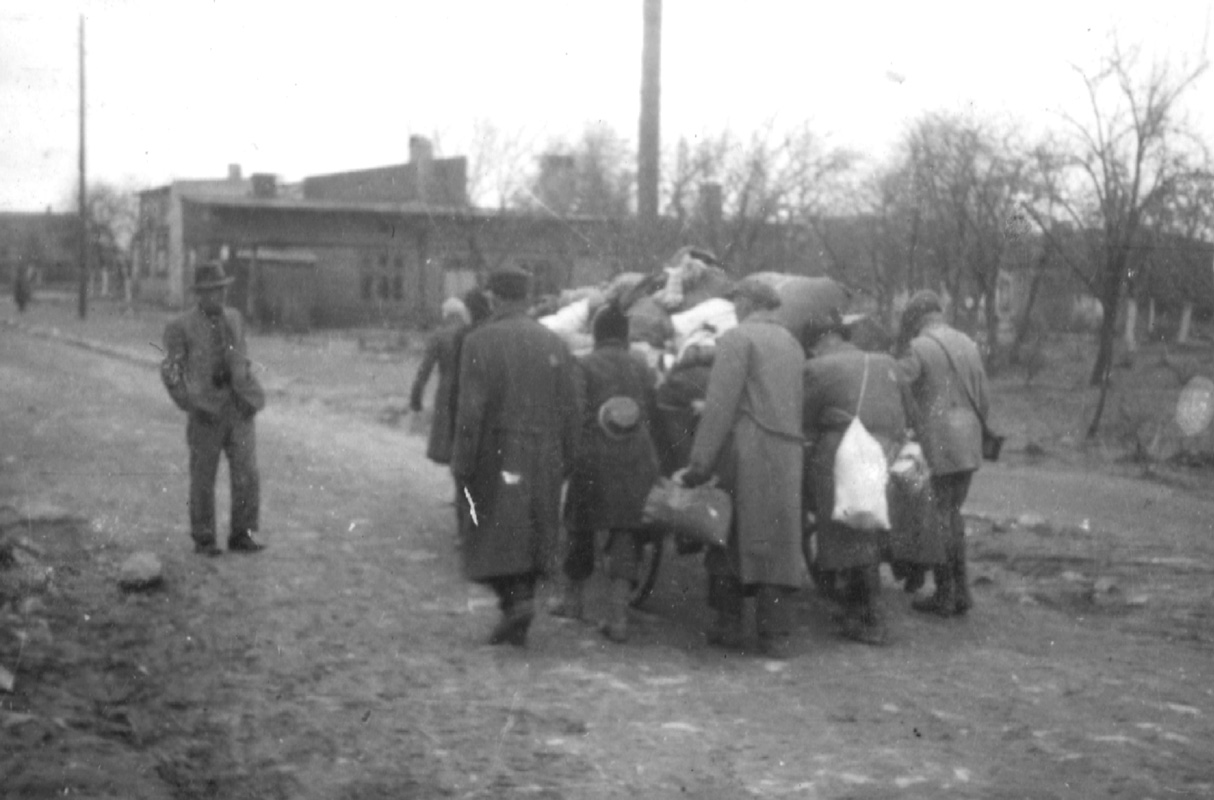
Deportation from the ghetto
(Archiwum Państwowe w Łodzi)
The post office was used to placate the mood in the ghetto after deportations. Postcards
allegedly sent by deported family members brought news of good health and abundance of food.
Chronicle of the Łódź Ghetto, April 29-30, 1942.
“A postcard from a village near Turek has arrived in the ghetto by indirect means. It was sent by a family resettled in January and reports that they are in good health.“
Many postcards with false information arrived in July 1944, before the final liquidation of the ghetto. The Germans were aware of the anxiety caused by the last deportations and wanted to keep the peace in the ghetto at all costs. Walter Burmeister, one of the members of the Sonderkomanndo in Chełmno on the Ner, testified after the war that certain groups of Jews were forced to write postcards. They were all along the same lines: “We’re doing well”, “We’re working in the Reich”. These postcards were sent to the ghetto from various cities in the Reich, including Leipzig. Burmeister called the operation of postcard writing “a devil’s alibi for murderers”.
Chronicle of the Łódź Ghetto, July 26, 1944.
“Glad tidings for the ghetto: postcards from Leipzig. The ghetto has received its first messages from people who left to perform manual labor outside the ghetto in the recent resettlement. Thirty-one postcards have arrived, all of them postmarked July 19, 1944. Fortunately, itis apparent from these cards that people are faring well and, what is more, that families have stayed together. Here and there, a card mentioned good rations. One card addressed to a kitchen manager says in plain Yiddish: “Mir kalhn fun ayre zupn!” [We laugh at your soups!]“
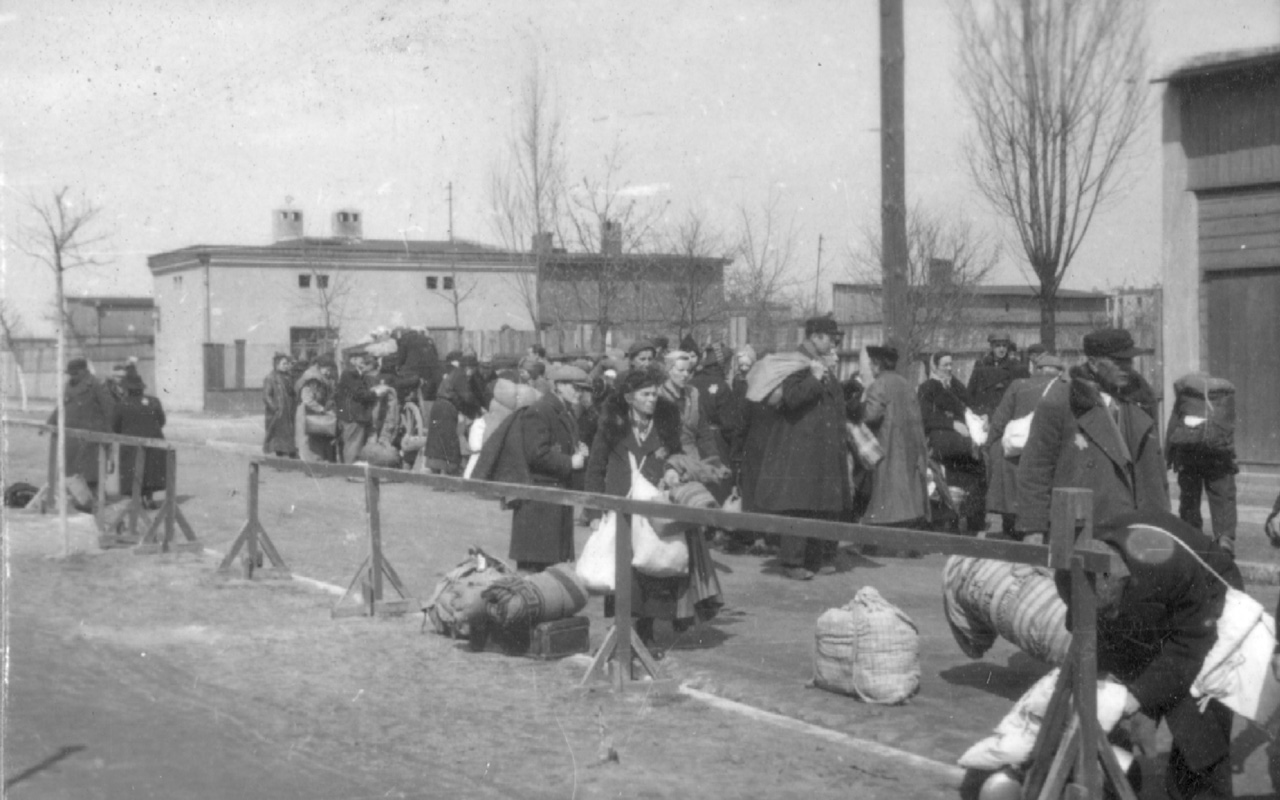
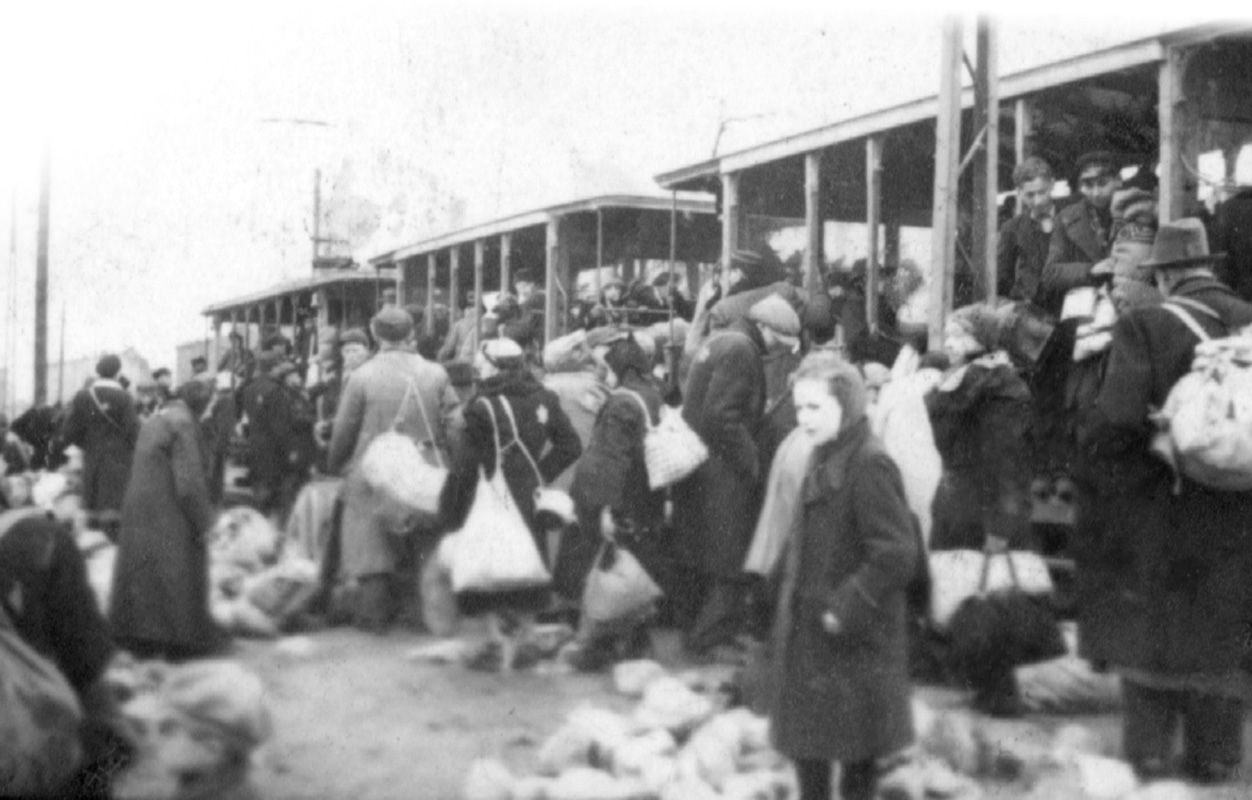
Deportation from the ghetto
(Archiwum Państwowe w Łodzi)