The Philatelic Department was established on
October 9, 1941 at the request of German authorities to buy up stamp
collections. The person interested in this kind of looting was
certainly Hans Biebow head of the German Ghetto Board, a passionate
philatelist.
The
Department was officially part of the Bank of Purchase
(Einkaufstelle), an institution set up to buy valuable items from
ghetto residents. Lack of money to buy food rations meant that family
jewelry, furs and foreign currency were sold at discounted prices.
The
Philatelic Department had its headquarters at the post office branch
at 1 Rybna Street, and was headed by Jakub Dawidowicz. It was staffed
by 9 to 10 people, with only three permanent employees. They were
provided with the necessary catalogs and professional journals, as
well as tools for evaluating collections, such as a quartz
lamp.
Stamps
were bought for about 20% of their actual catalogue value and paid in
ghetto currency, the so-called “chaimkes”. Catalogue prices
served as a basis for settlement with German philatelistic companies
– contractors of Gettoverwaltung. Particularly valuable items were
brought Jewish collectors deported from European cities. The
collected materials were used to prepare sets and collections, with
the most valuable specimens sent to Poznań for auction and offered
to private collectors.
By
December 1943, the Department purchased philatelistic material for
about 30,000 Mk and delivered completed orders and collections to the
German authorities for 25,000 Mk.
In
November 1942, the Department was given the task of preparing
packages from stamps purchased in the ghetto for Christmas presents
given by the German ghetto management. A similar order the following
year was for as many as 20,000 packages of 50 stamps, but only 6,500
sets were completed by Christmas. Apparently, the ghetto's collectors
had already exchanged their collections for food, and stamps too had
become a commodity in short supply in the ghetto.
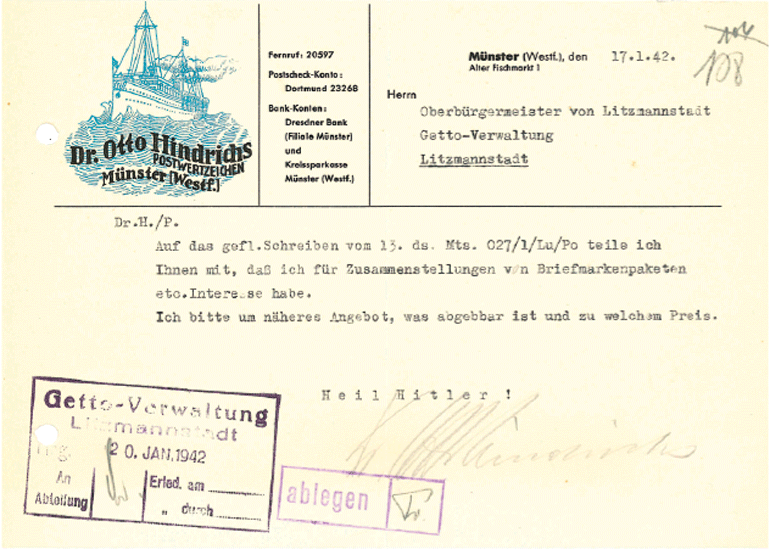
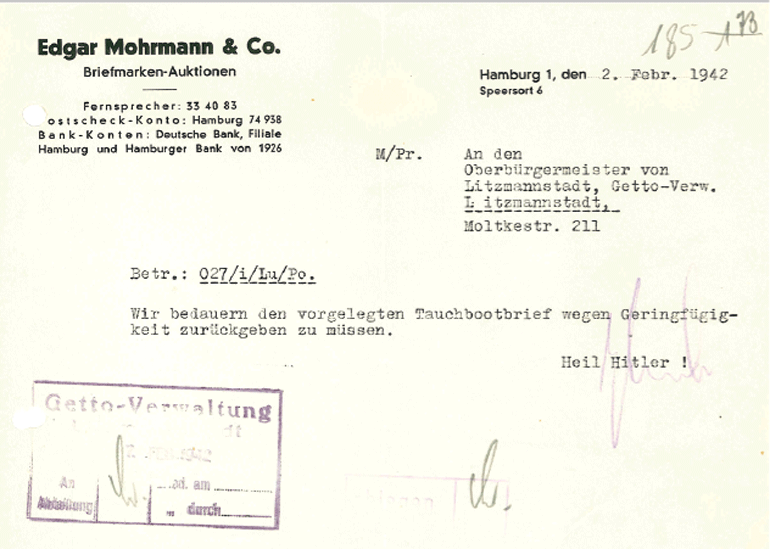
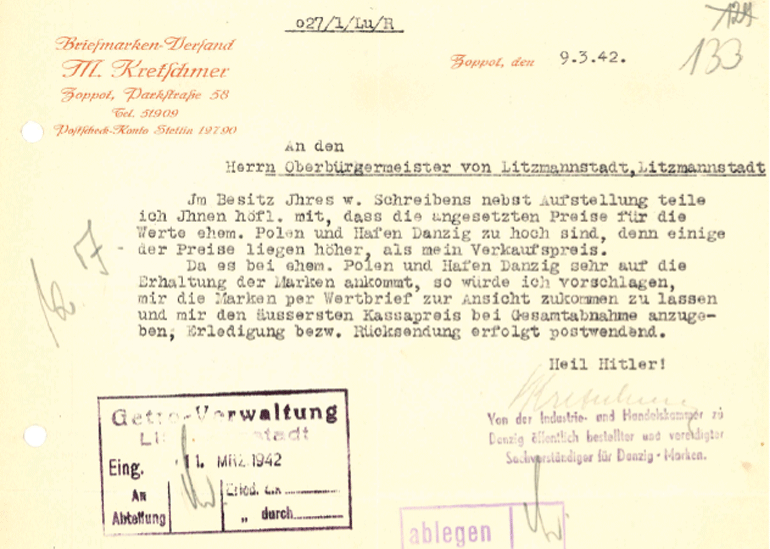
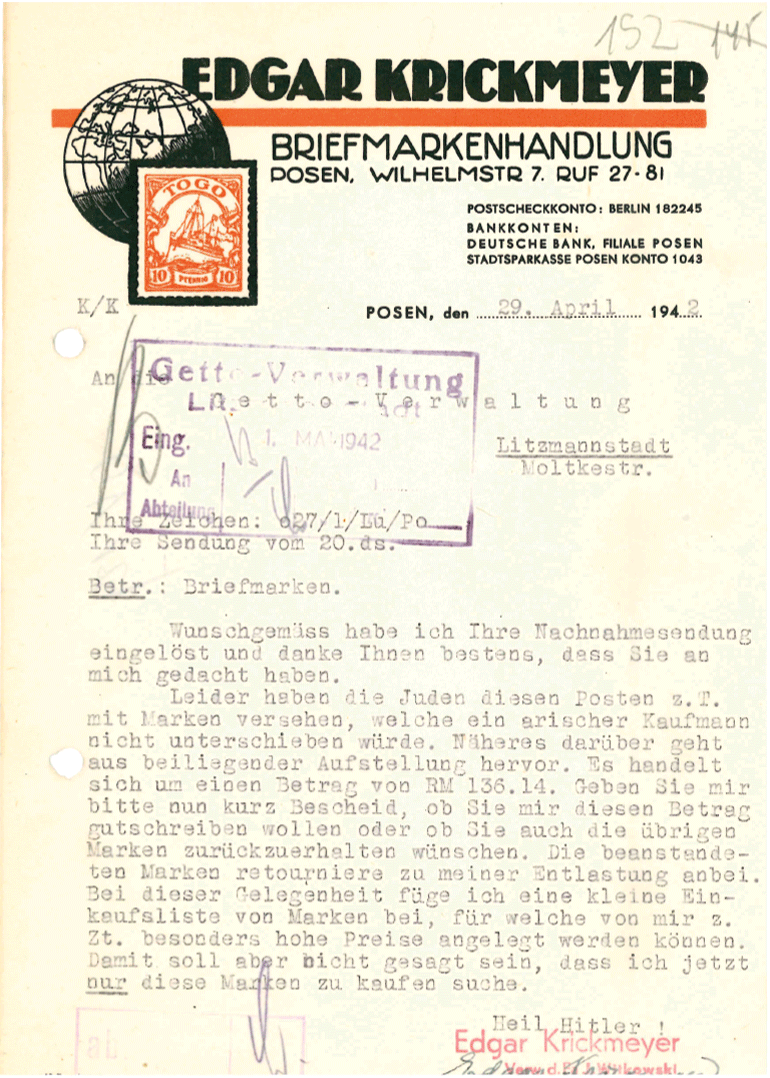
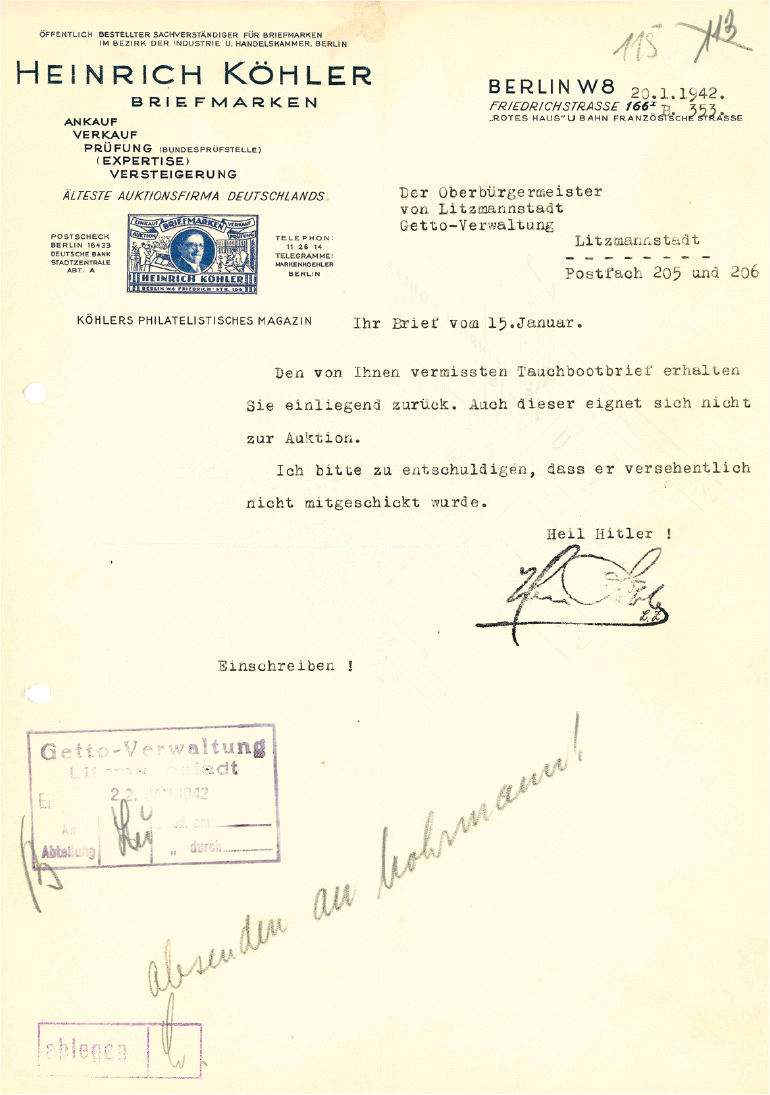
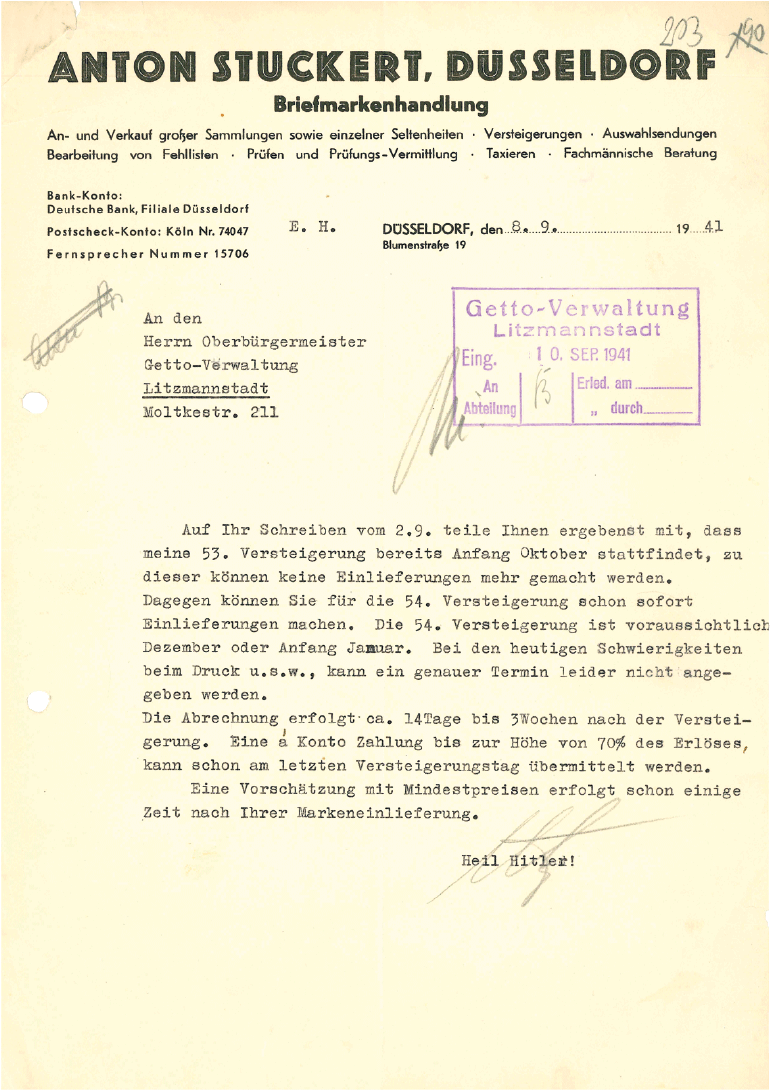
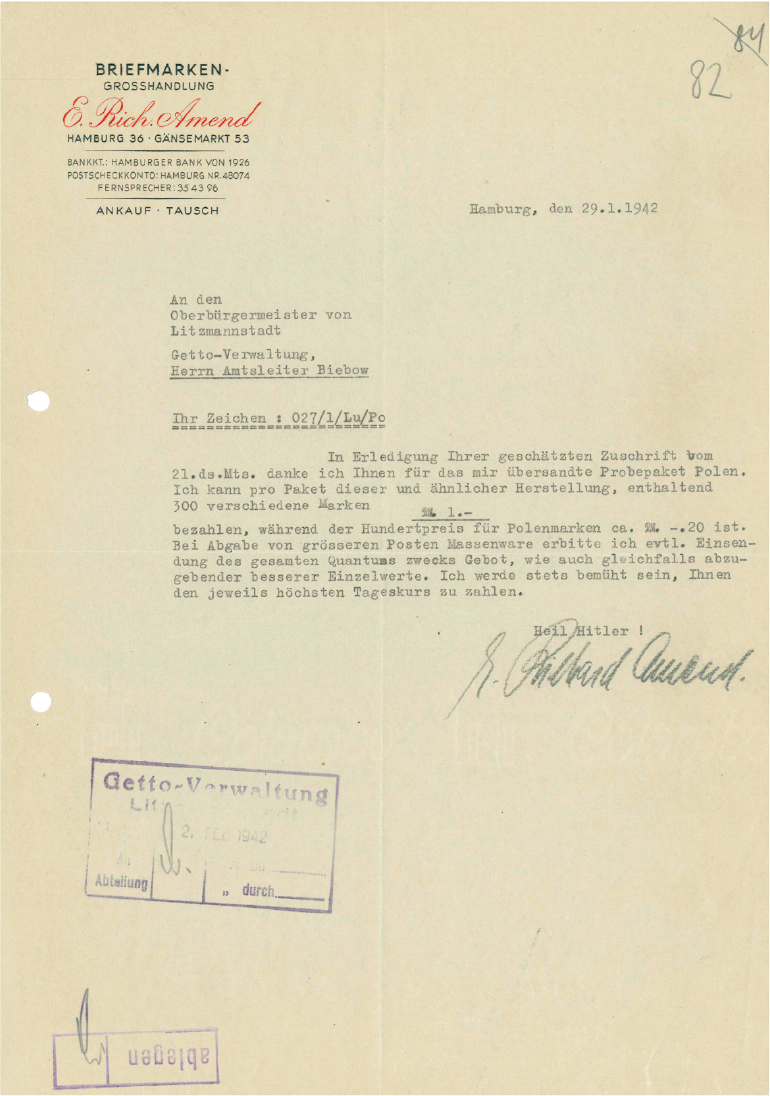
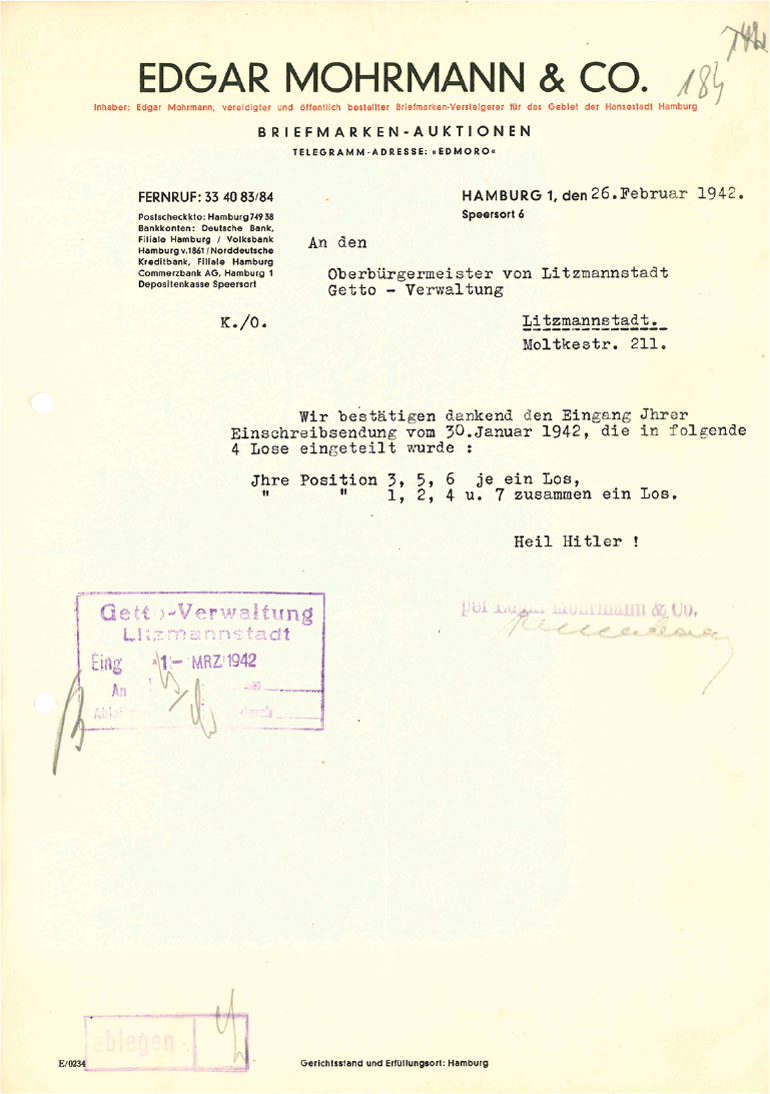
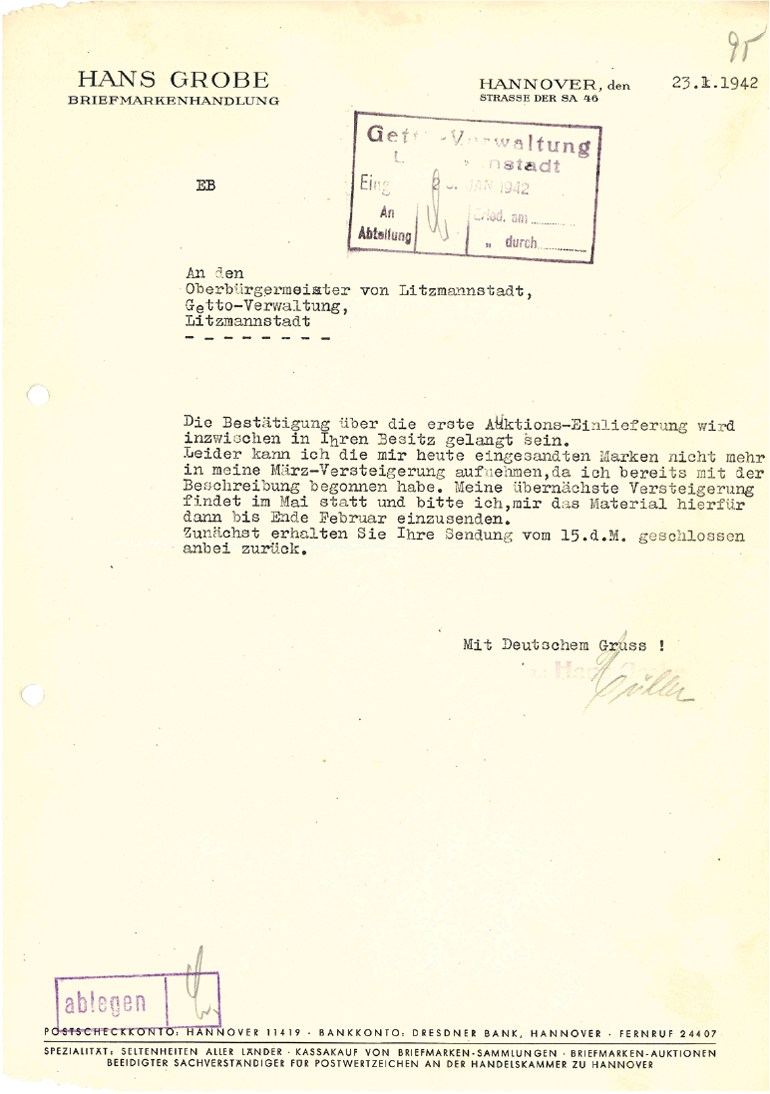
Correspondence between the German Ghetto Board
(Gettoverwaltung) and philatelic companies regarding the purchase of
stamps has been preserved
in the collection of the State Archives in
Lodz.
(Archiwum Państwowe w Łodzi)
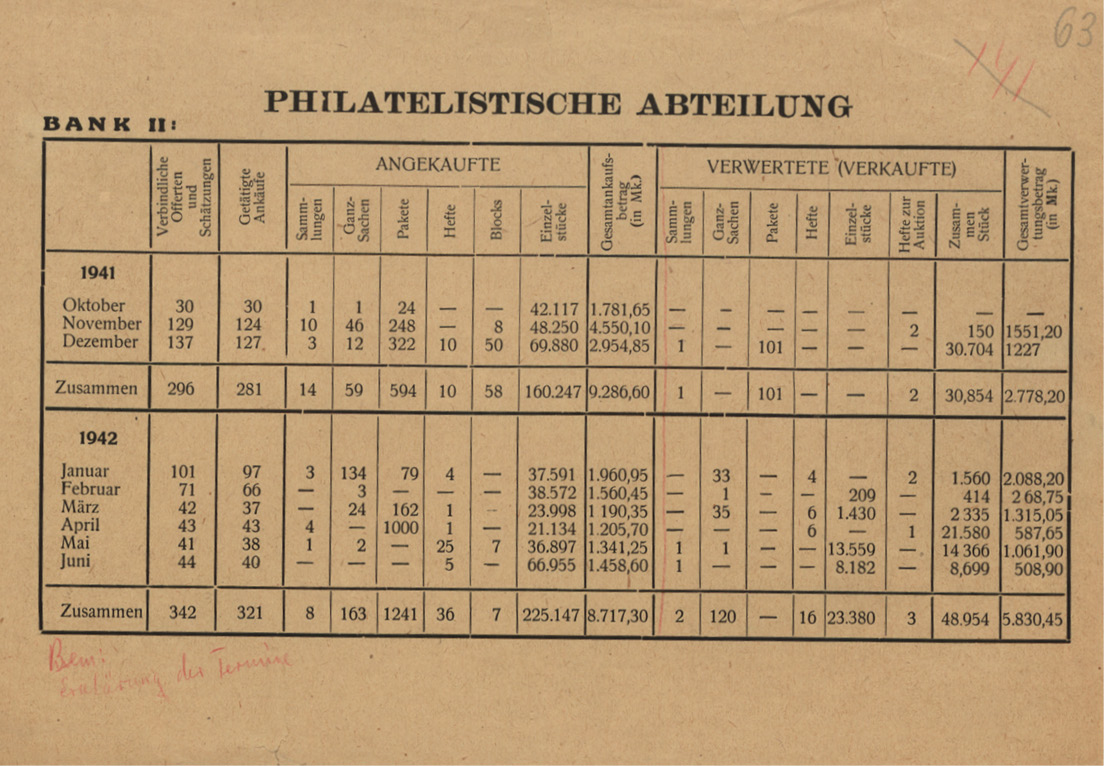
Purchase and sale of stamps – data for the Ghetto Statistical Yearbook
(Archiwum Państwowe w Łodzi)
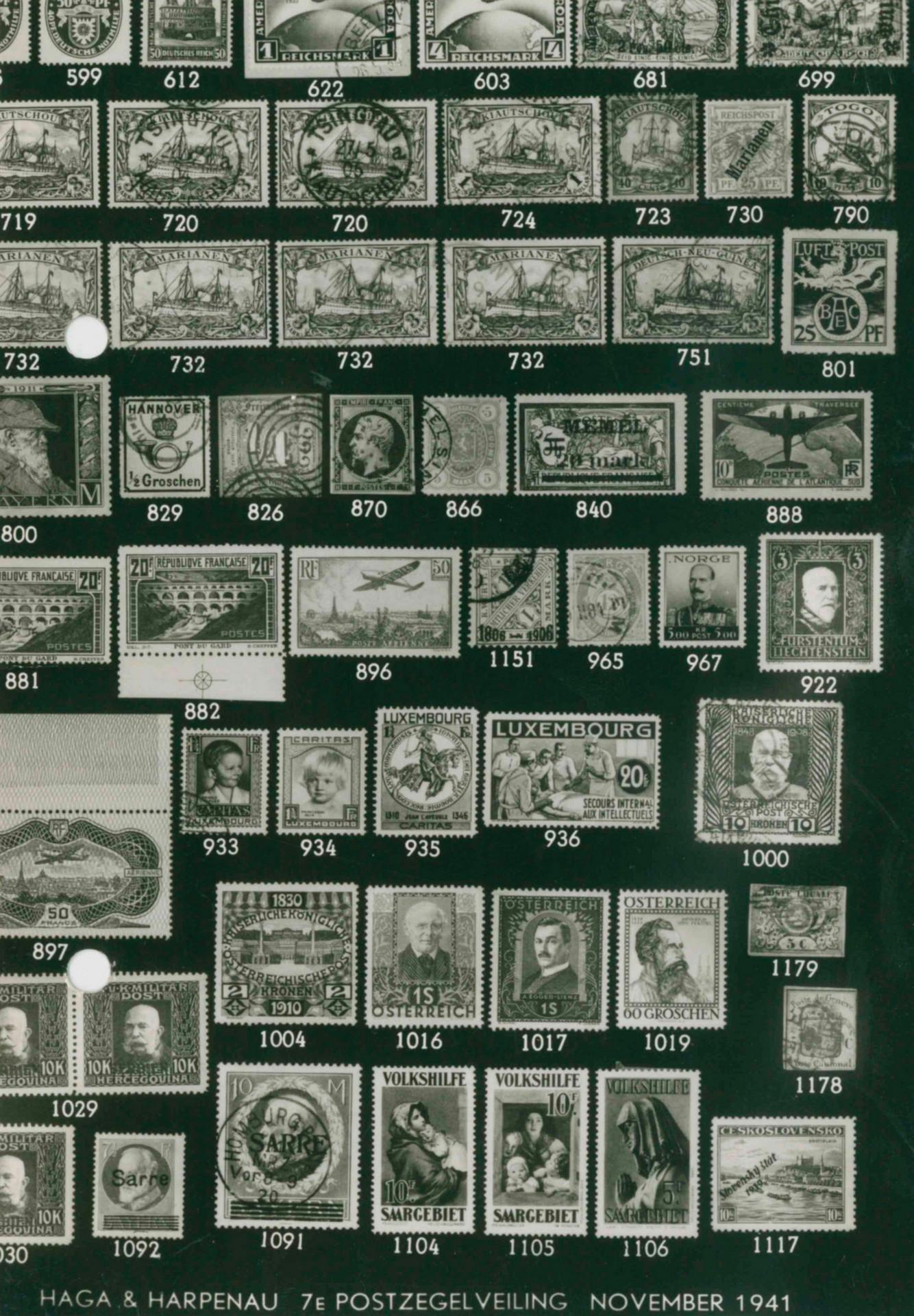
Collection of stamps purchased for the Gettoverwaltung
(Archiwum Państwowe w Łodzi)

Chaim Rumkowski's letter to the German Ghetto Administration
(Spungen Family Foundation)
Chaim Rumkowski's letter to the German Ghetto Administration
Subject:
Philatelic department - supply of stamps.
With reference to the letter No. 2852/br./42. dated 29.05.42. I am also sending the stamps listed in the attachment, namely:
7,770 pcs.
The gross price of these stamps is Rm 1,156.50,
the net price is Rm 260.80.
These stamps also come from the confiscation of stamps on the recommendation of Mr. Biebow.
More stamps will be sent.
Sincerely
Ch.
Rumkowski
The
Eldest of the Jews
In
Litzmannstadt