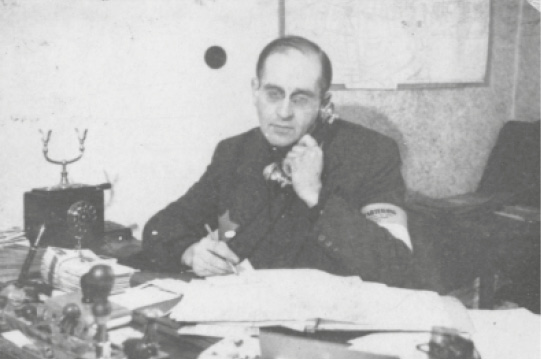
Head of the Post Department
(Archiwum Państwowe w Łodzi)
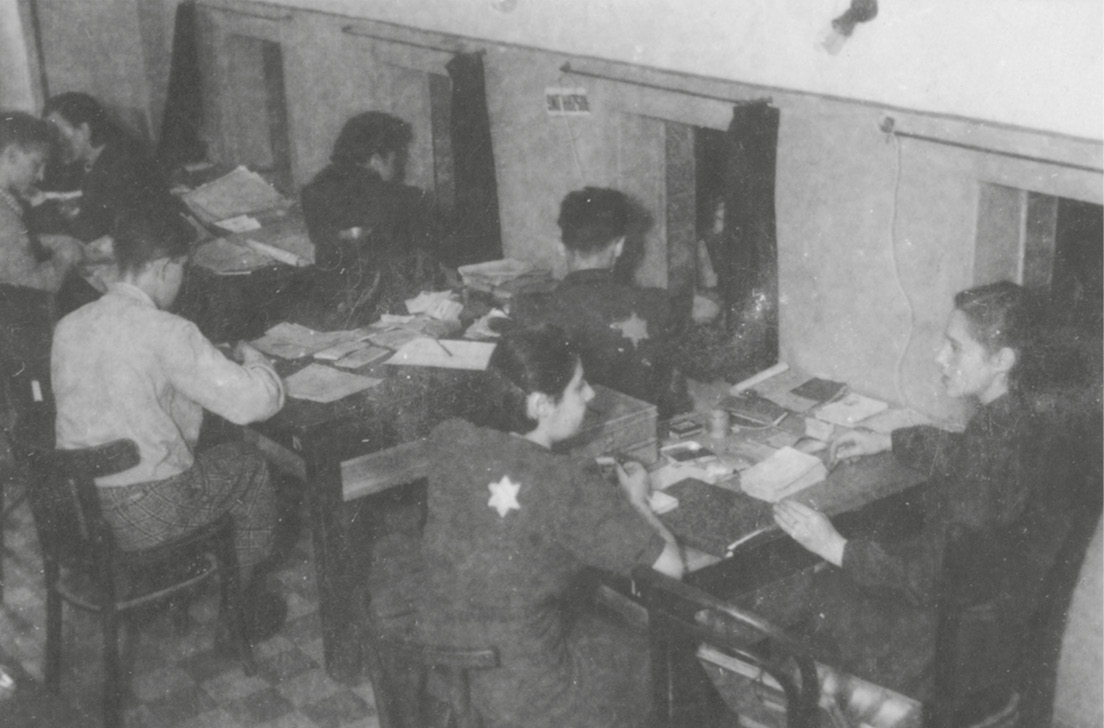
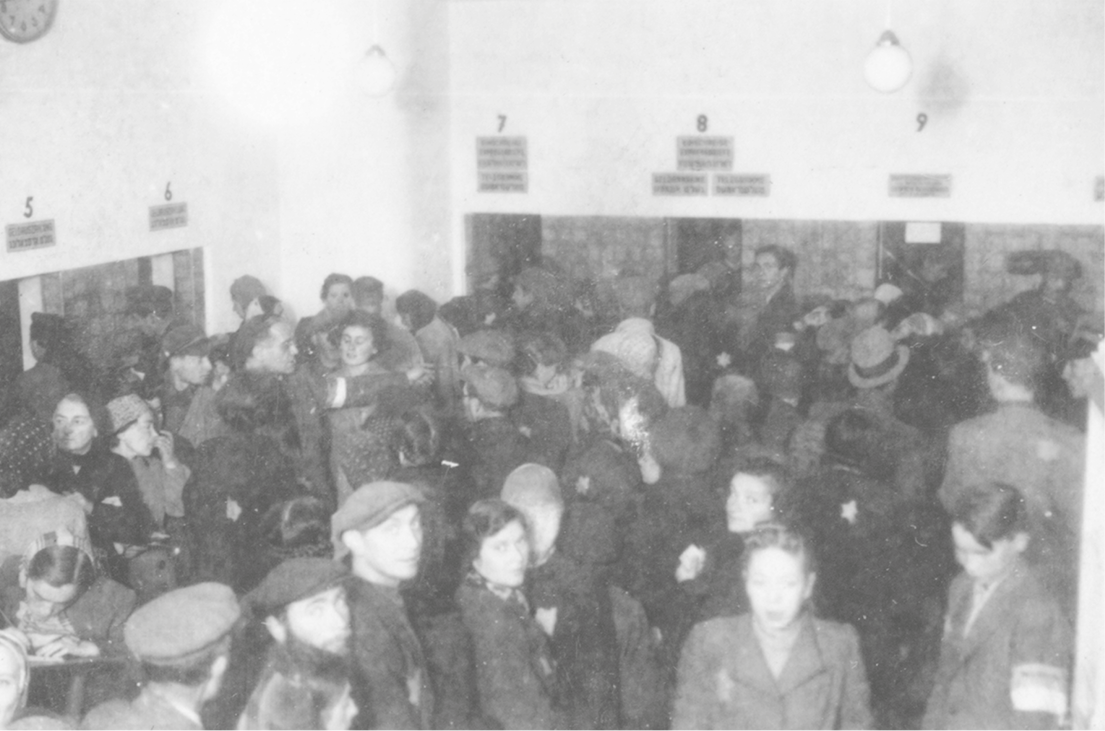
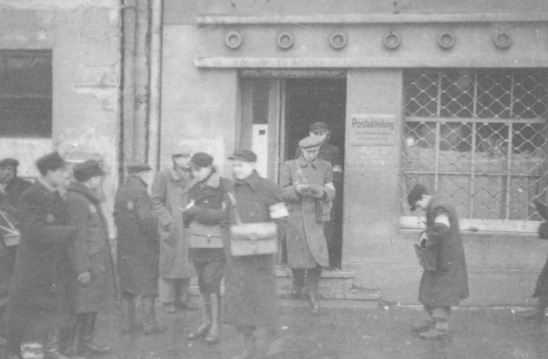
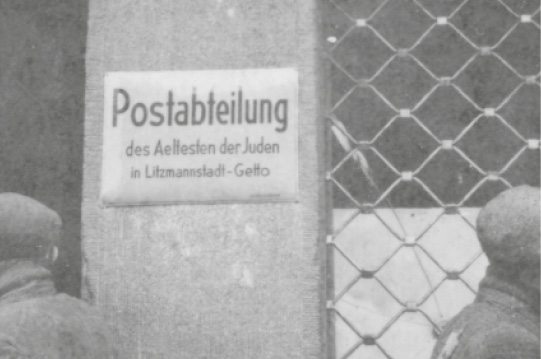
The main seat of the post office was the building at 4 Kościelny Square. For those living on the other side of Zgierska Street, excluded from the ghetto area, a branch was opened at 1 Rybna Street.
After a year of the post office’s operation, on March 16, 1941, additional rooms were opened at 4 Kościelny Square.
The opening of the new headquarters, combined with the anniversary, is described in the Chronicle:
Chronicle of the Łódź Ghetto, March, 10-24, 1941.
“The new station, which has been appointed in a truly comfortable and modern fashion – for the ghetto, that is – is causing
a significant improvement in the post office’s efficiency and, what is more important, is making it possible to deal with customers without having them wait in line outside, as had previously been the case. The Chairman came for the ceremonies and there was also a large group of individual guests. The director of the post office, Grawe, delivered a speech in which he recapitulated the post office’s activities for the year. It should be noted that the opening of new branch coincided exactly with the first anniversary of this institution od such importance to the inhabitants of the ghetto.“
The first head of the Postal Department, responsible for creating rules for its operation, was Herbert Grawe (1891-1944). The period of his leadership also saw the greatest development of the post office. For unknown reasons, he left on March 20, 1942, taking over the management of the dry-cleaning plant. Maurycy Goldblum (1882-1944) became the manager at that time, and served only until the end of July 1942. As a result of disagreements with Chairman Rumkowski, he resigned for health reasons. Eng. Abram Jakub Dawidowicz, head of the postal branch on Rybna Street and head of the Philatelic Department operating there, was then appointed head of the Postal Department. His leadership of the Department also did not last long, as the Chronicle reported on December 8, 1942:
Chronicle of the Łódź Ghetto, December 8 , 1942.
“The management of the post office was taken over on November 25 by Abramowicz from the Investigative Department, whom, as we have already reported, the President settled there as a commissar after the detection of embezzlement, and he is now the manager. The previous manager of the post office, engineer Dawidowicz, has returned to his previous position at Rybna Street as head of the Philatelic Branch of the post office.”
Mieczysław Abramowicz (b. 1900) initially shared management of the post office with Moses Gumener (b. 1920), a young and apparently skilled organizer, who worked there as a clerk. Gumener headed the Department until the end of the ghetto's existence. He was the only one of these individuals to survive the war.
Head of the Post Department
(Archiwum Państwowe w Łodzi)
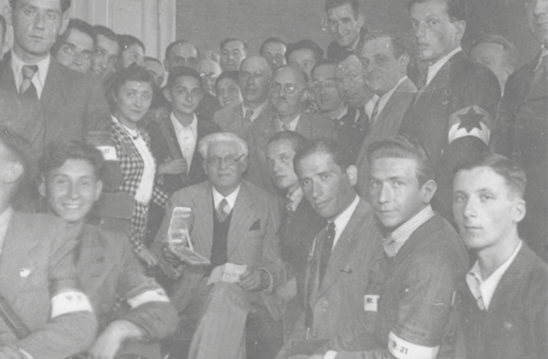
Opening of the new Post Office
(Archiwum Państwowe w Łodzi)
The Chairman's Best Child. The Year of the Jewish Post Office.
Last Sunday, March 15, marked one year since the President established the Jewish post office.
In connection with this, the Post Office held a modest celebration in its own premises at 4 Kościelna Street, to which Chairman Rumkowski, his deputy Dr. Leon Szykier, Mr. Józef Rumkowski and his wife and a number of heads of various departments were invited.
The head of the post office, engineer Mr. H. Grawe, gave a brief overview of the establishment and gradual development of the post office over the past year.
In numbers, the matters handled for ghetto residents were as follows: 64,049 remittances from abroad for a total of 1 million 699 thousand 151 marks; 135,062 intrastate mail and 14,229 foreign mail; 10,238 dispatches and 1 million 74 thousand 351 letters and postcards.
The speaker sincerely thanked the hard-working staff who supported him in his work, and at the same time assured that in the future, too, the Post Office will faithfully and sincerely serve the Chairman and all his sisters and brothers in the ghetto.
As a sign of gratitude to the Chairman for his tireless and sacrificial work on behalf of the ghetto, Engineer Grawe presented him with an artistically made album with various photographic shots of the Post Office.
A pleasant surprise for the Chairman and the assembled guests were reports and scenes by anonymous authors, postal clerks, depicting daily work at the post office. The content, form and humorous tone caused great joy among the gathered.
After two postal officials sang two pieces in Jewish and Hebrew, Chairman Rumkowski gave the following commemorative speech:
“I treat every new office that has been created and is being created in the ghetto as my child. Everyone knows that parents give more love and devotion to a child who has undergone many illnesses in childhood, from which the parents have suffered a great deal. In this case, however, the opposite has happened: the post office, which has caused me almost no suffering and worry throughout its existence, is closer to me than many of my other children (offices).
My friend Eng. Grawe, although a chemist by profession, managed to turn a ruin into an exemplary establishment and into an even more exemplary institution, where everything functions perfectly.
Also deserving huge thanks is my faithful friend, the “profligate” engineer Gutman, the only one who does not listen to me and “crooks” me in his budgets. However, I am now letting go of the expenses he has made by enlarging and improving the current post office premises.
You postal clerks and especially gray soldiers, letter carriers! Your work is not foreign to me. More than once I have come to observe your sacred work, performed by you in silence and modesty. May I derive such pleasure and peace from the work of other offices in the ghetto. May God pay you for your strenuous work.
As a token of my appreciation and gratitude for your merits, I give each of you a gift of 50% of your monthly salary. At the same time, I set a sum of 5,000 marks for the Gemiles Chesed fund for postal officials.
( translation from Yiddish Szyba)
Text published in “Geto-Cajtung,” No. 3, March 21, 1941
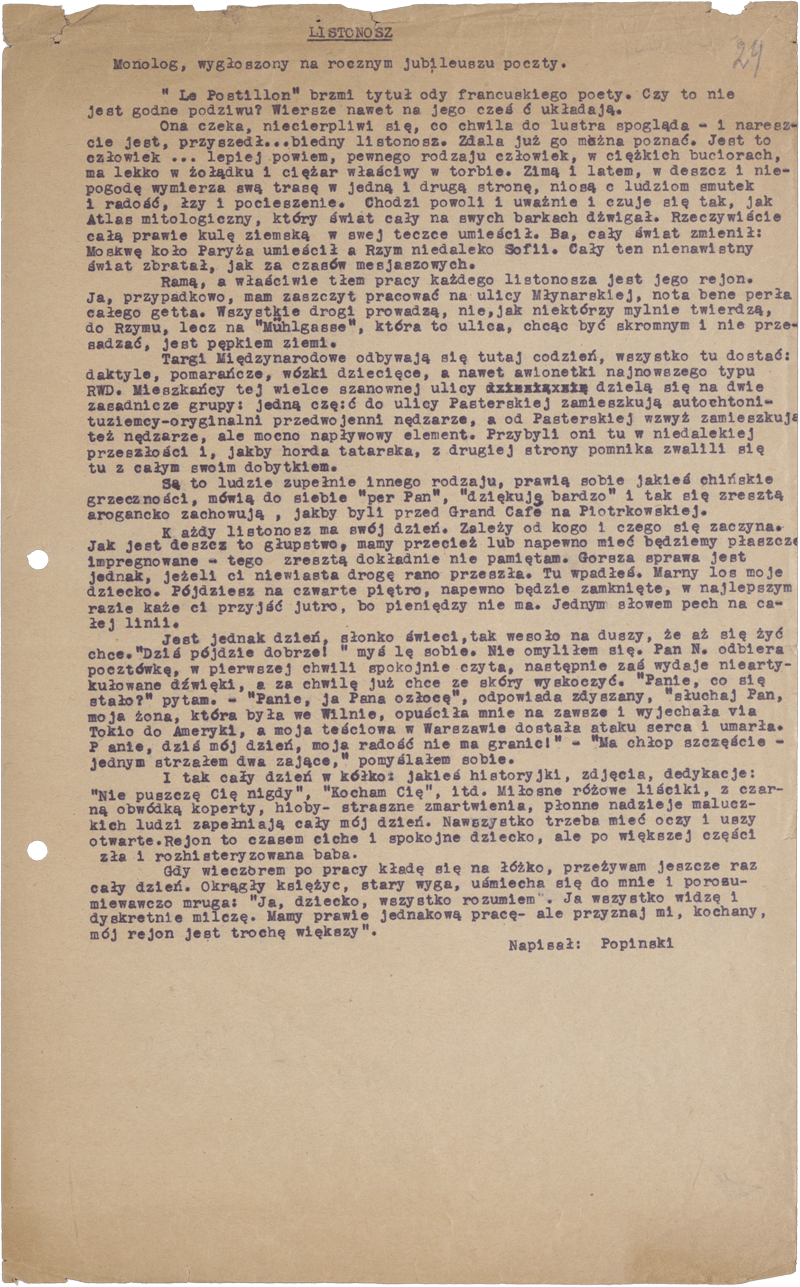
A monologue delivered at the annual jubilee of the post office (translation below)
(Archiwum Państwowe w Łodzi)