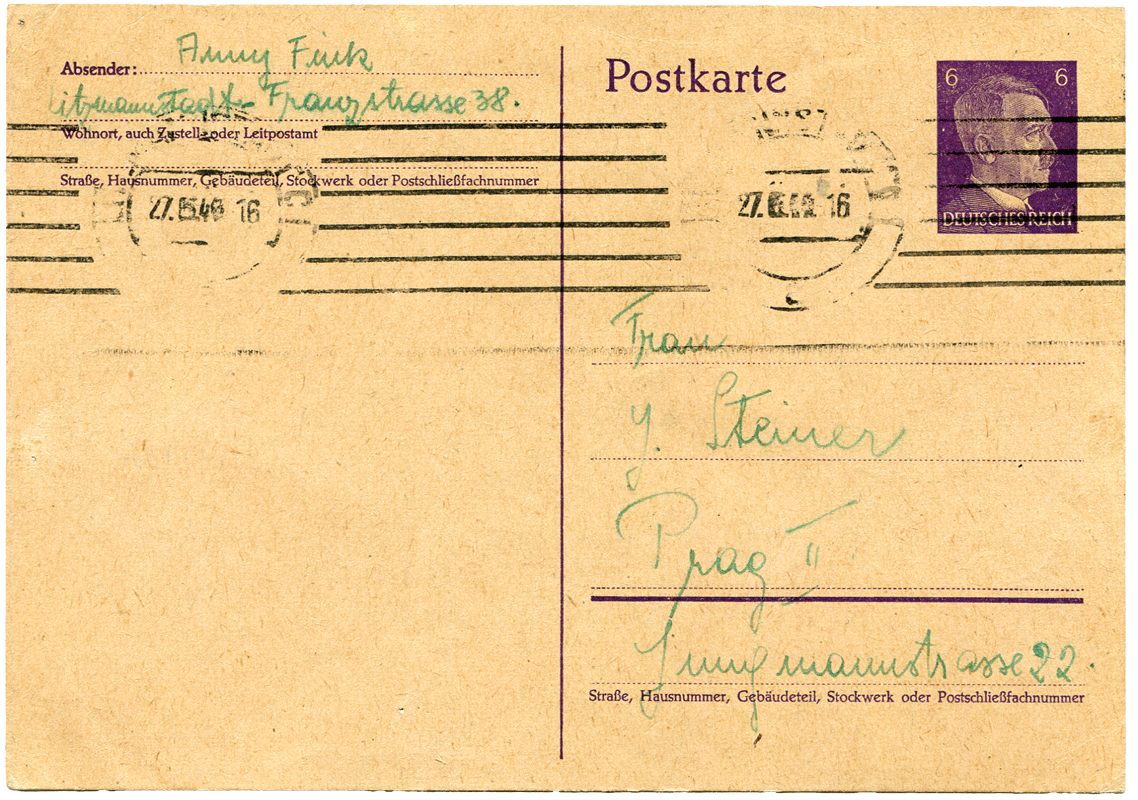
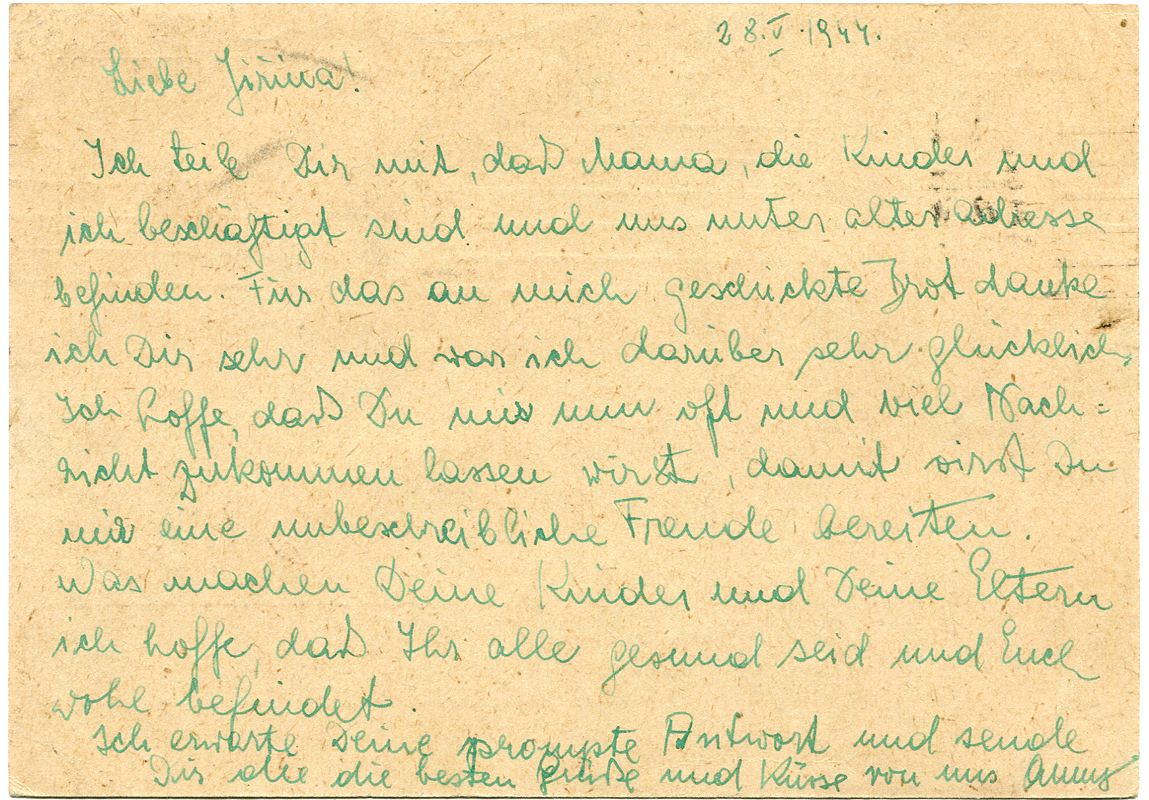
Postcard sent after lifting the mail ban, front side and back side
(Spungen Family Foundation)
The suspension of the correspondence ban, which
had been in place for two and a half years, reverberated widely among people and was commented
on a regular basis in the Chronicle,
written in the ghetto. Most emotional was this fact among Jews
deported to Lodz in the fall of 1941 from the Reich and the
Protectorate, especially the large group coming from Prague. For Lodz
Jews, the lifting of the ban on correspondence was linked to the
realization that there was a shortage of people to whom one could
write
Chronicle of the Łódź Ghetto, May 9, 1944.
“ Ban on mail lifted
The major development today is the news that the ban on mail has been lifted. The spokesman for the post office in the 6th Police Station arrived in the ghetto with this news in the predawn hours and immediately everyone knew about it. The ghetto would be able to write and receive mail again. It has been almost two and a half years since the ghetto was completely isolated from the outside world, and now the residents of this imprisoned city will be able to make contact with their relatives again. First it was said that it would be possible to write anything, in letters and on cards. That it would be possible to receive packages and look for relatives. The ghetto is overjoyed. Of course, there are many who receive this news with mixed feelings. The only ones who have had relatively constant contact with relatives outside the ghetto are the 250-300 or so resettlers from Prague who still receive food parcels from the Protectorate of Bohemia and Moravia, primarily from Prague. Living there now are probably Jews living in Aryan families who were lucky enough to be allowed to remain in their own homeland. They remember their relatives and send bona fide parcels. But to whom should others write? To their relatives who at one time fled Lodz? Who knows if they are alive, where they are? To fathers, mothers and children displaced from the ghetto? Who knows if they are still alive, where are they? The people resettled here from the former Reich and Vienna also have little hope of making contact with their relatives, because they too have no idea of their whereabouts. Only if the Jews in the Reich, the Protectorate of Bohemia and Moravia and the General Government learn that the postal blockade has been suspended and hear from them themselves could contacts be established again. Many, unfortunately too many, are afraid of these contacts, for they can learn only bad things.
It is only in the evening, after 5 o'clock, that the storming of the Post Office Department at 4 Church Square begins. Mainly these are the displaced, who now hope to make contact with relatives and receive packages. But the post office is still not working today. Clear guidelines on what and where to write have not yet arrived. The news that it will be possible to write to the former Reich, to Bohemia and Moravia, to the General Government, to the occupied territories and even to neutral foreign countries seems at first glance too far-fetched and optimistic.
In any case, the entire ghetto is clearly excited, and groups can be seen everywhere discussing the issue. A mass assault in the coming days is already ruled out for the reason that the Postal Department temporarily does not have. postcards and stamps at all. At the moment it is completely impossible to assume that letters will be allowed, because if stamps were not allowed to be affixed even to postcards, a closed letter is not an option at all. We won't know more until tomorrow. “
Chronicle of the Łódź Ghetto, May 10, 1944.
“ Ban on mail lifted
The situation has since clarified. Only postcards are allowed, namely to the former Reich, the Protectorate of Bohemia and Moravia and the General Government. It is only permitted to write to relatives with brief information about the family. It is not permitted to ask for food to be sent, but it is permitted to acknowledge receipt of bread. (It is not allowed to confirm receipt of parcels.) The Postal Department will only issue a sufficient number of postcards in 2-3 days. The cards sent in the meantime at the post office window will be collected and inspected by the Jewish censors. At the Postal Department, we learn that the material will later be subjected to German censorship as well. Even though this restriction certainly diminishes hopes a bit, the joy in the ghetto is still great, however. The feeling that, after all, it will again be possible to make contact with people outside the ghetto means, after all, that the previous mental burden has been lightened. “
Postcard sent after lifting the mail ban, front side and back side
(Spungen Family Foundation)
Chronicle of the Łódź Ghetto, May 10, 1944.
“ A small mirror of the ghetto
Writing is allowed again. The suspension of the postal blockade is a surprise of the highest order. The ghetto can hardly believe the news - there are doubts here and there, because often enough in recent years the so-called favorable, joyous news has turned out to be gossip and led to severe disappointments. But this time it is true. In the vestibule of the Postal Department one can read in black and white: writing to relatives here and there is allowed.
First comes the thought, “To whom should I write? Where is the person to whom I would like to write? Is he or she even still alive?” This implies an expectation. “Maybe this relative will write to me first and in a short time we will make contact again.”
The main thing for those resettled from the Protectorate of Bohemia and Moravia is to get something to eat, a food parcel, above all bread, from this country, where there are still some resources, because several such parcels arrive in the ghetto every day. So to write, it's easy to say. After 30 months of postal blockade, one is weaned from writing.
Ink and pen are rare. Therefore, people turn to acquaintances who are suspected of still having such rarities. Or they knock randomly on the door of some apartment, asking: “Can I write a few postcards at your place? Just a few lines. I just want to try to find out if my brother ..., my mother ..., my uncle ... is still alive. I have neither pen nor ink at home.” Why not? And he writes a few lines with a smile, in anticipation of the happiness that awaits him. “
Chronicle of the Łódź Ghetto, May 16, 1942.
“ Lifting the mail ban
The suspension of the mail ban has yet to have an effect. Thousands of postcards have been posted at the windows, but all this material is still piled up at the Postal Department, for it seems there are still no precise guidelines for outgoing mail. Mainly it is the newly resettled, and among them especially the Prague residents, who are working hard to get in touch with relatives or friends. The content of these postcards only concerns requests for food. Since it is actually only allowed to acknowledge receipt of bread, senders cope by acknowledging bread they have not received. “
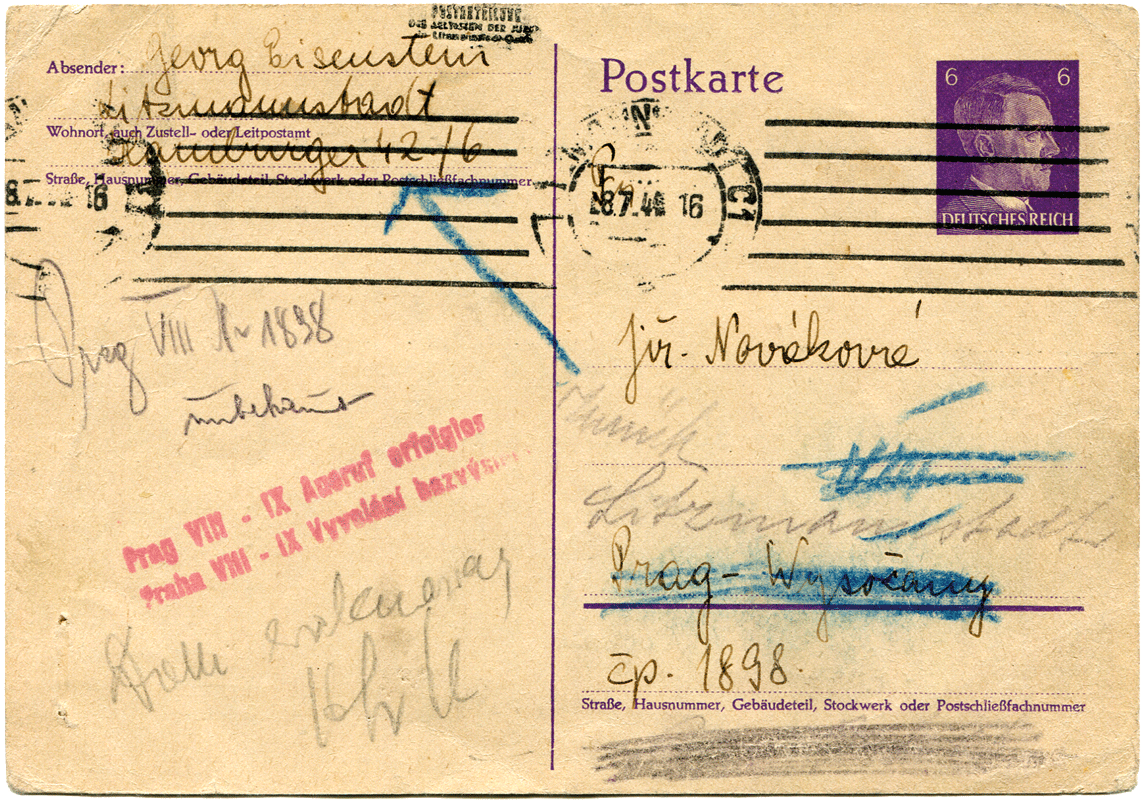
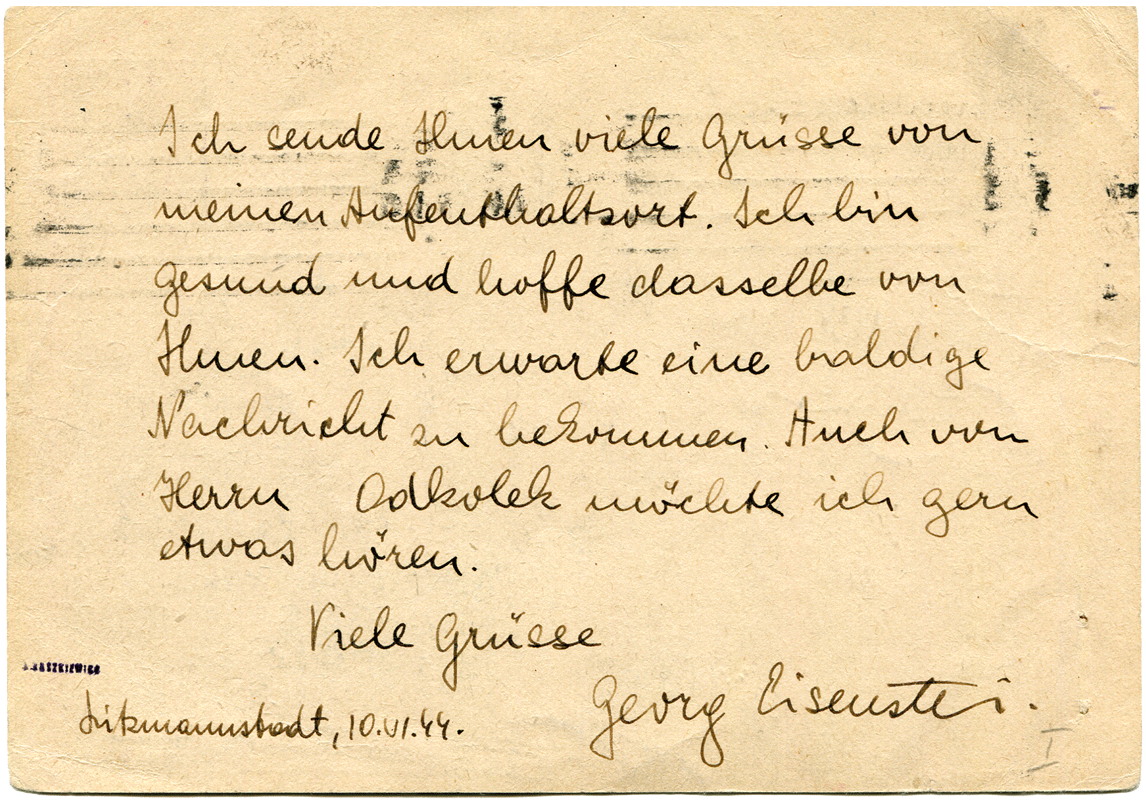
Postcard sent after the mail ban was lifted, returned to the ghetto – the addressee was deported, front side and back side
(Spungen Family Foundation)
Chronicle of the Łódź Ghetto, May 23, 1944.
“ From the post office
The first postcards posted at the window after the postal blockade was lifted have been sent. About 3,000 postcards were handed over to the German authorities through the Special Branch and are expected to be answered within the next week. It is still unclear whether the postcards will be sent directly or through the collective censorship point in Berlin. “
Chronicle of the Łódź Ghetto, June 11, 1944.
“ A small mirror of the ghetto
At the post office. A petite, wrinkled woman pushes her way to the window at the post office. She is a native of Bałuty. She wants to buy postcards. Postcards are a much sought-after item now, since the lifting of the postal blockade and since, above all, displaced persons can write to their former homeland to receive food parcels. The post office no longer has cards. Besides, there are still mountains of unsent cards lying around. A petite woman absolutely wants cards. The postmaster, Gumener, approaches her. “What do you want, good woman?” she says. “I want to buy postcards!”. “And to whom and where do you want to write?”. “Because I know? I don't have anyone to write to, but everyone buys, so I do too!”.
Now postcards are among those items that are reaching record prices on the black market. Secretly, postcards are being offered for 15 mk, which normally cost 10 fen. apiece at the Post Office, and people who don't know that mail can't be sent in these quantities are buying them. “
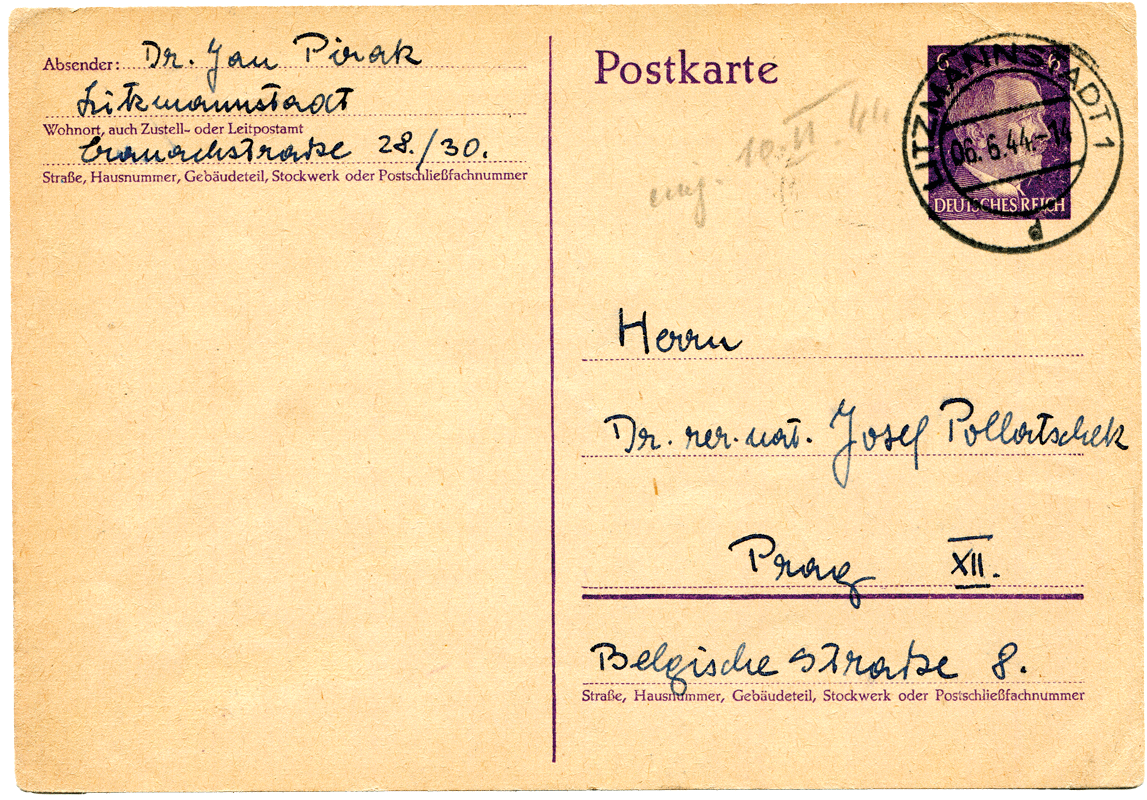
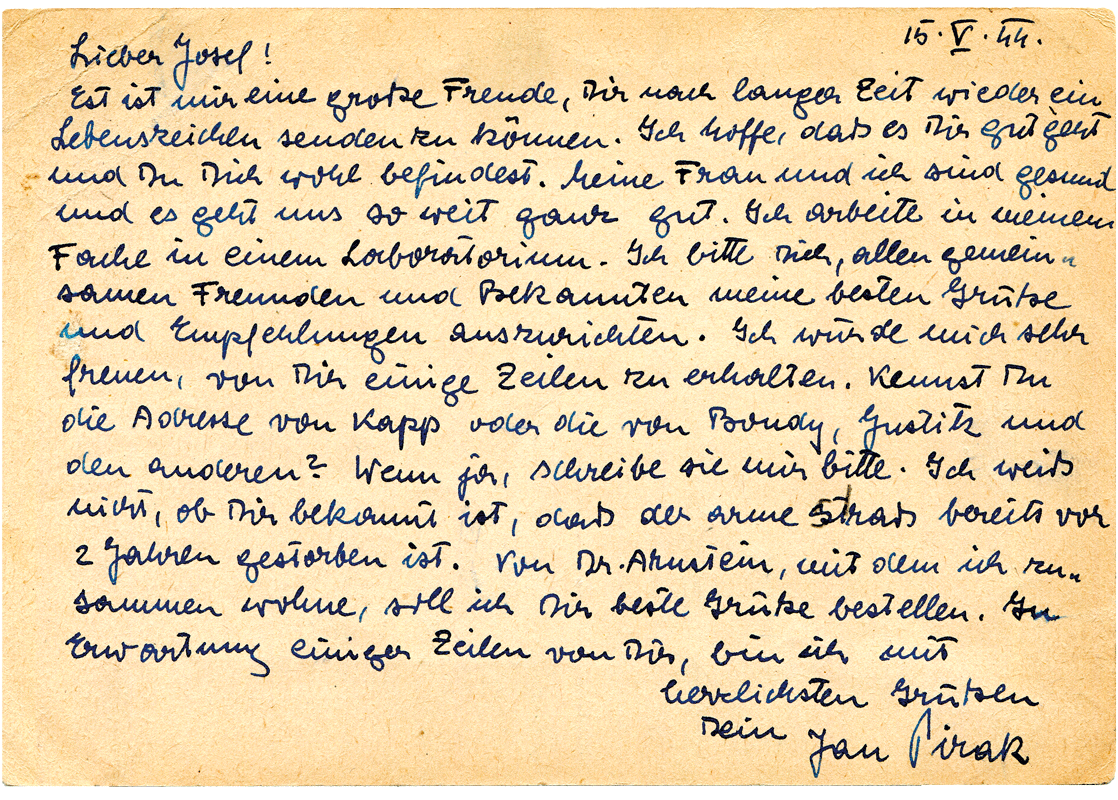
Postcard sent after lifting the mail ban, front side and back side
(Spungen Family Foundation)