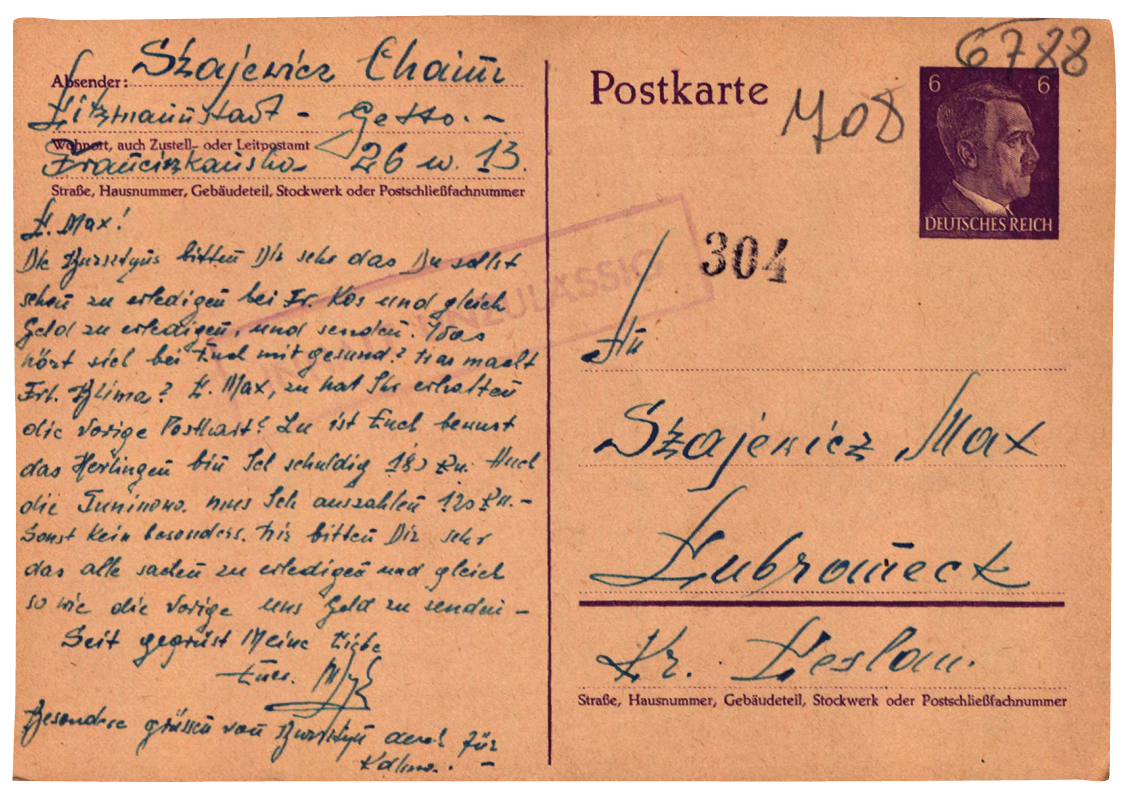
Postcard stopped by the censor due to prohibited content, front side
(Archiwum Państwowe w Łodzi)
Despite prohibitions and censorship of correspondence, it was possible to encrypt and pass on information about the tragic situation of Jews, deportations and extermination. Specific phrases were used, referring to events that only the addressees would understand. They referred to religious issues or biblical events. Diseases were often described, which by then came to mean resettlement and deportation. The meaning of words was reversed, as in the case of a wedding (khasene), which became a reference to confusion and danger.
On November 4, 1942, after the deportation from the Łódź Ghetto (“sperre”) and after the great deportation operation in the Warsaw Ghetto, a note appeared in Chronicle of the Łódź Ghetto, which clearly indicates how thoroughly correspondence was analyzed and what people managed to convey on postcards:
Chronicle of the Łódź Ghetto, November 4, 1942.
”After two weeks of a total mail embargo, postcards are again arriving from Warsaw. It has been noted that these cards no longer bear the postmark C2 (Warsaw Center). Most of the mail from the small towns in the Generalgouvernement and Warthegau is in German, or Yiddish in Latin letters, or in Polish. The majority of the correspondence makes reference to khasenes (weddings).
From this mail, one can infer that nearly all Jewish centers have been liquidated.”
Postcard stopped by the censor due to prohibited content, front side
(Archiwum Państwowe w Łodzi)
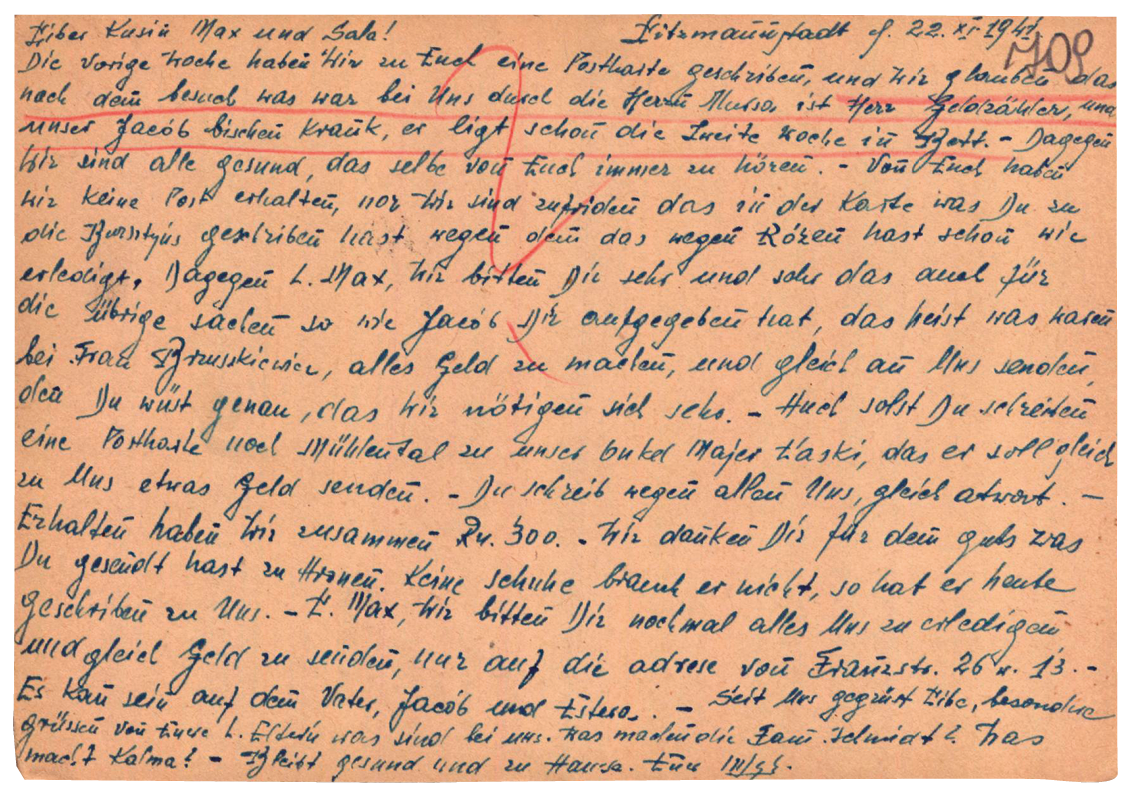
Postcard stopped by the censor due to prohibited content, back side
(Archiwum Państwowe w Łodzi)
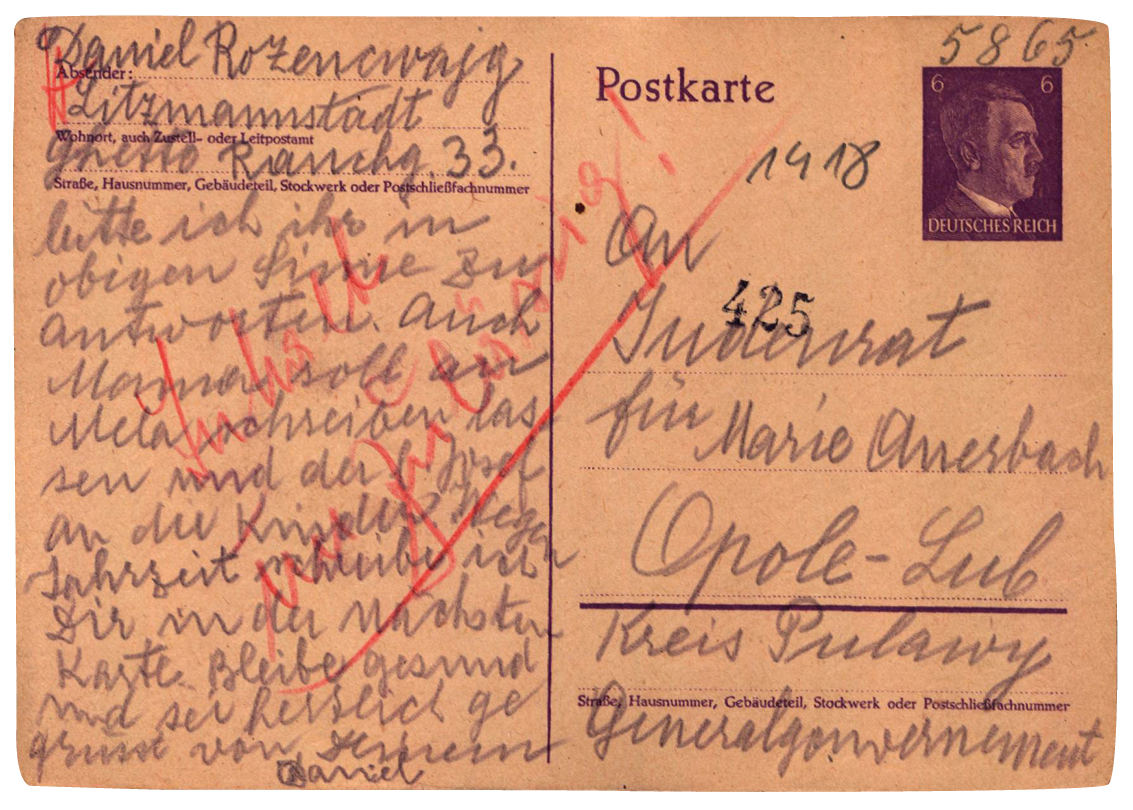
Postcard stopped by the censor due to prohibited content, front side
(Archiwum Państwowe w Łodzi)
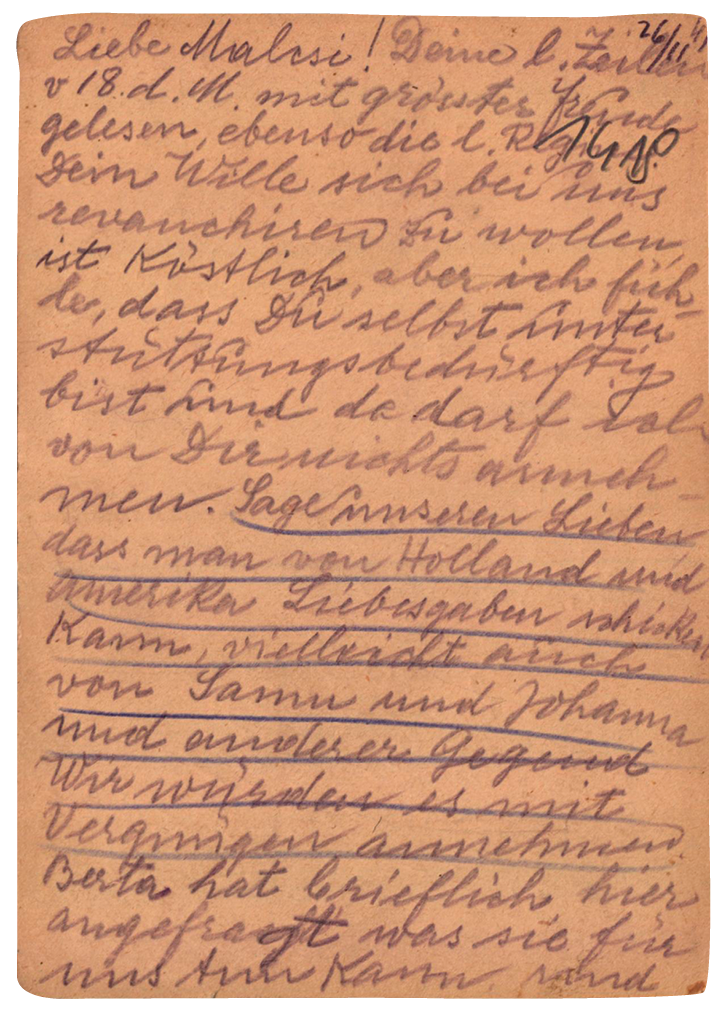
Postcard stopped by the censor due to prohibited content, back side
(Archiwum Państwowe w Łodzi)
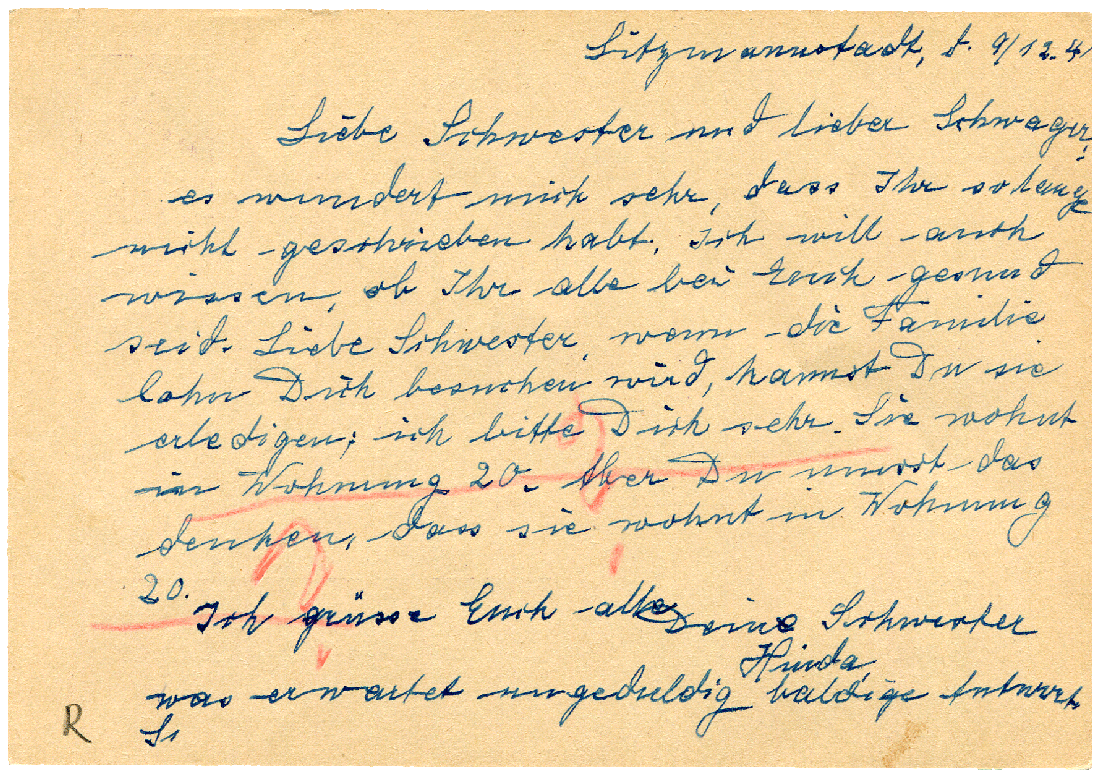
Card stopped by censors. The censor's suspicion was aroused by the repeated information about apartment 20 (Wohnung 20), with an apparently hidden message.
(Spungen Family Foundation)
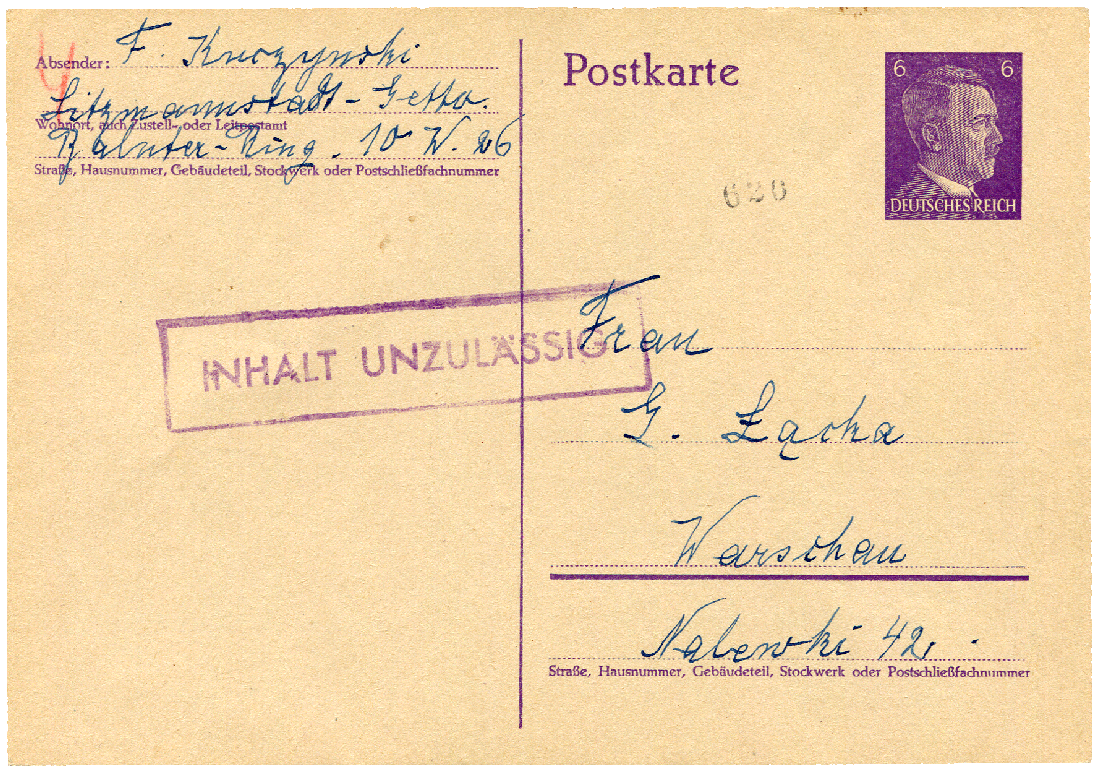
Card stopped by censors. The censor's suspicion was aroused by the repeated information about apartment 20 (Wohnung 20), with an apparently hidden message.
(Spungen Family Foundation)