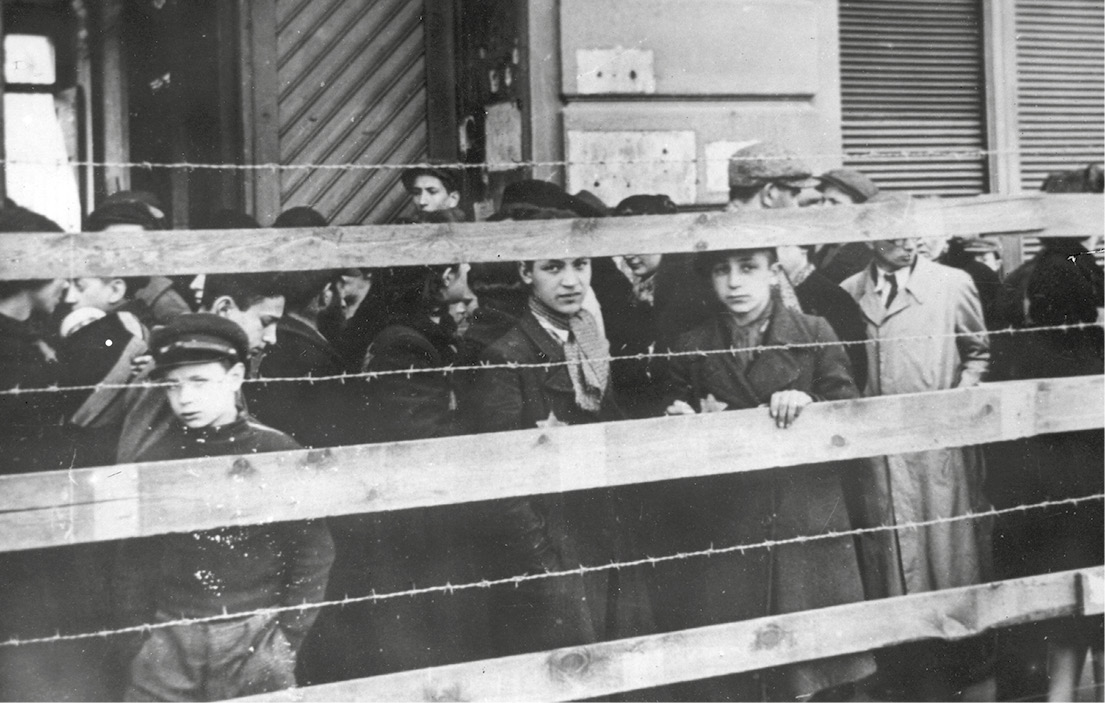
A fence surrounding the ghetto
(Muzeum Tradycji Niepodległościowych)
On February 8, 1940, the newspaper “Lodzer Zeitung” published a decree by the chief of the German police with information that a separate residential area for Jews (Wohngebiet der Juden) had been designated in the neglected districts of Bałuty and the Old Town.
Nowomiejska, Zgierska and Limanowskiego streets were excluded from that area for communication purposes, which is why wooden footbridges, landmarks of the ghetto landscape, were mounted above them.
On May 1, 1940, the ghetto area was separated from the city by a fence, guarded from the outside by the German police, and from the inside by officers of the Jewish Order Service.
On June 12, 1940, the day of the official census, the ghetto had 160,320 inhabitants. From
October 17 to November 4, 1941, 20,000 Jews from Western Europe and 5,000 Roma and Sinti from the Austro-Hungarian borderland were deported there, and followed by almost 18,000 Jews deported from the liquidated Wartheland ghettos in the first half of 1942.
The ghetto was shaken by two waves of deportations to Chełmno nad Nerem, where the extermination center was located. From January to May 1942 more than 57,000 people were deported there, and in September 1942, during the dramatic Sperre – about 20,000 children and elderly people. In the ghetto about 45,000 people died of malnutrition and disease.
Between June 23 and July 14, 1944, more than 7,000 were deported to Chelmno-on-Ner, and in August 1944, trains set off for Auschwitz-Birkenau, transporting 65,000 Jews. Only a few hundred were left in the ghetto to clean up the area.
A fence surrounding the ghetto
(Muzeum Tradycji Niepodległościowych)
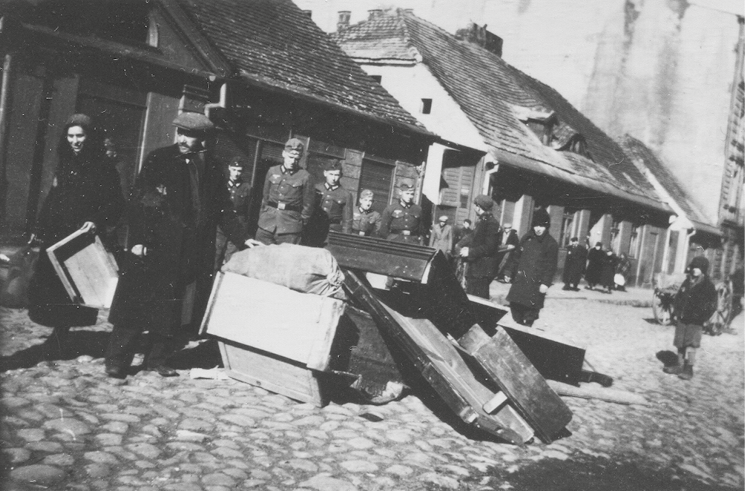
Moving to the ghetto
(Spungen Family Foundation)
The occupying authorities placed Mordechai Chaim Rumkowski at the head of the Jewish community in Łódź. Hans Biebow became the head of the German Ghetto Board (Gettoverwaltung). Rumkowski, an insurance agent before the war, and Biebow, a merchant from Bremen, came to an understanding despite the principles of Nazi politics. Rumkowski coined the motto: “Our only currency is work” and Biebow organized the demand for that work.
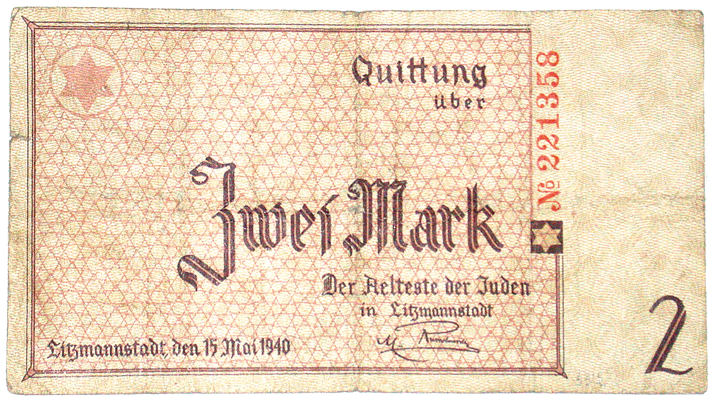
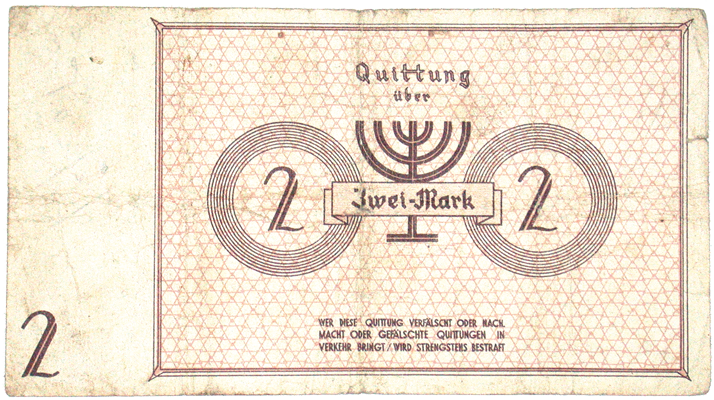
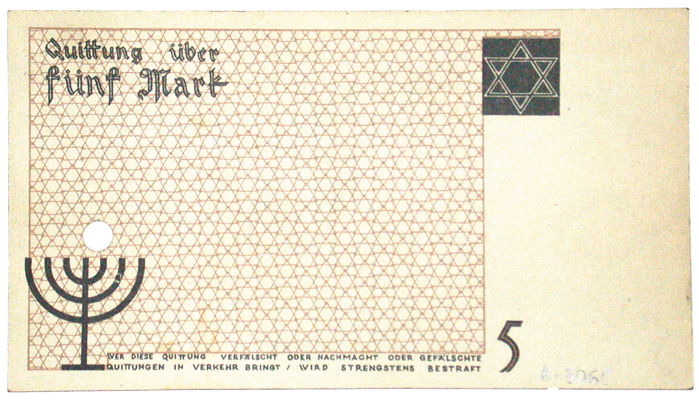
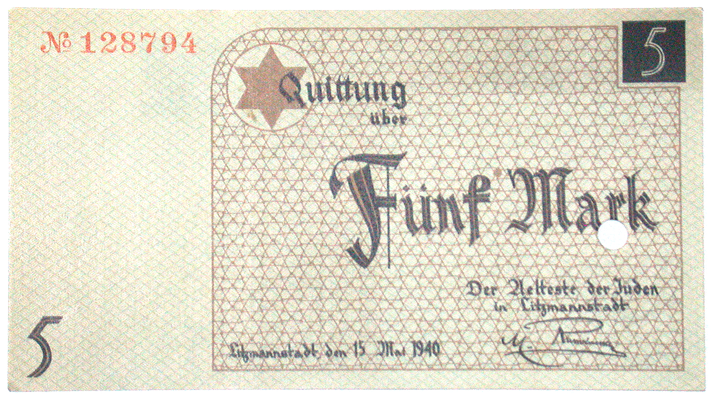
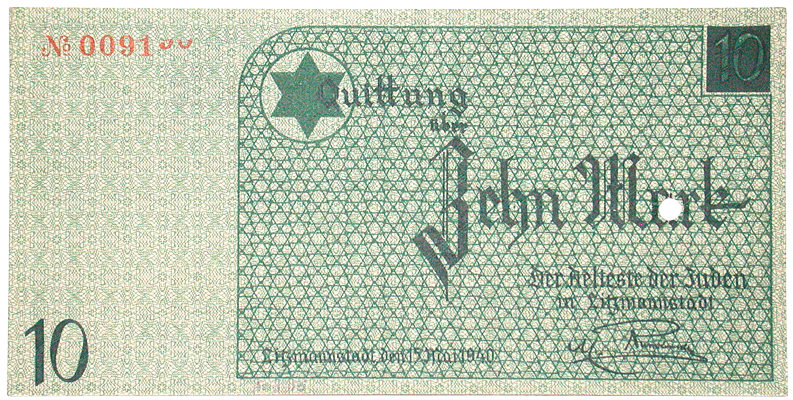
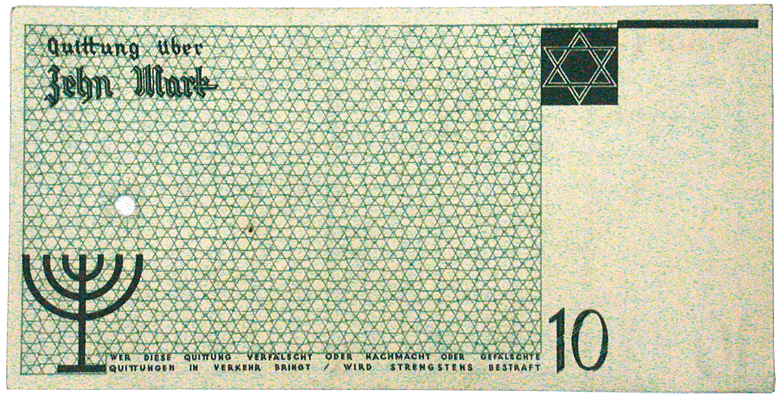
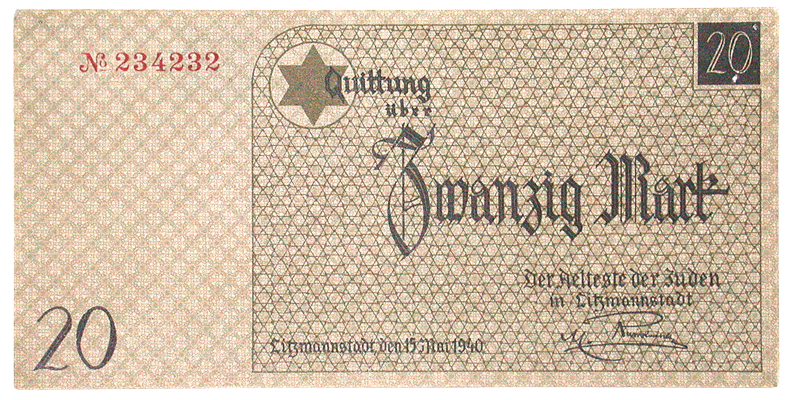
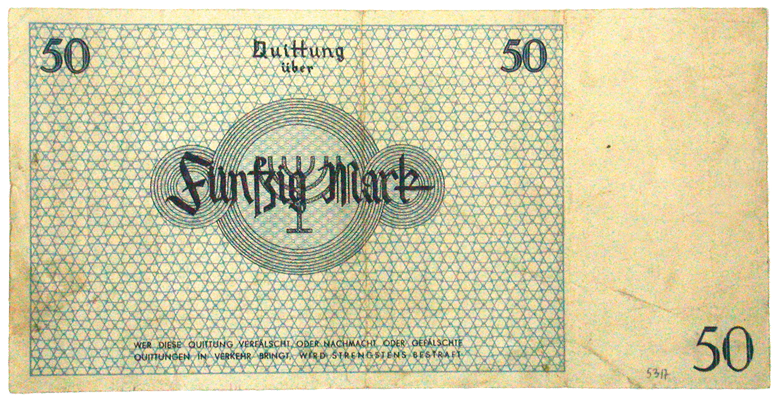
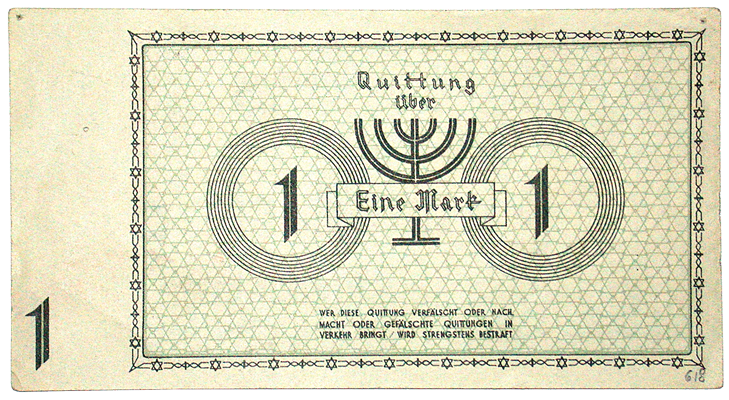
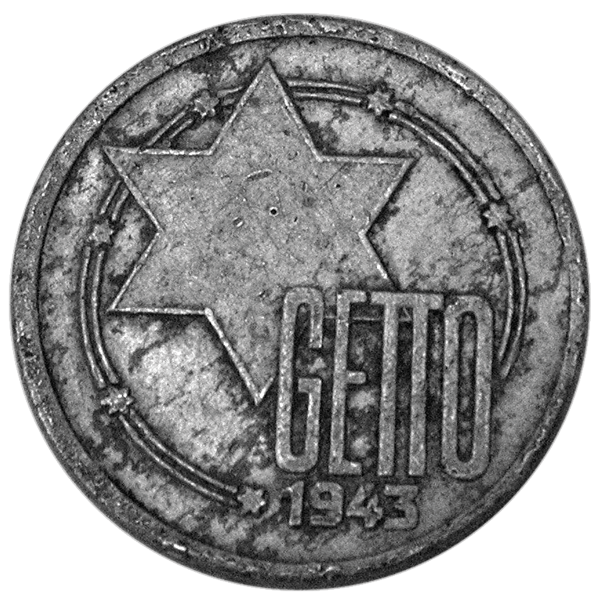
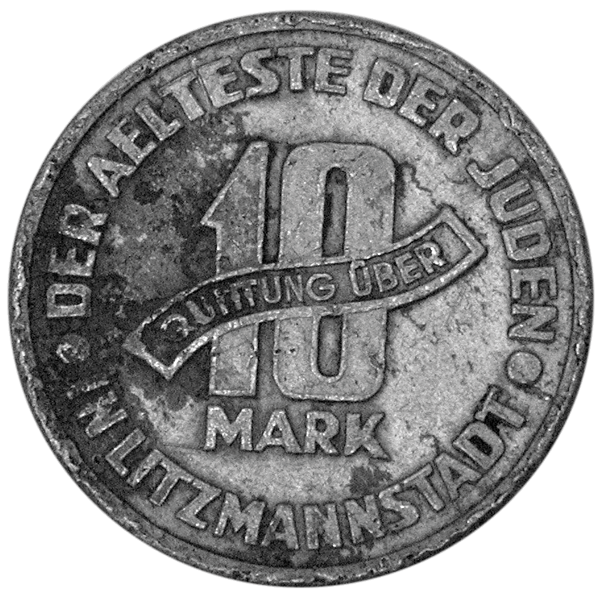
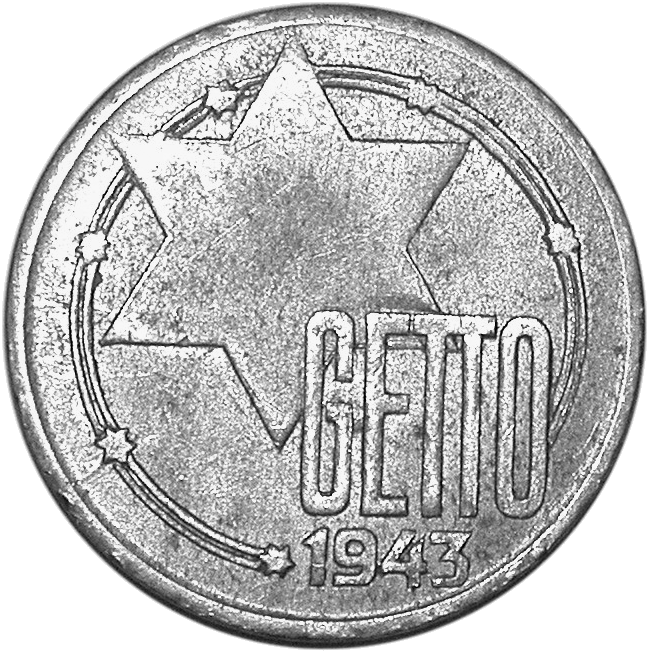
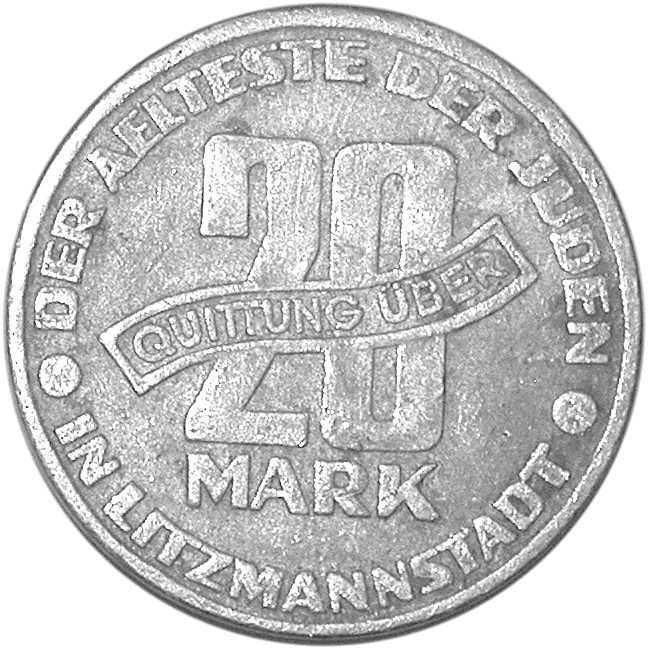
The internal organization of the ghetto was based on an extensive structure of departments regulating all areas of life. These included, among others, departments dealing with supplies, production, allocation of apartments, health, funerals, education and population records. The Order Service, the Supreme Chamber of Control, the Court and prosecutors were established for the control and administration of justice. The Issuing Bank was responsible for the currency of the ghetto, and on the order of the occupying authorities the last valuable personal belongings were sold to the Bank of Purchase at a much lower price. The Post Department was appointed to perform tasks related to handling the post.
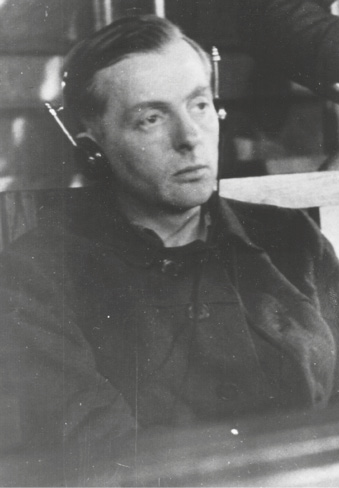
Head of Gettoverwaltung (picture from the the post-war trial)
(Archiwum Państwowe w Łodzi)
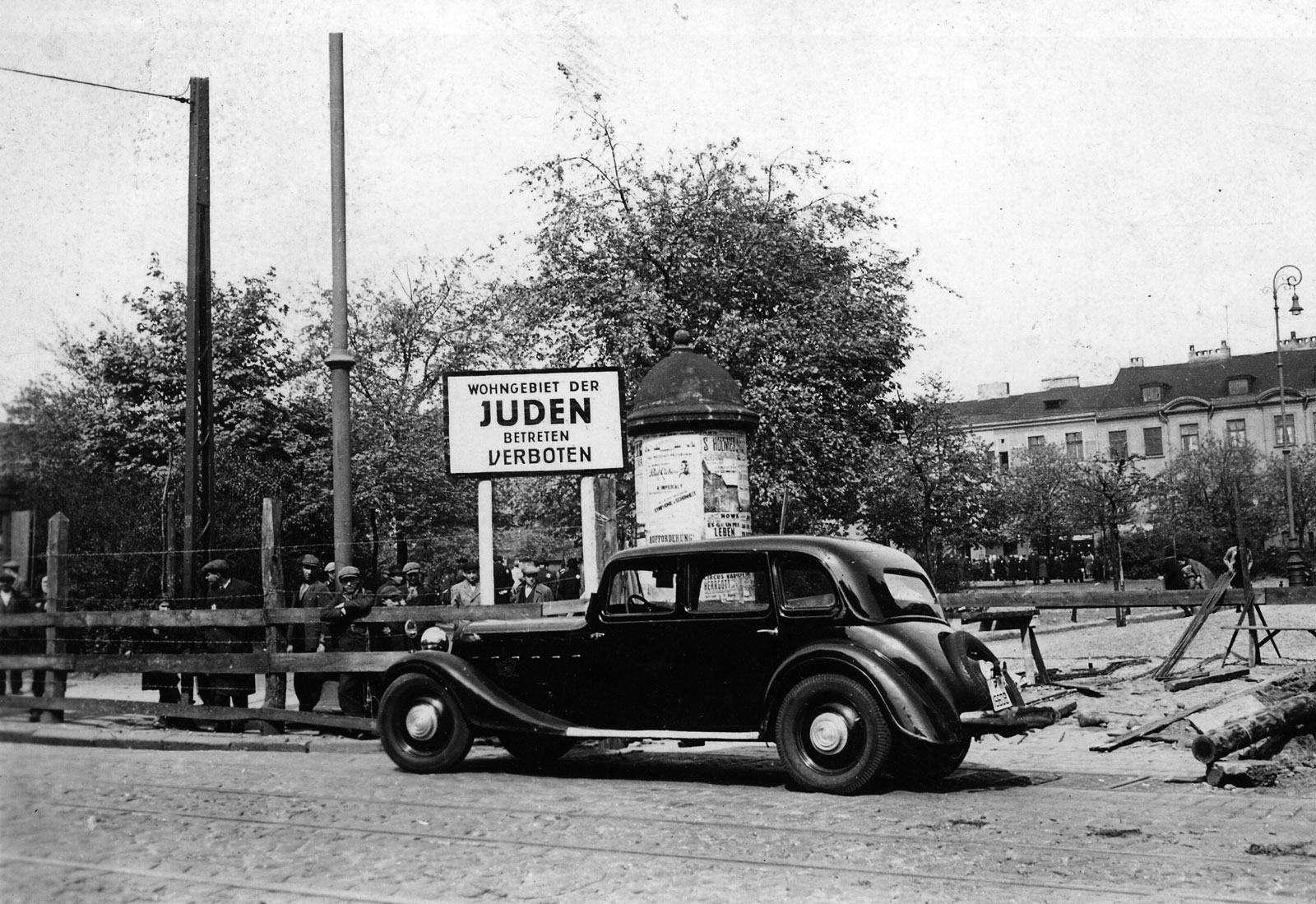
Boards near the ghetto borders
(Muzeum Tradycji Niepodległościowych)