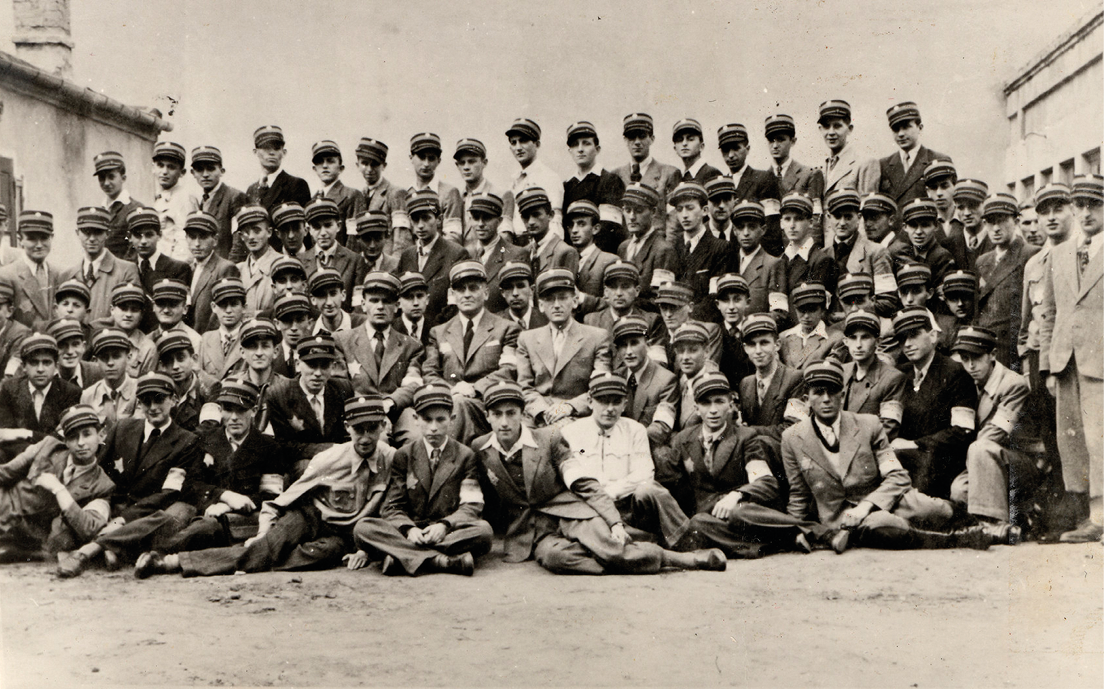
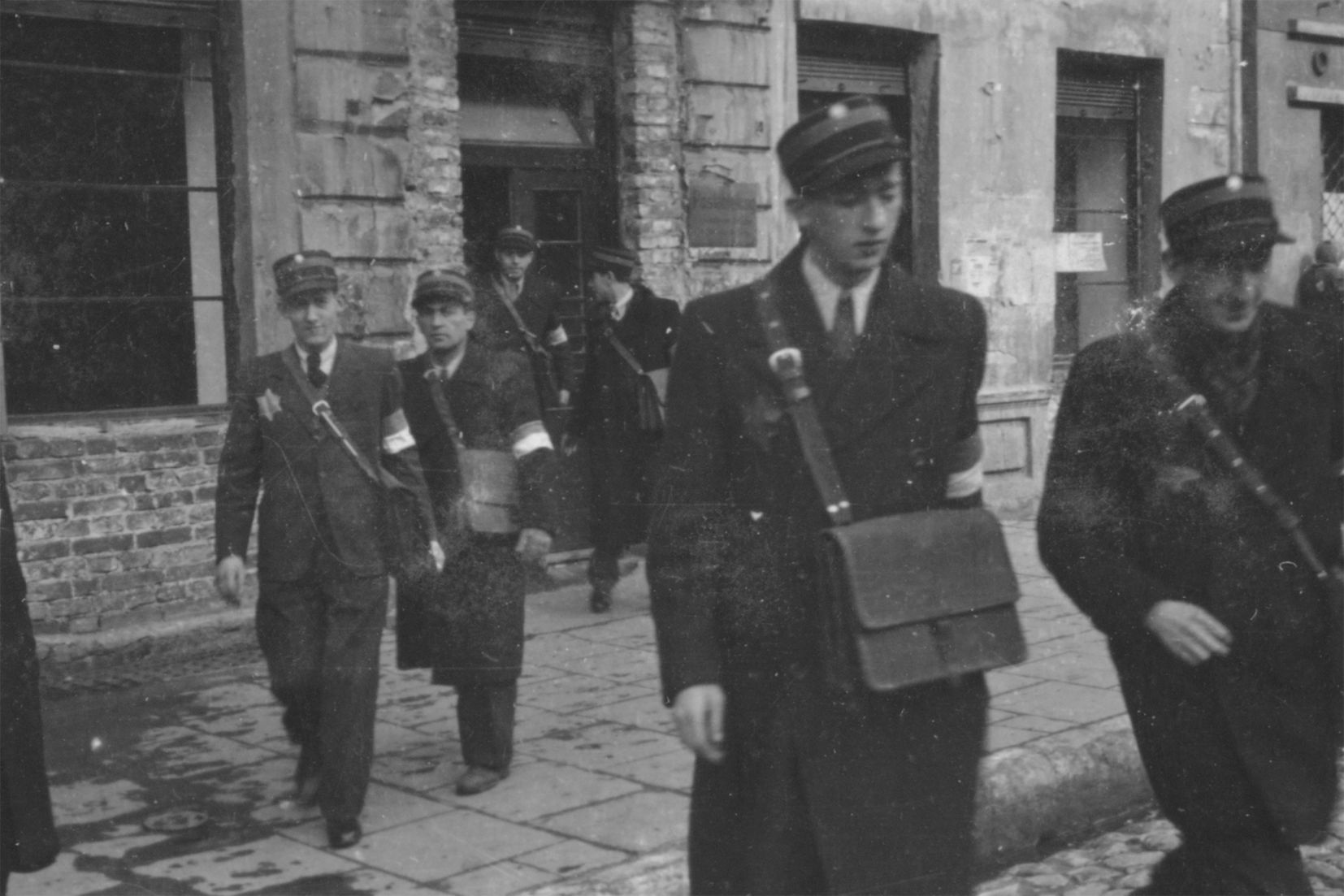
Postmen
(United States Holocaust Memorial Museum)
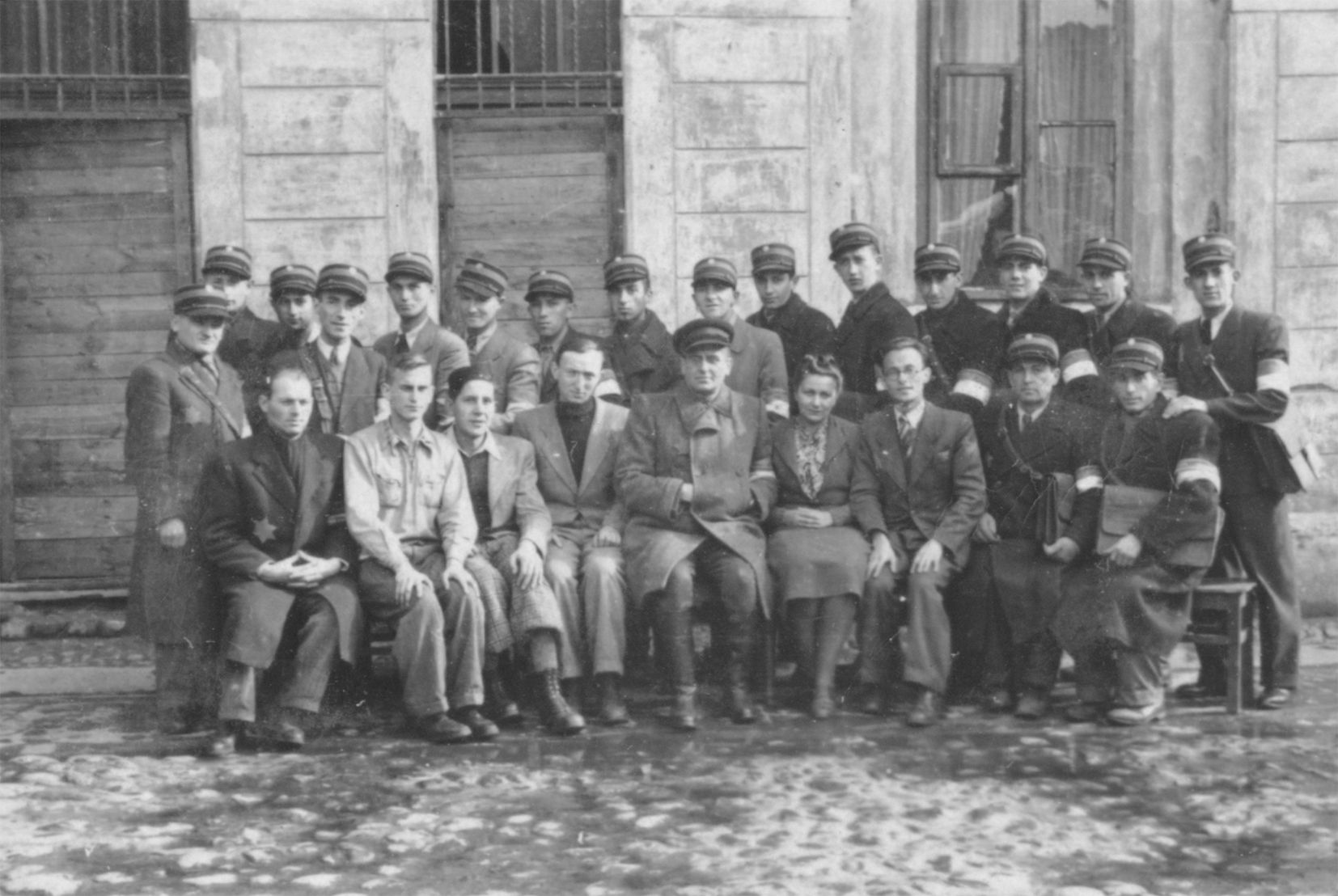
By the end of 1940, 149 the staff of the Post Department consisted of 149 employees. By the summer of 1942 their number rose to 183. After deportations in the spring and autumn of 1942, the number of employees was reduced as a result of decreasing volume of mail. In mid-1943, 70 people worked at the post office, including 40 postmen.
Despite the decreasing mail volume, the postmen were burdened with work, mainly official internal mail. In mid-1942, it was estimated that up to 4,000 deliveries were processed daily, and one postman handled up to 550 items each day. In mid-1943, up to 2,000 items were processed daily, and the monthly volume reached 60,000 items.
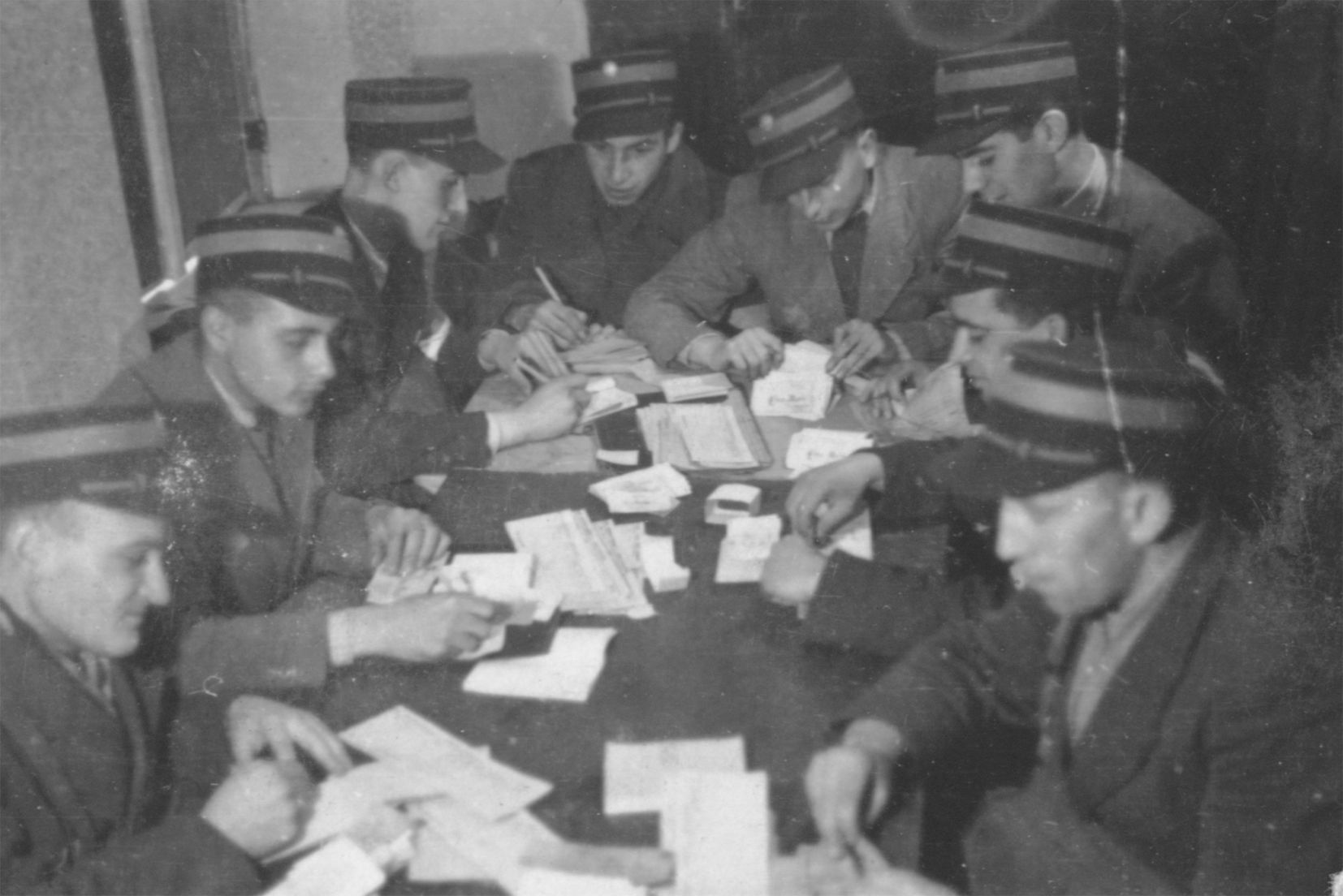
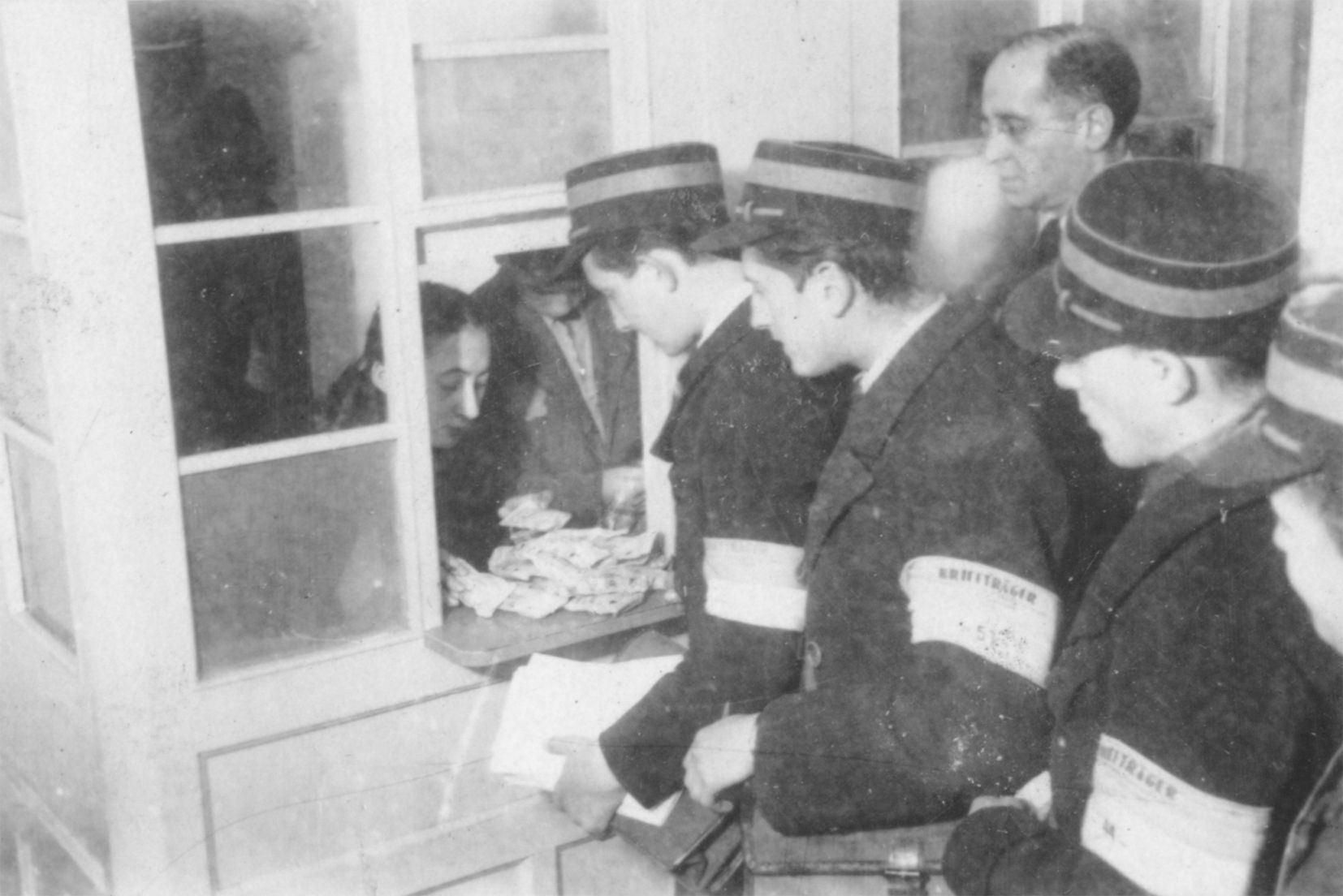
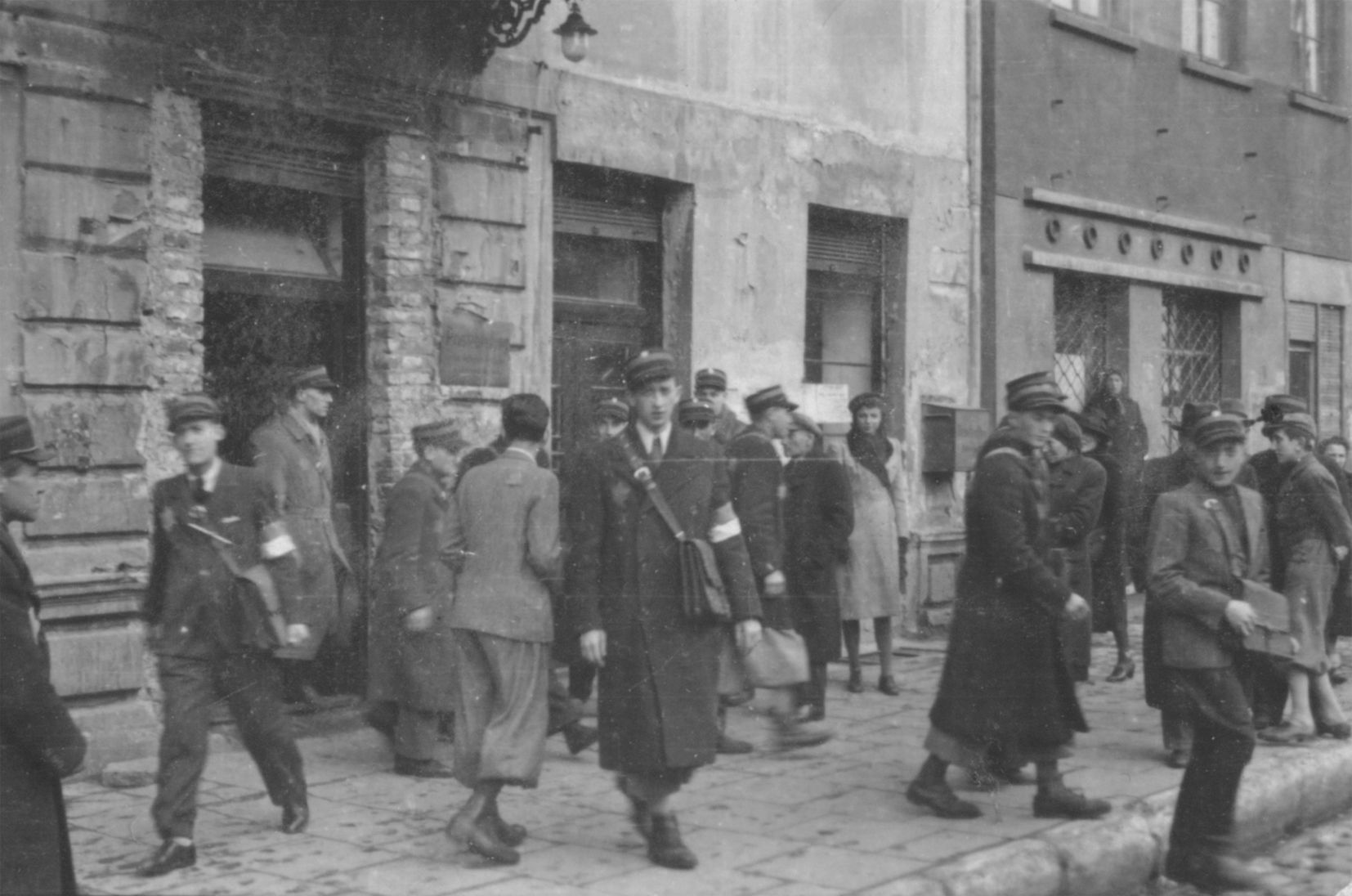
The postmen wore dark suits as uniforms with an armband on the left shoulder and caps with green rim and green string. Some postmen used bikes purchased specially for them. One of the postmen was Nachman Zonabend, who hid and saved the most important documents from the ghetto Archives.
The responsibilities of officials working in the Post Department included receiving and registering mail, handling money transfers, selling stamps, sorting and issuing parcels and expediting mail.
In order to fund their wages, charges were levied both for mail delivered and sent outside the ghetto, regardless of the tariffs of the German post office, which opened an opportunity of fraud.
Chronicle of the Łódź Ghetto, January 16, 1942.
“In today’s Announcement No. 194, the Eldest of the Jews warns the population against a gang of fraudsters who, pretending to be post office officers, hand out notices on mail to be collected, extorting the appropriate fee. The announcement reminds that all postmen of the Post Department are provided with IDs and all notices on mail delivery are distributed only by them.”
Postmen
(United States Holocaust Memorial Museum)
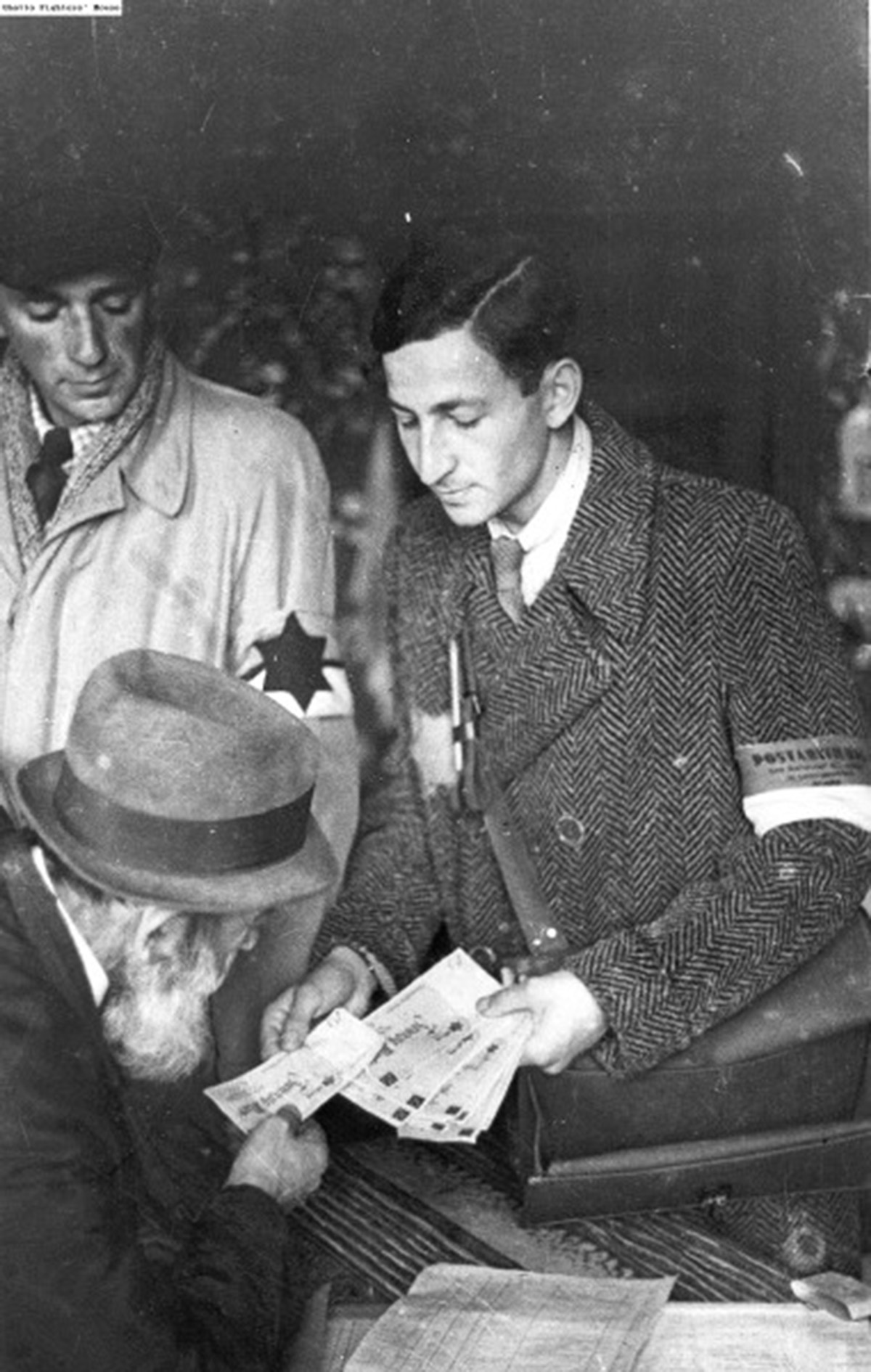
Nachman Zonabend delivering unemployment benefits
(Spungen Family Fundation)

From the left: Herbert Grawe, NN, Jakub Dawidowicz
(Archiwum Państwowe w Łodzi)
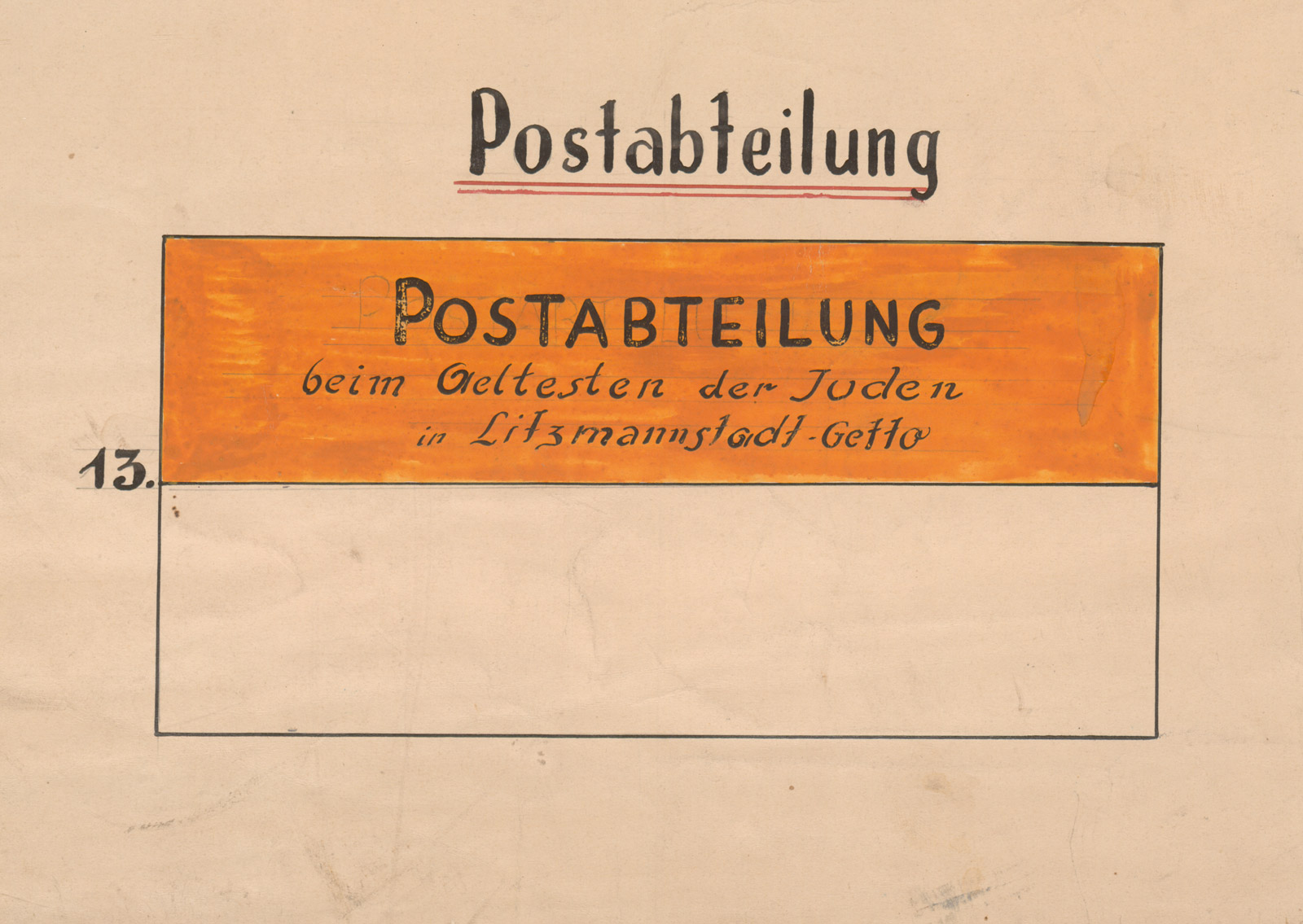
Postman’s armband design
(Archiwum Państwowe w Łodzi)

Postman’s cap with green rim and green string
© Jüdisches Museum Frankfurt am Main / foto: Walter Genewein
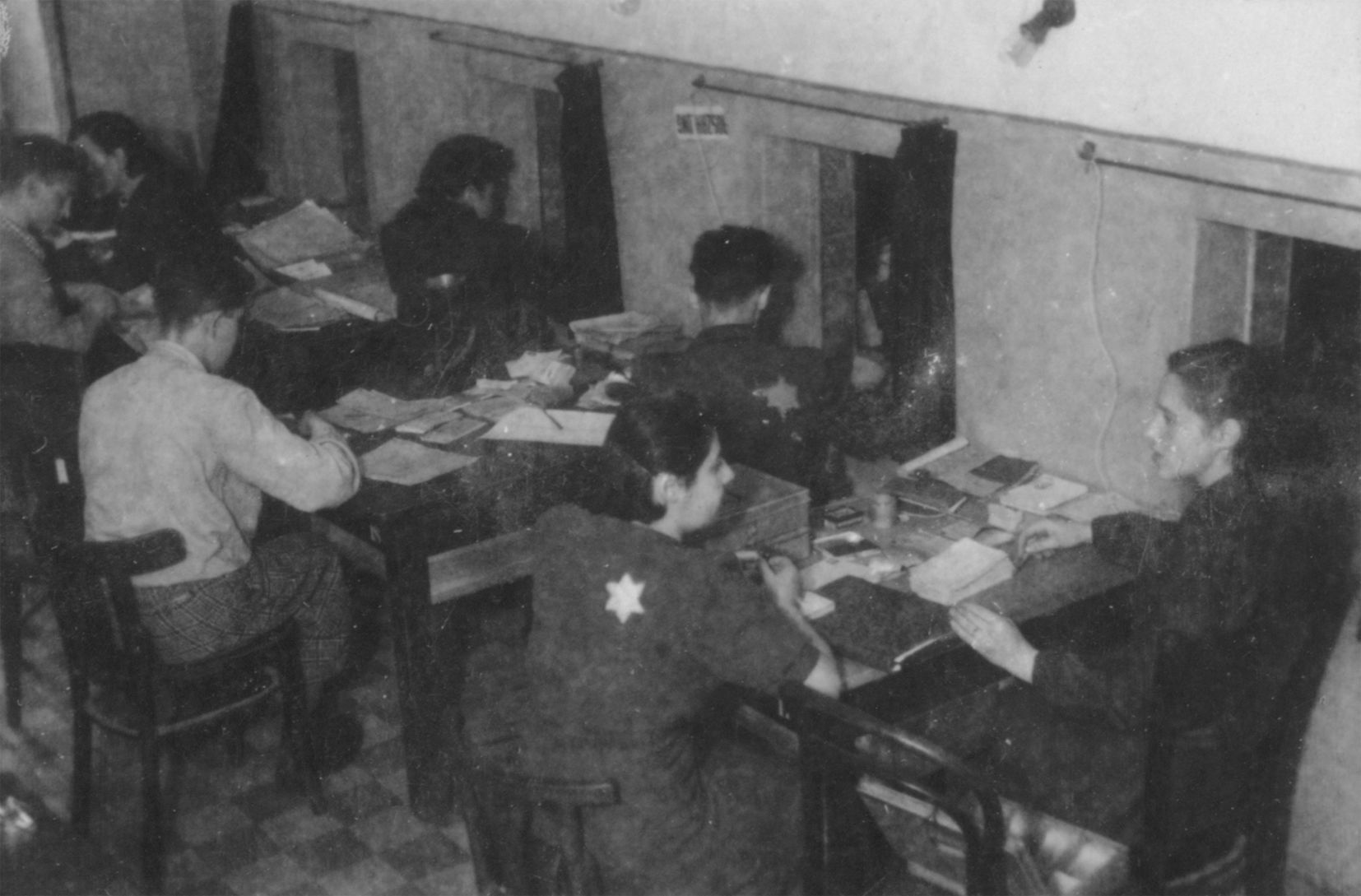
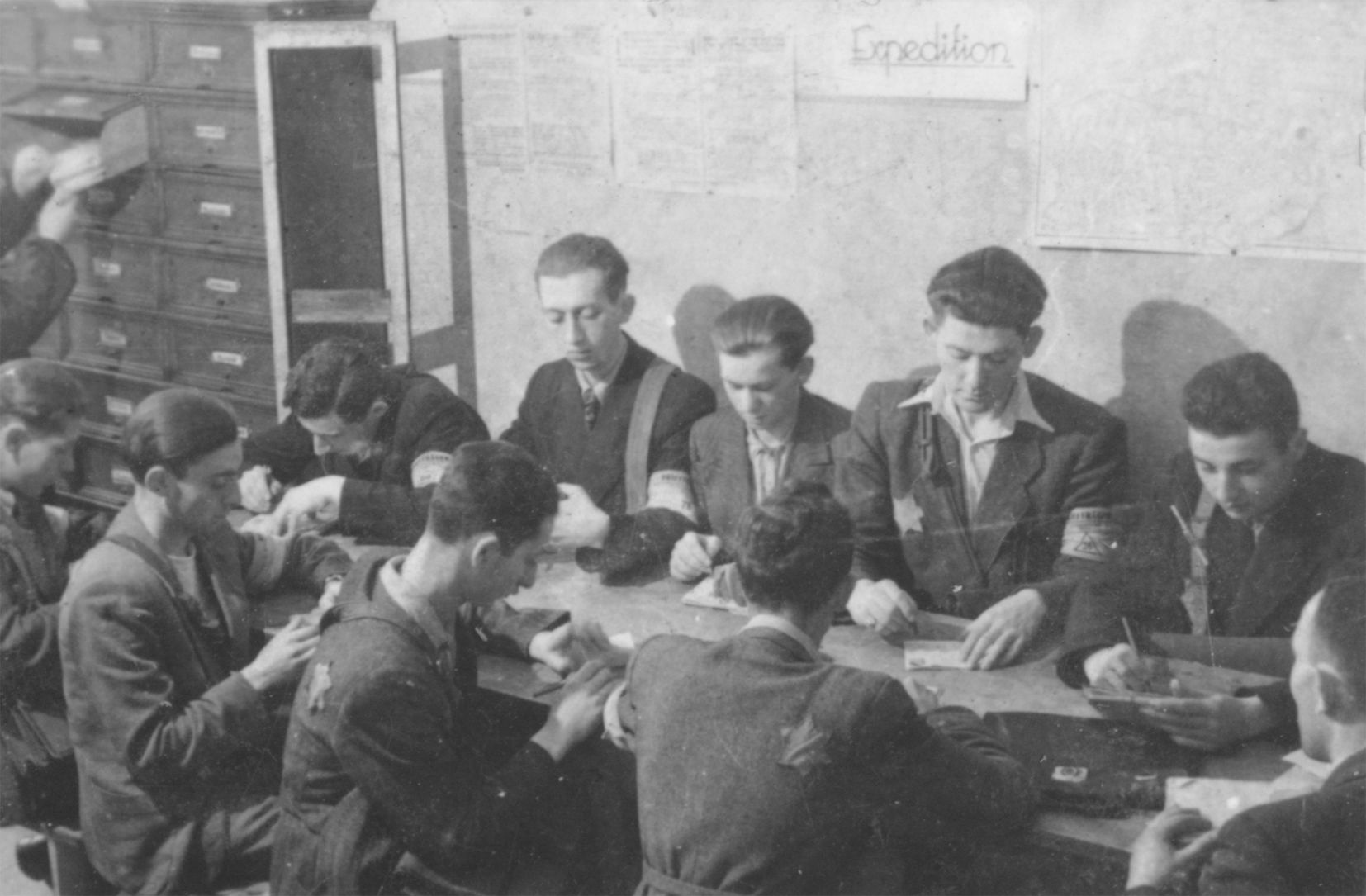
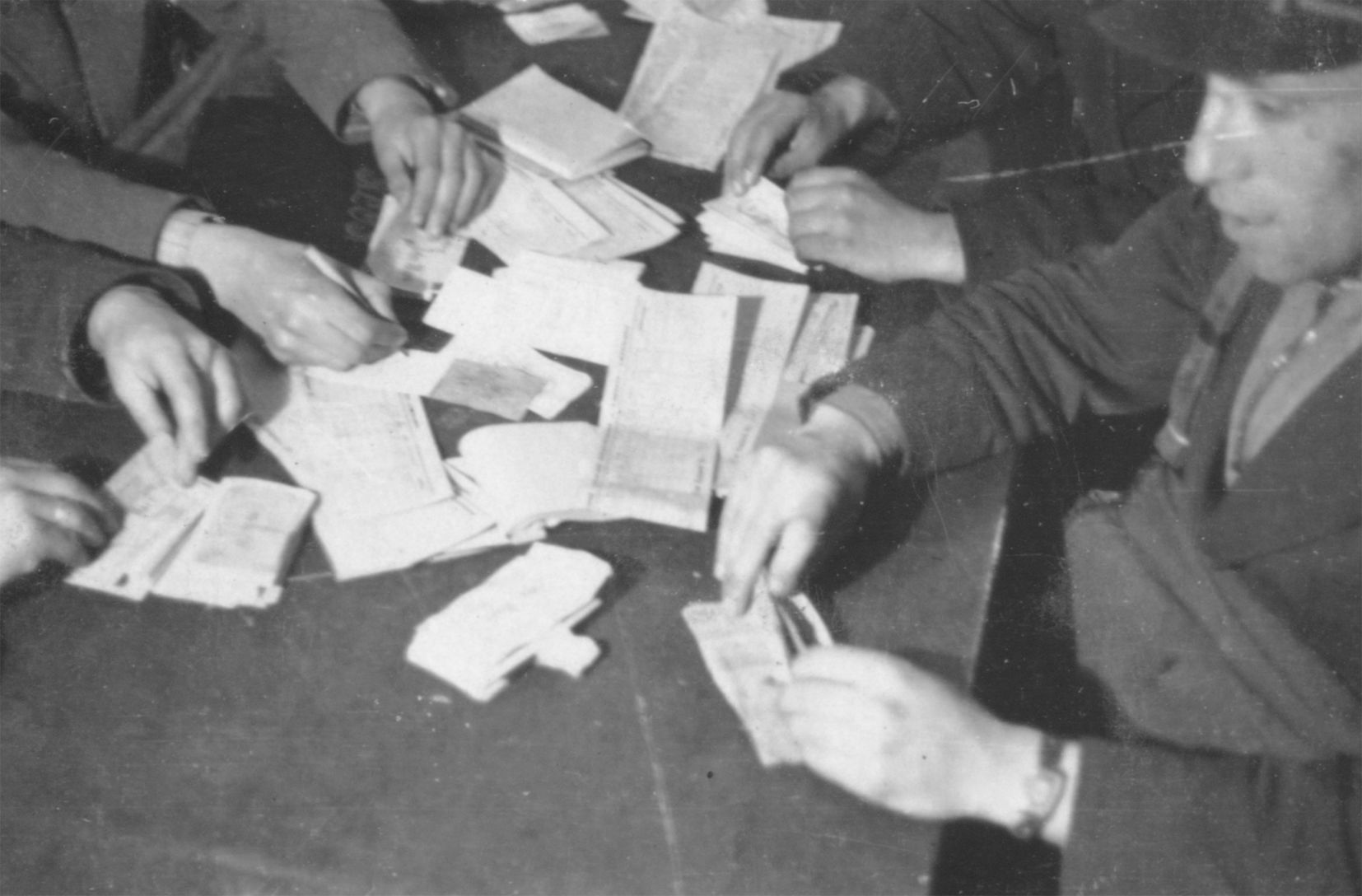
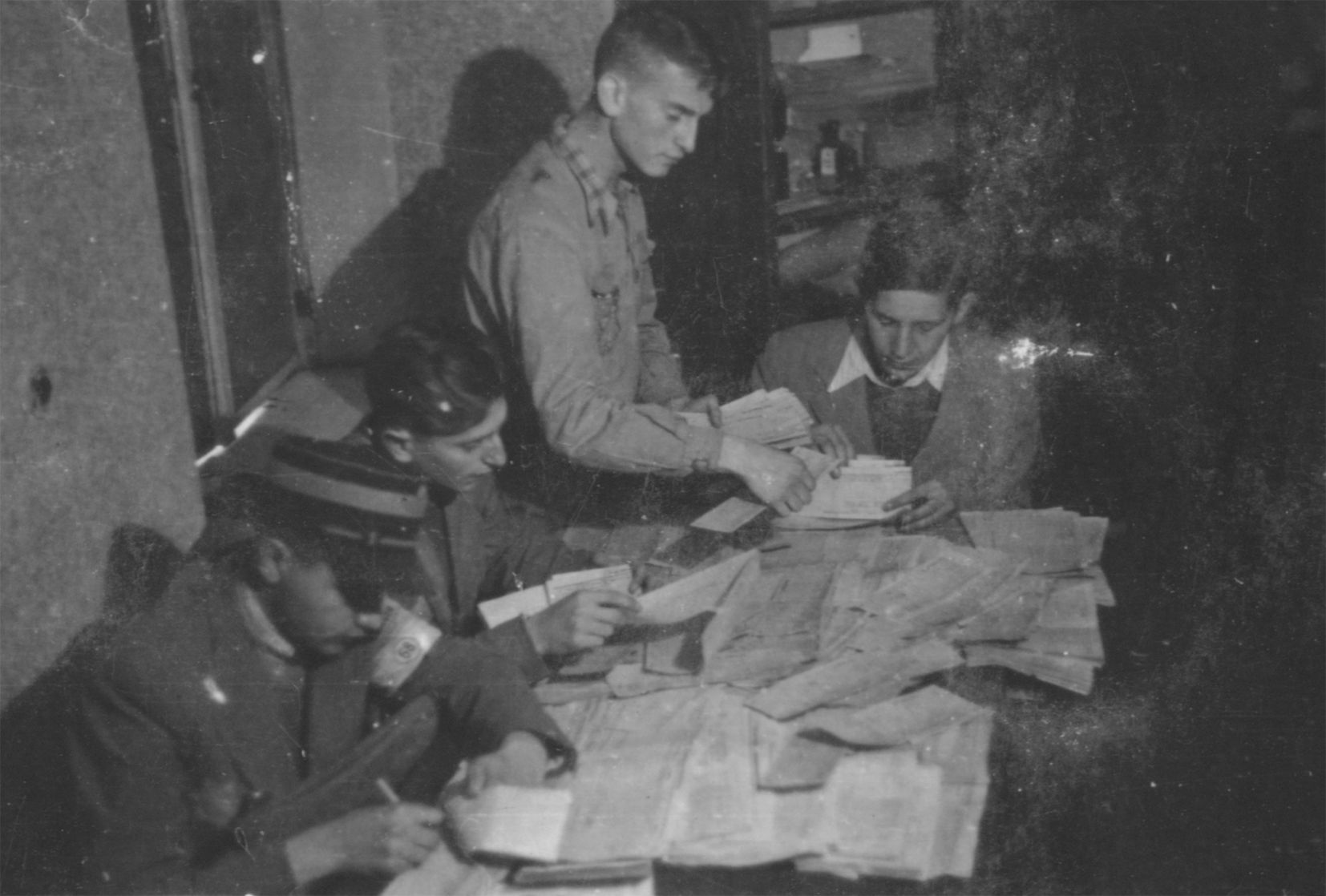
Postmen at work
(Archiwum Państwowe w Łodzi)