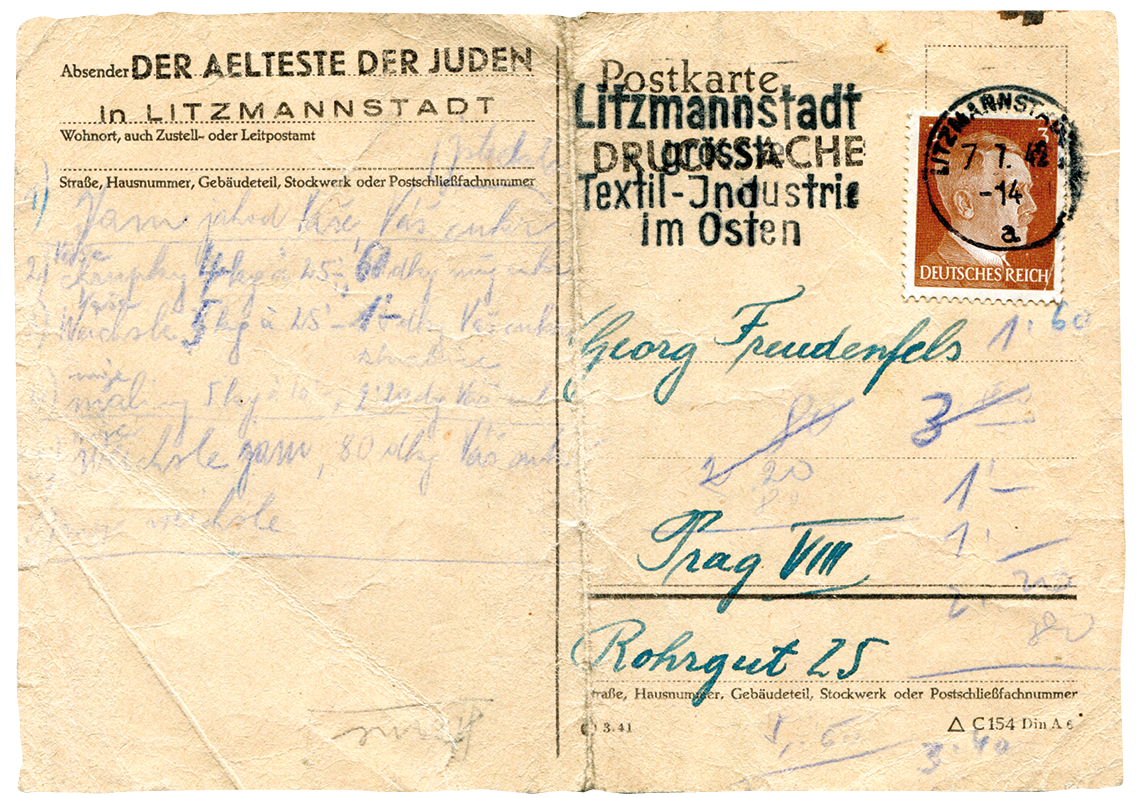
Pre-printed postcard sent from the ghetto
(Spungen Family Foundation)
After a ban on outgoing mail was introduced in the ghetto on January 5, 1942, the only items allowed were forms confirming that the sender received money or lived in the ghetto. The permission to send such pre-printed postcards was granted in March 1942. Initially it was allowed to send 30,000 postcards a month, in November 1942 the number was reduced to 20,000. The ghetto printing house at 10 Brzezinska Street was responsible for their preparation.
Cards confirming residence in the closed district, which were a response to hundreds of questions sent to the ghetto by people who had lost contact with their loved ones, were filled in by ghetto officials, and their nominal sender was the Head of the Elders of the Jews.
In mid-1943, unfortunately, this illusory opportunity for contact with the outside world was also taken away.
Chronicle of the Łódź Ghetto, June 18, 1942.
”A notice was posted in front of the post office to the effect that the pre-printed postal cards that are allowed for use in the ghetto can be sent only to Jews. At the same time the notice calls attention to the fact that when addressing pre-printed postal cards to Jews residing in the Old Reich, it is absolutely mandatory to add the names “Israel” or “Sara”. This is the personal responsibility of the sender.”
Chronicle of the Łódź Ghetto, November 4, 1942.
”Printed matter: Previously, the ghetto was allowed to mail out 30,000 pre-printed postal cards. Now the limit has been reduced to about 20,000. This number now suffices, unfortunately, because the overall volume of the mail has automatically declined as a result of the resettlements.”
Chronicle of the Łódź Ghetto, July 27, 1943.
”From the Post Office. By order of the [German] authorities, effective immediately, all use of the so-called greeting cards (pre-printed) has been terminated.”
Pre-printed postcard sent from the ghetto
(Spungen Family Foundation)
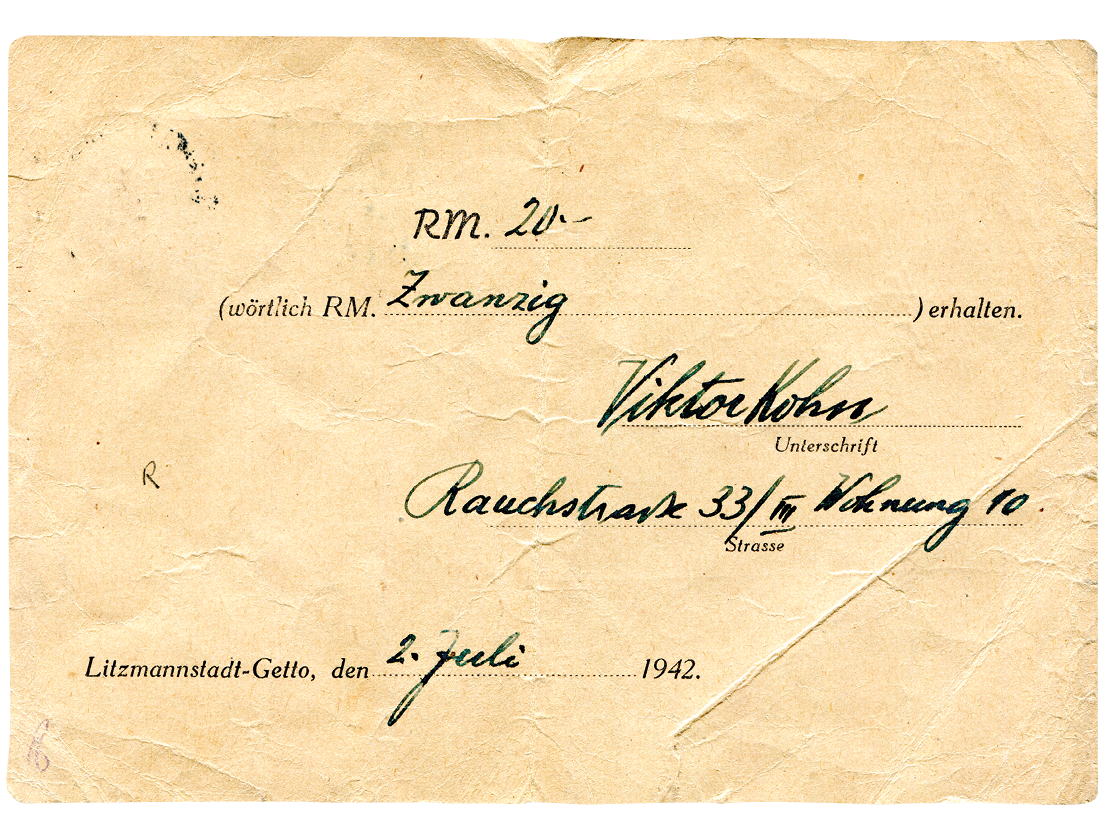
Pre-printed postcard sent from the ghetto
(Spungen Family Foundation)
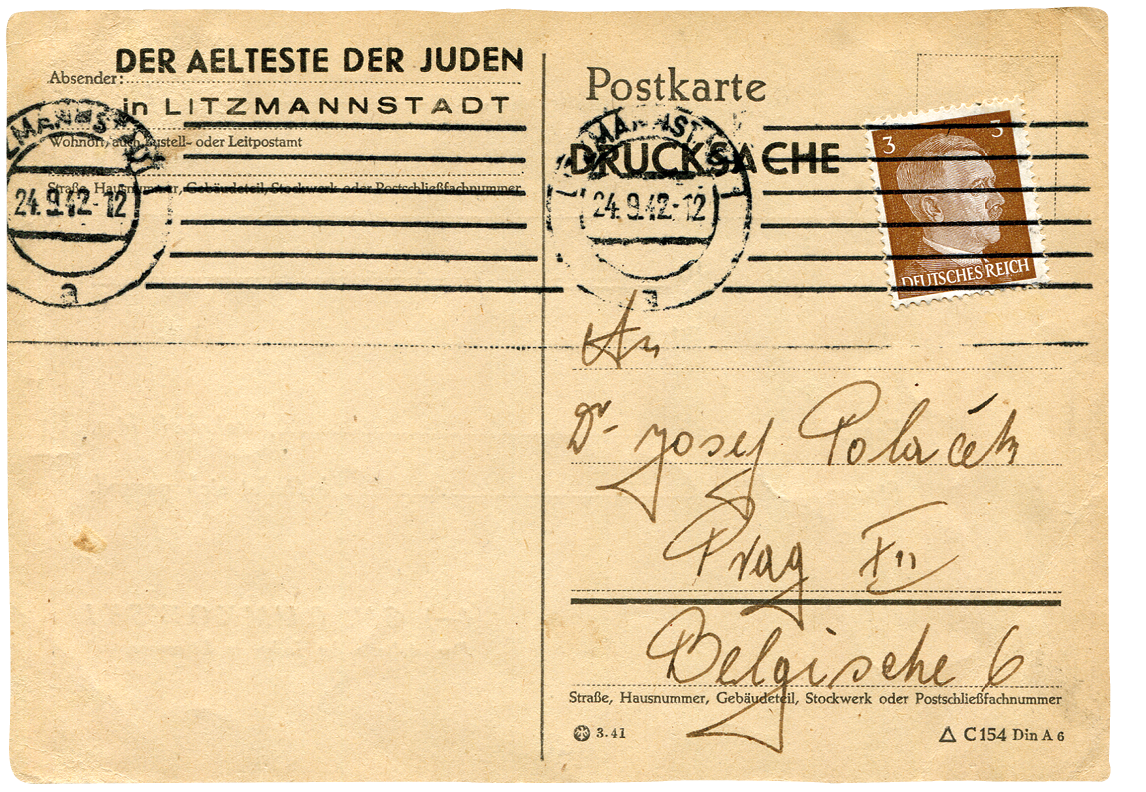
Pre-printed postcard sent from the ghetto
(Spungen Family Foundation)
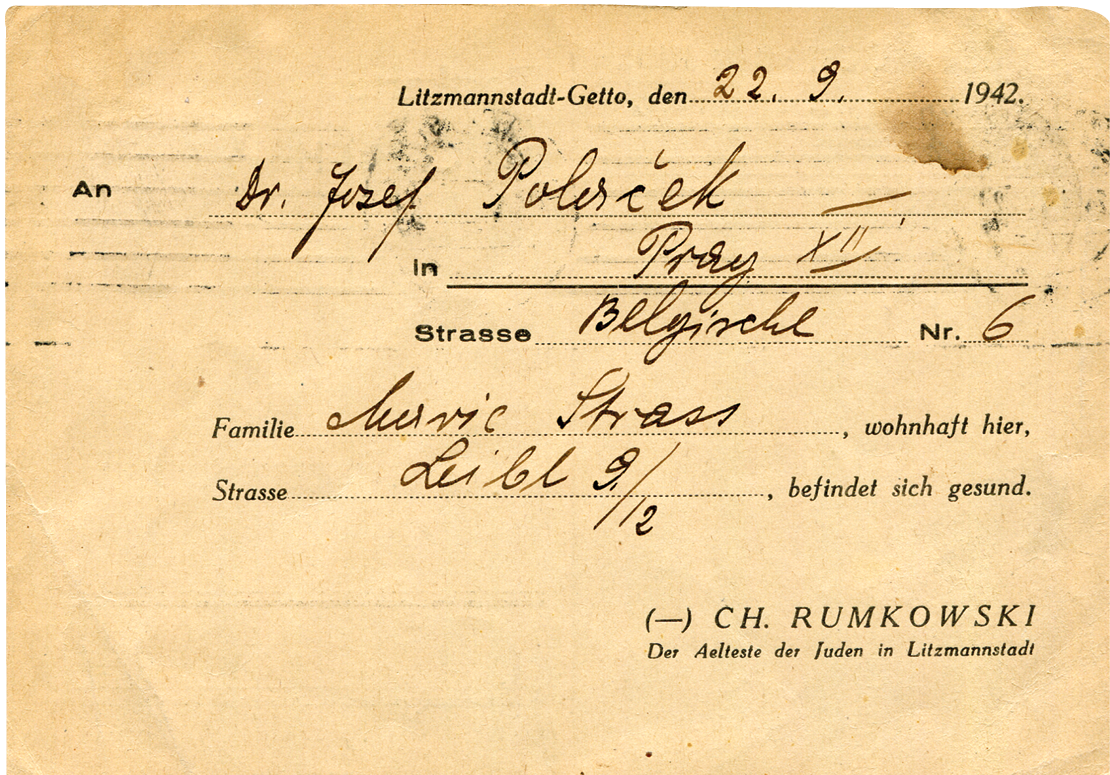
Pre-printed postcard sent from the ghetto
(Spungen Family Foundation)
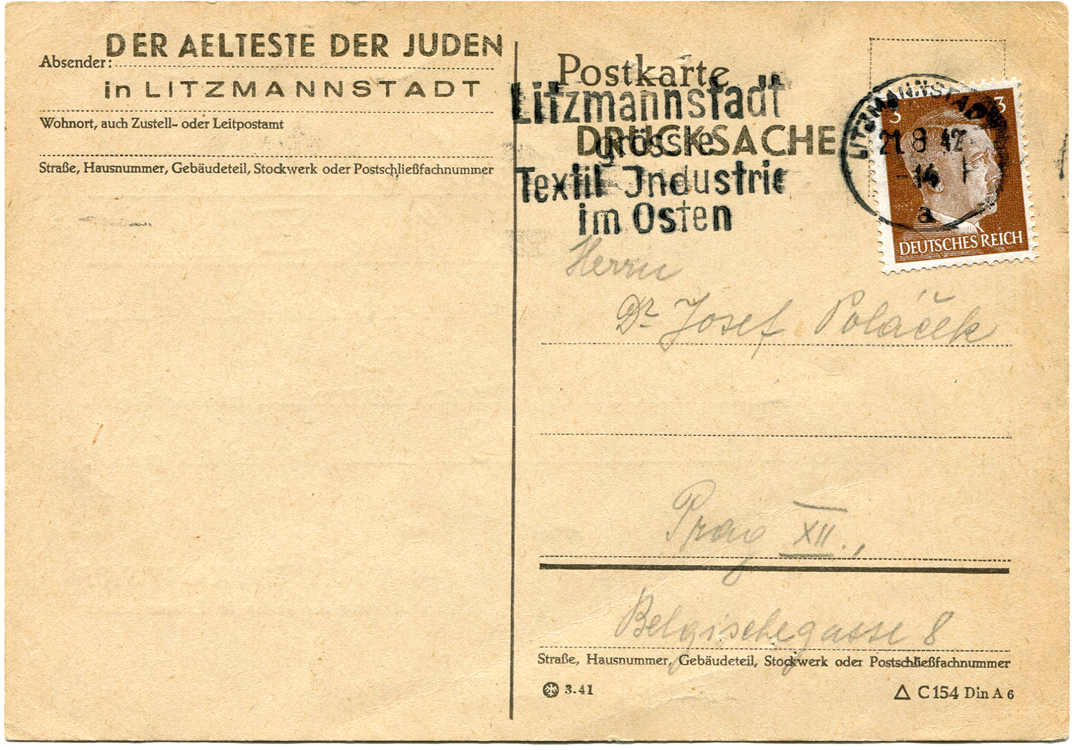
Pre-printed postcard sent from the ghetto
(Spungen Family Foundation)
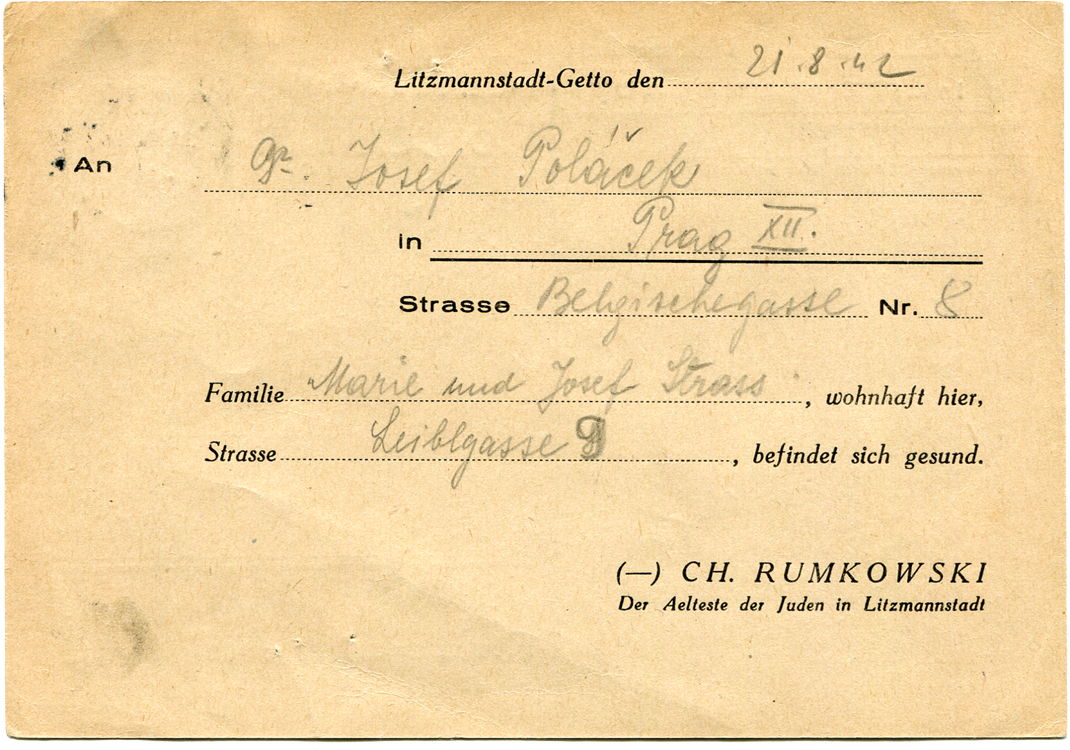
Pre-printed postcard sent from the ghetto
(Spungen Family Foundation)