Cut
off from the city, the ghetto's population began using the post
office primarily to contact friends and request food parcels. Above
all, they contacted their neighbors in Lodz. This took such a massive
turn that on June 3, 1940, the German authorities banned the sending
of parcels from the city, encouraging people to send the equivalent
of the products in cash, deposited in a special ghetto account in the
city's cash register. Food parcels could be sent from abroad, which
was understood to include the General Government.
In
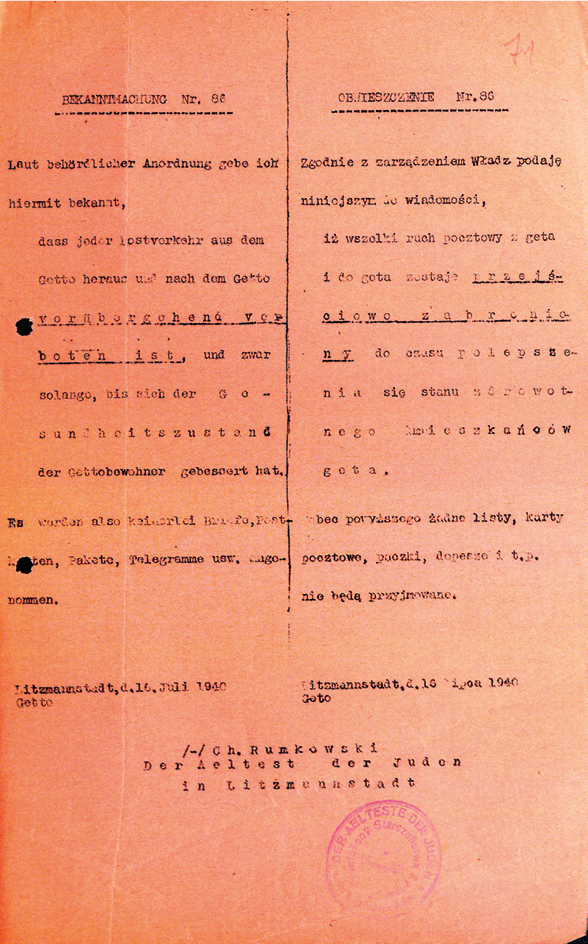
mid-July 1940, the first mail ban,
referred to in the ghetto as “Postsperra,” was introduced. It was
justified by sanitary requirements, namely the outbreak of dysentery.
The
suspension of postal traffic was lifted as of September 16, with only
postcards, letters up to 20 grams in unsealed envelopes and telegrams
being allowed to circulate. Food parcels were still not allowed to be
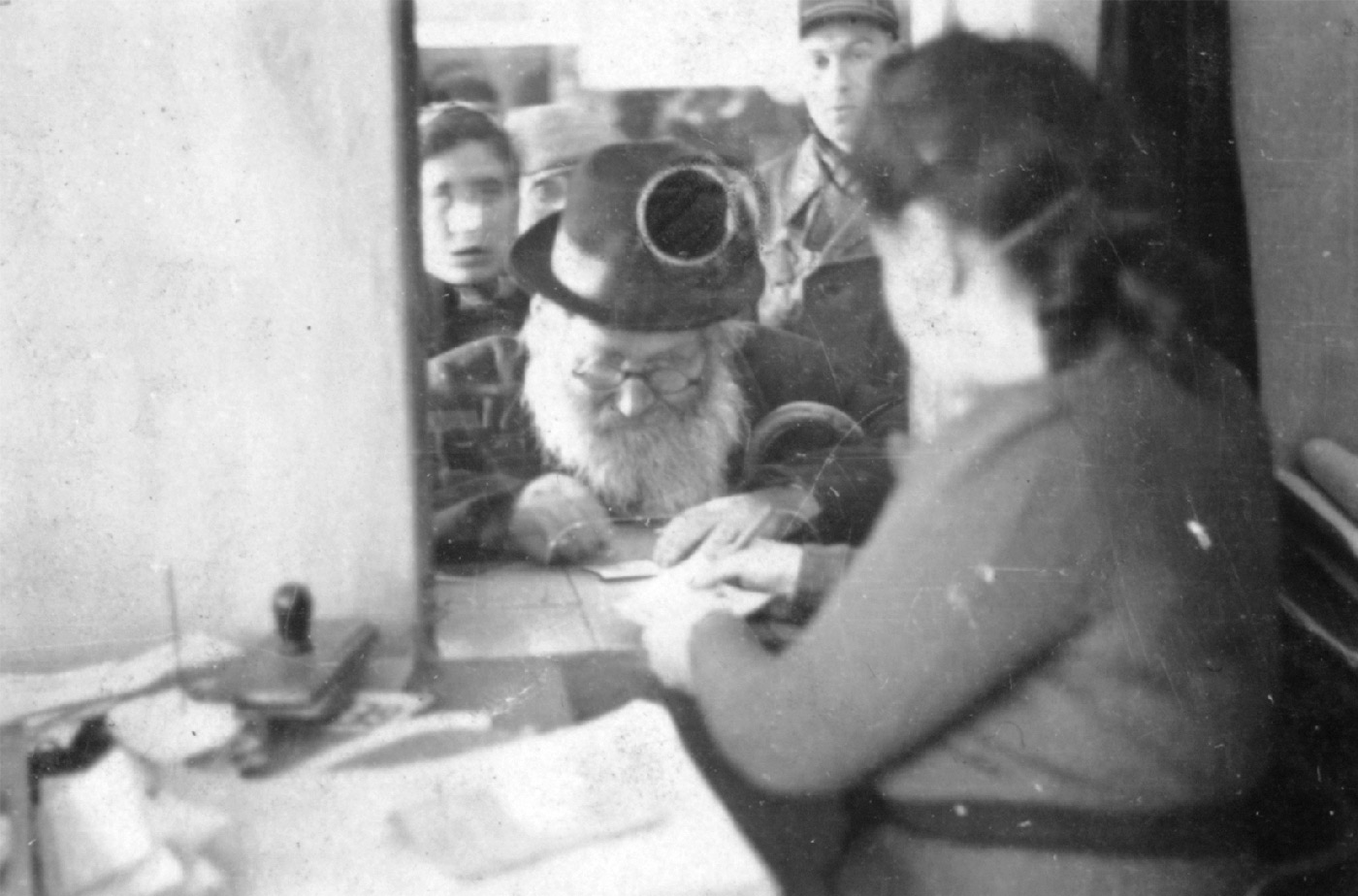
sent, only money shipments. Restrictive was the sender's address,
which had to be entered at the postal window upon presentation of
documents. This was a procedure that enforced self-censorship of
correspondence.
Stakeholder at the post office window
(Archiwum Państwowe w Łodzi)

The
ban on correspondence extended to those deported to the ghetto in the
fall of 1941. 20,000 Jews from the Reich and the Protectorate. The
German authorities allowed them to use the postal service only on
December 4, six weeks after the first transport arrived in the
ghetto, provided they followed strict rules.
The second total blockade of correspondence was introduced by the Germans on January 5, 1942.This came at a time when a mass extermination center was launched in Chelmno-on-Ner and transports from the ghetto were soon to be sent there. The introduction of the “postsperry” was ostensibly linked to the flood of correspondence sent by Jews from European cities, which the ghetto post office and the Reich Post Office were unable to handle. In reality, there was an effort to block the transmission of information to the outside world. It was a blockade that cut the ghetto off from the outside world until 9th May 1944.
Ghetto Chronicle, January 1-5, 1942.
On 5 bm. the Postal Department of the Superior Jewish Elders received an order from the authorities to suspend postal circulation regardless of the type of correspondence and the place of posting. As of 5 bm. thus postal circulation of all kinds outside the ghetto is suspended. Horrifying news spread rapidly through the ghetto, making a depressing impression, particularly strong in the ghetto's new population, which made relatively most use of the postal service and, most importantly, received remittances, the primary source of income for most. How the matter of orders and correspondence addressed to the ghetto will be presented remains to be seen. It is worth recalling that since June 1940, the ghetto was deprived, for a period of two and a half months, of the possibility of using the postal service in the outgoing movement [...]. Various versions have been generated on the subject of the suspension of postal traffic, with the basis of interest being the question of whether the order is merely local or whether it falls under nationwide restrictions. And beyond that, consideration has been given to the reasons for the latest restriction.
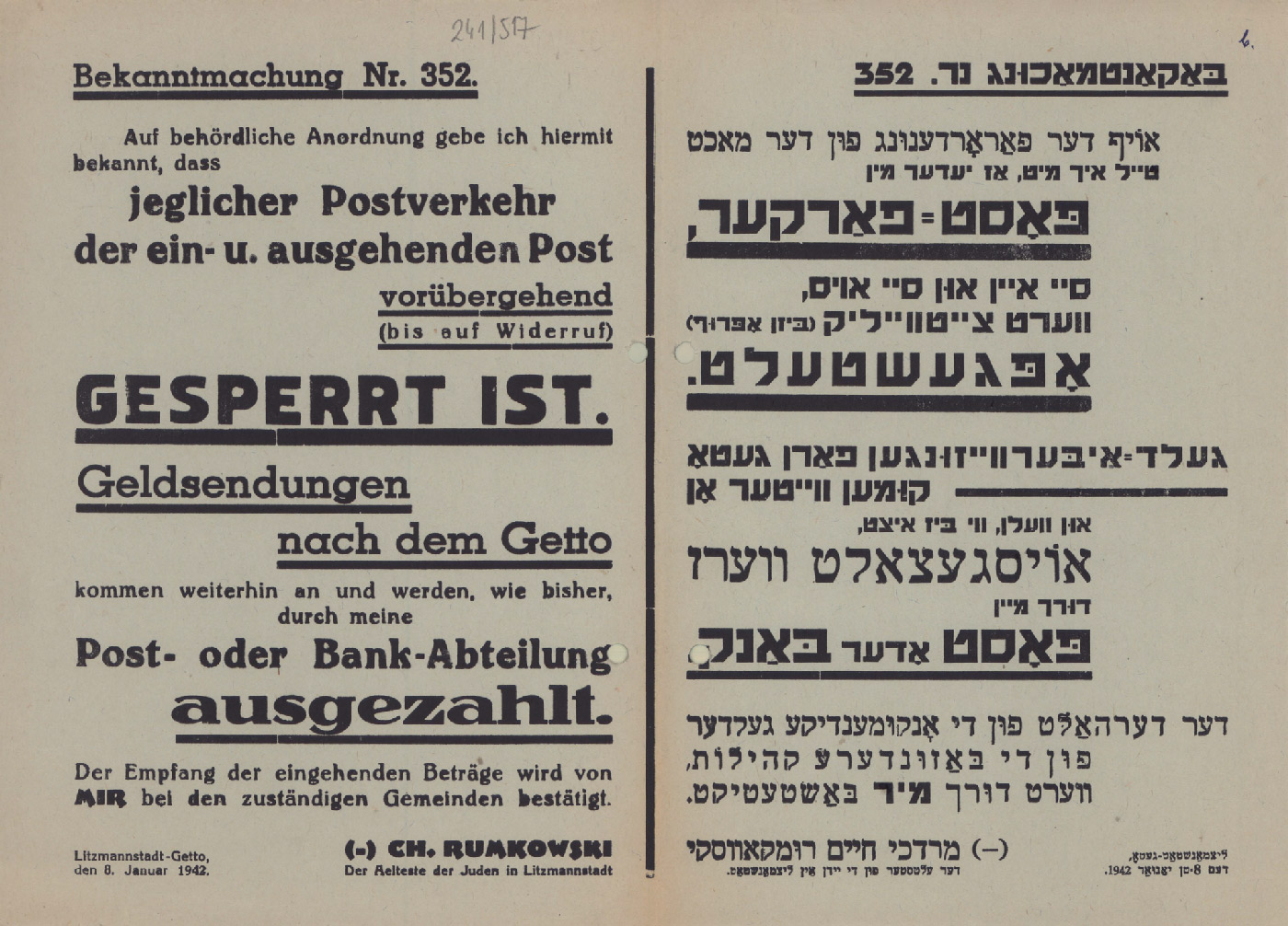
By order of the authorities, I announce that all postal traffic of incoming mail And outgoing mail is temporarily (until further notice) suspended. Money shipments to the ghetto continue to arrive and, as before, are paid out are made at my Postal Department or Bank. Receipt of incoming amounts will be approved by me at the responsible municipal offices in charge.
Announcement informing about the suspension of postal traffic (Announcement No. 352)
(Archiwum Państwowe w Łodzi)

Announcement No. 352
By order of the authorities, I announce that all postal traffic of incoming mail And outgoing mail is temporarily (until further notice) suspended.
Money shipments to the ghetto continue to arrive and, as before, are paid out are made at my Postal Department or Bank.
Receipt of incoming amounts will be approved by me at the responsible municipal offices in charge.
Litzmannstadt-Getto, January 8, 1942
(–) Ch. Rumkowski
The Eldest of the Jews
In Litzmannstadt
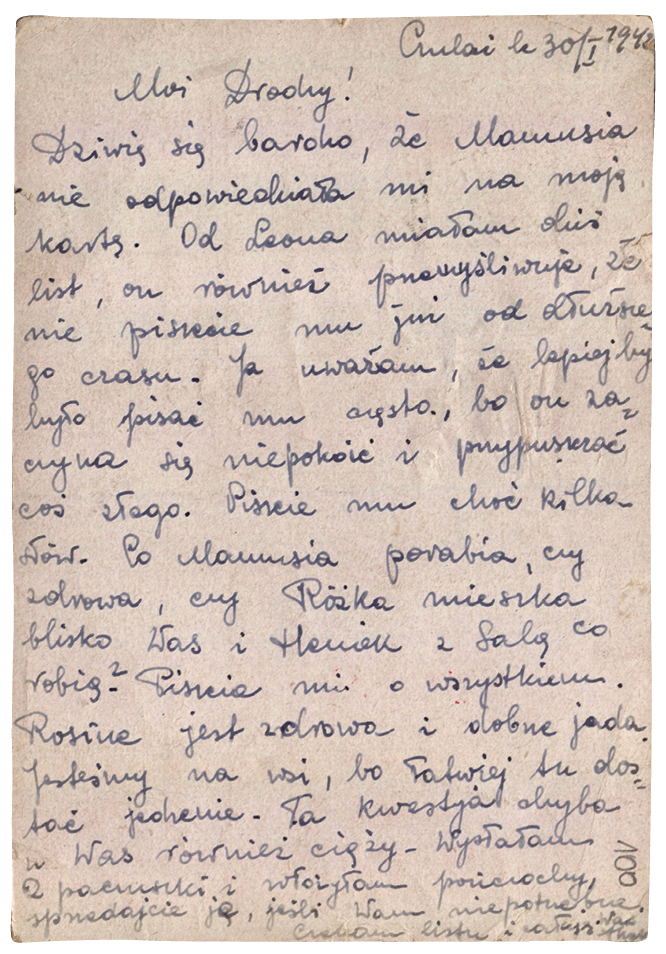
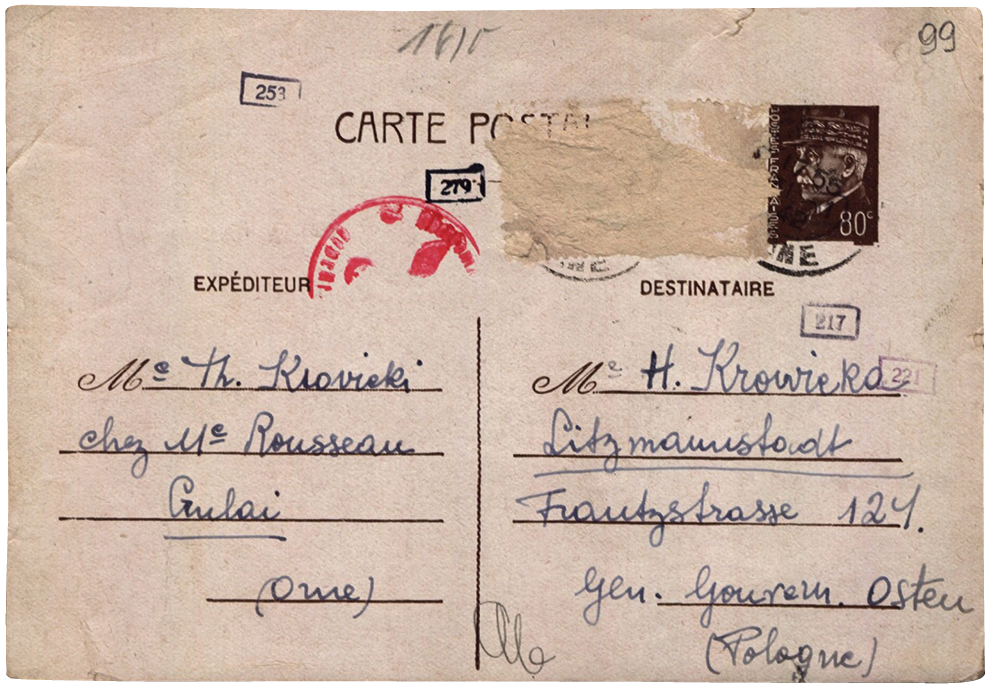
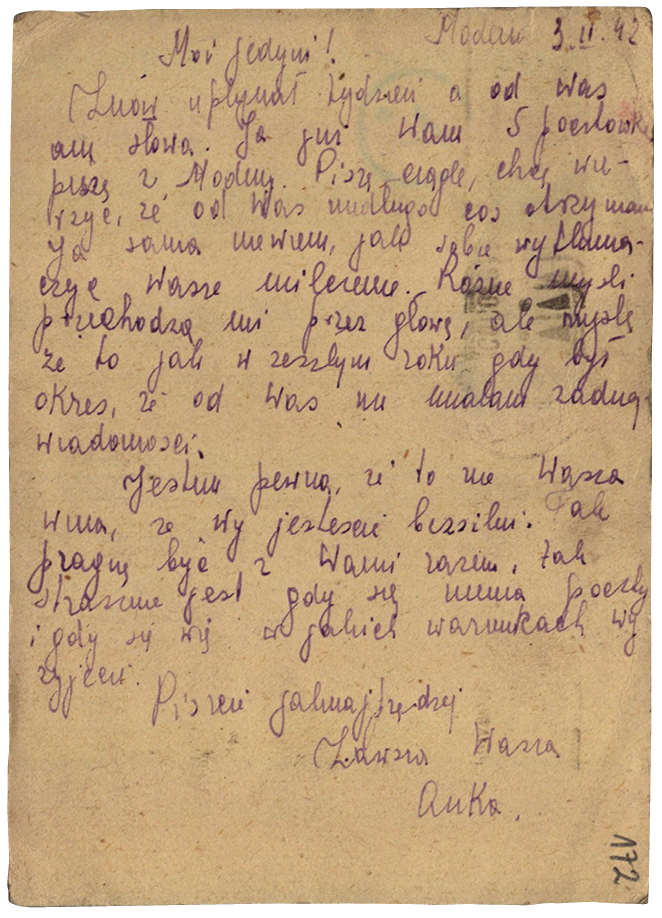
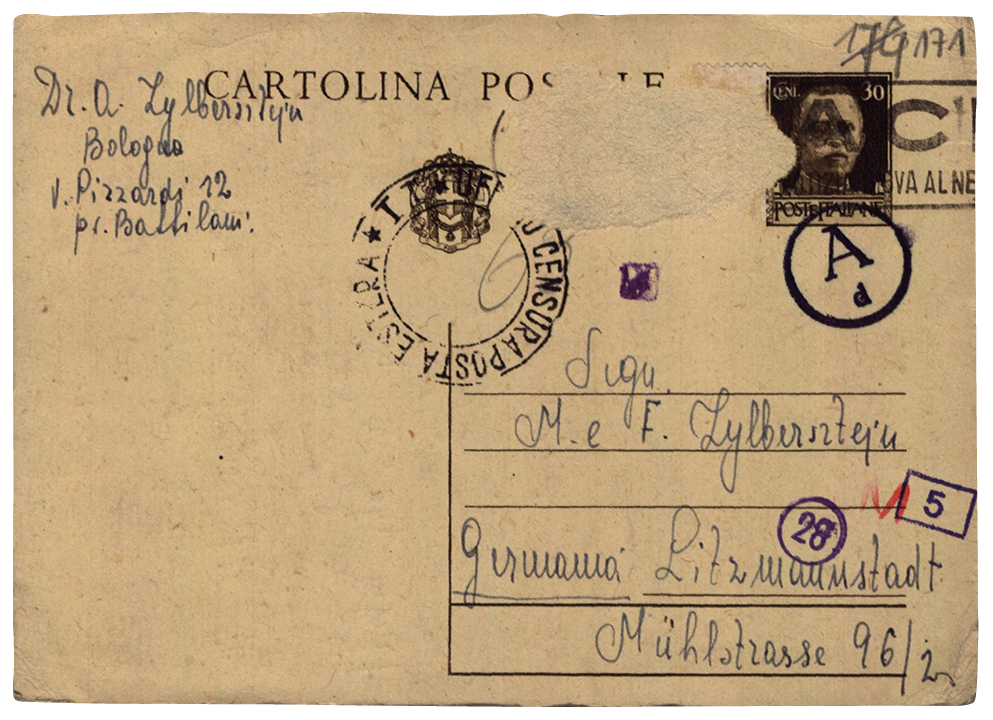
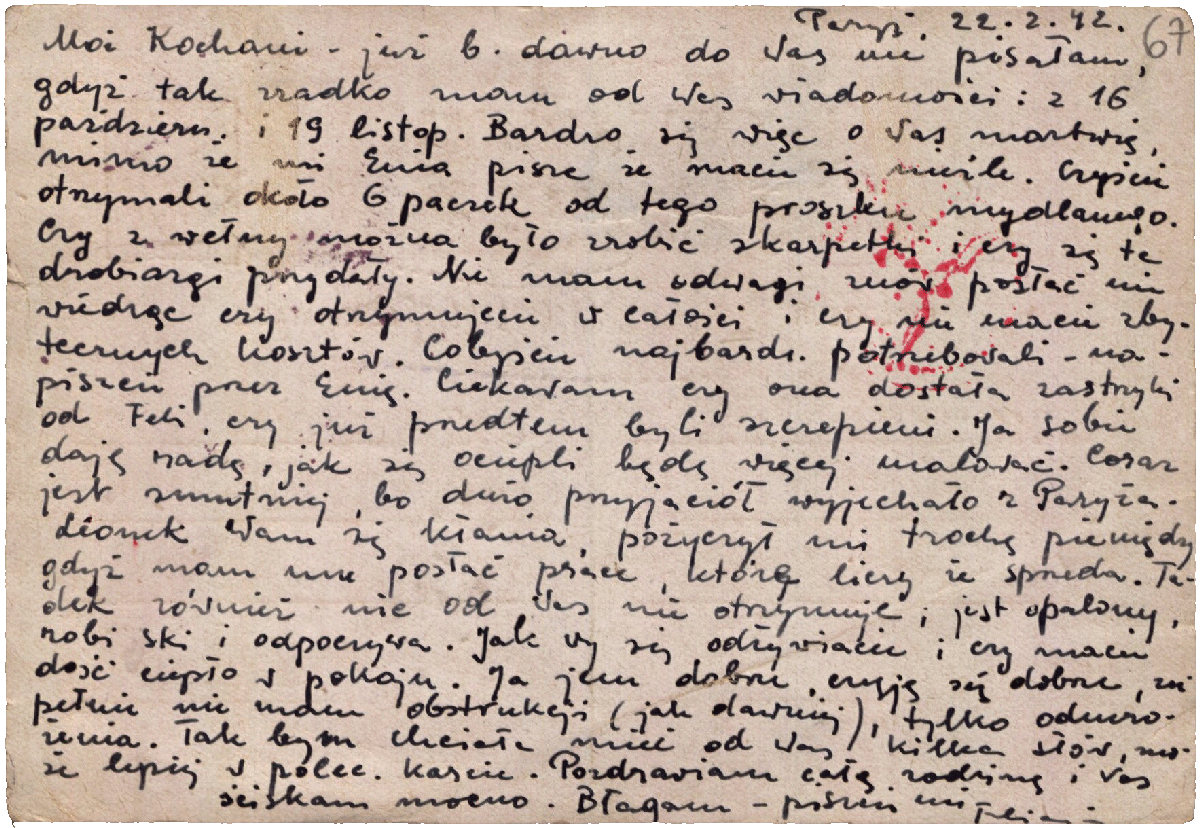
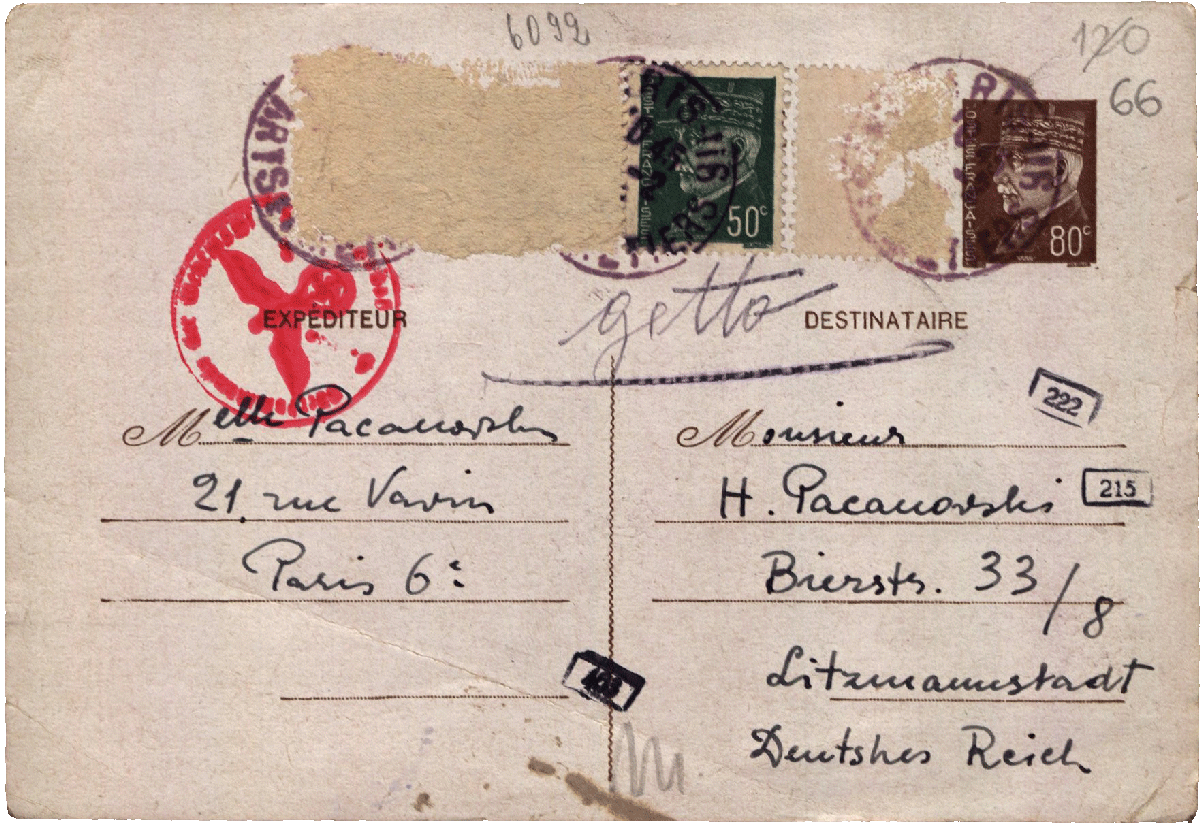
A collection of postcards that were delivered by the Reich Post Office to the ghetto, but did not reach their addressees, due to the ban on correspondence imposed, has been preserved in the collection of the State Archive in Lodz. The anxiety caused by the lack of news from loved ones is repeated in the texts.