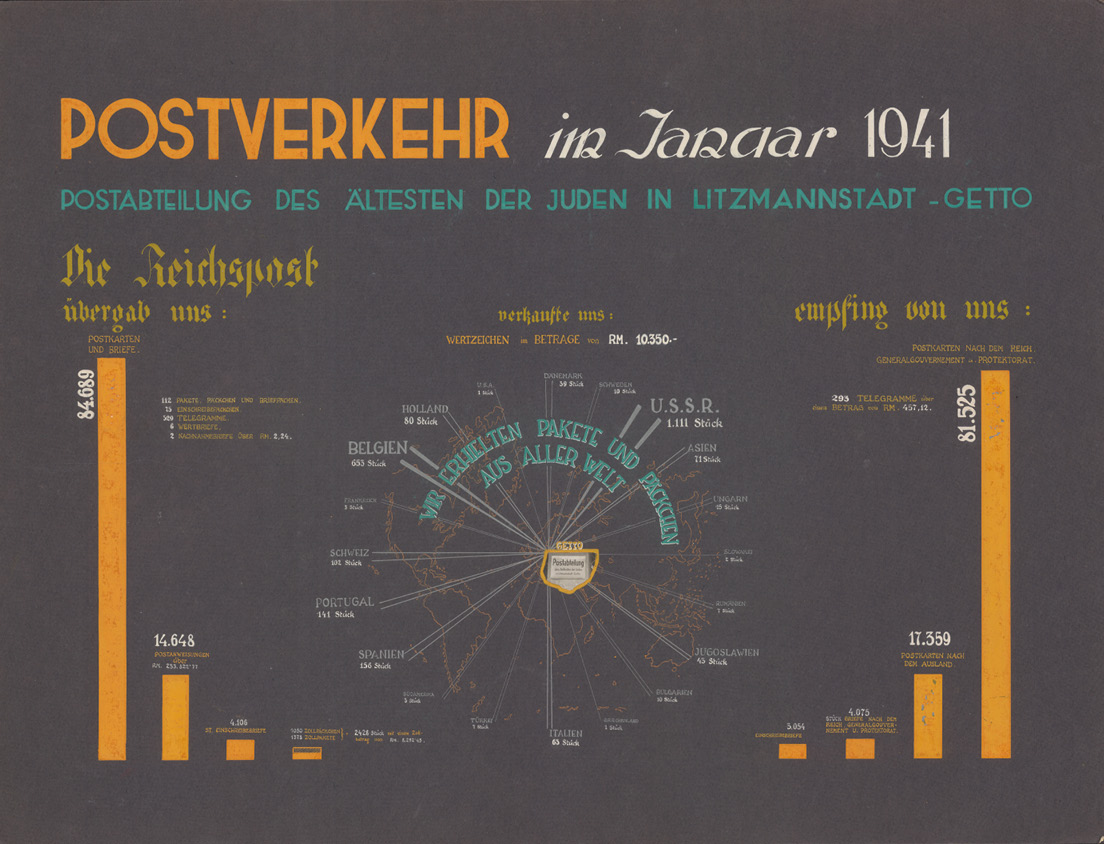
Statistical chart
(Archiwum Państwowe w Łodzi)
Letters, postcards, parcels, telegrams and money orders were sent to the ghetto. To cover the costs related to the delivery of correspondence, fees were charged to be collected by postmen, ranging from 10 to 30 pfennig in the ghetto currency.
Until the outbreak of the German-Soviet war, about 50% of the parcels were sent from the Soviet Union. After June 1941, most correspondence came from Portugal, as mail from the United States was directed via that country.
The ghetto also received deliveries from such exotic places as San Domingo, Manchuria, Bolivia and Cuba.
Preserved reports covering several months or a year make it possible to determine the number of deliveries made to the ghetto. Declining numbers are a significant proof not only of the restrictions imposed on postal traffic, but above all of the policy of extermination of the Jewish population in occupied Poland and in conquered European countries.
Data from A. Piwowarczyk, Dokumentacja znaczków w Łodzi, „Filatelista”, R. XI, 1964, No. 3
Statistical chart
(Archiwum Państwowe w Łodzi)
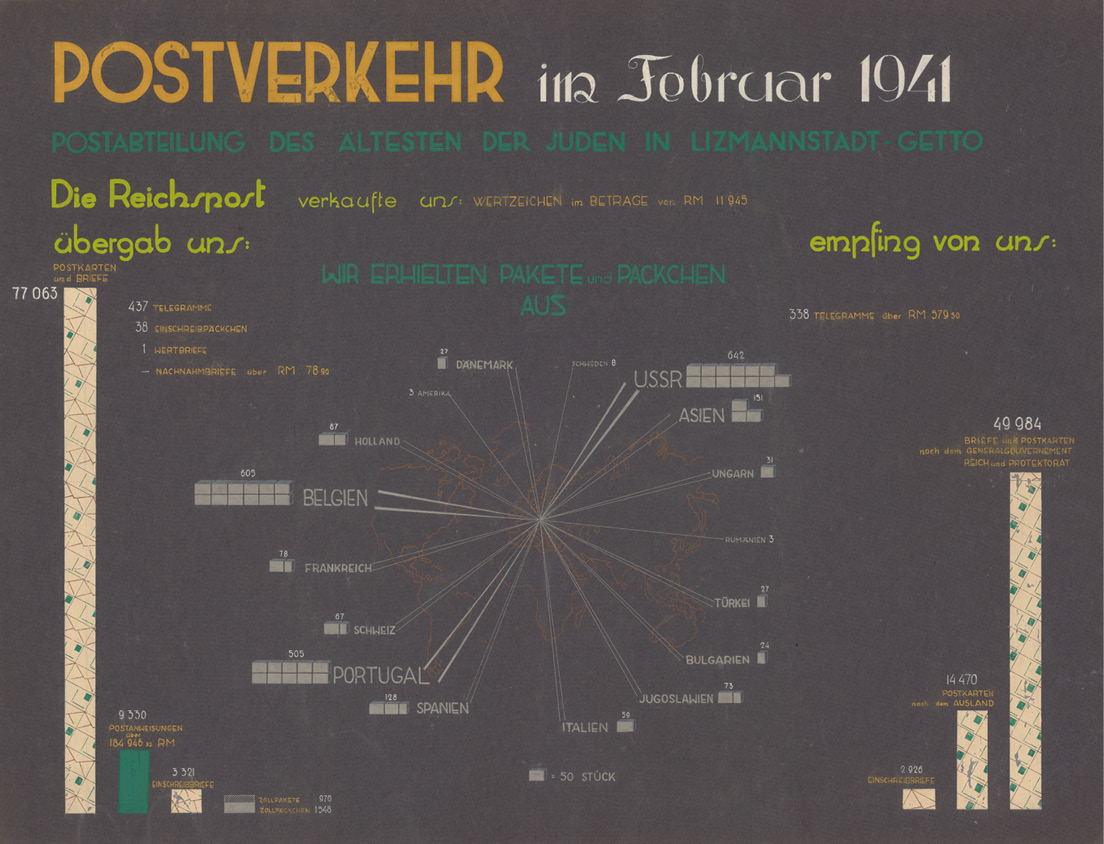
Statistical chart
(Archiwum Państwowe w Łodzi)
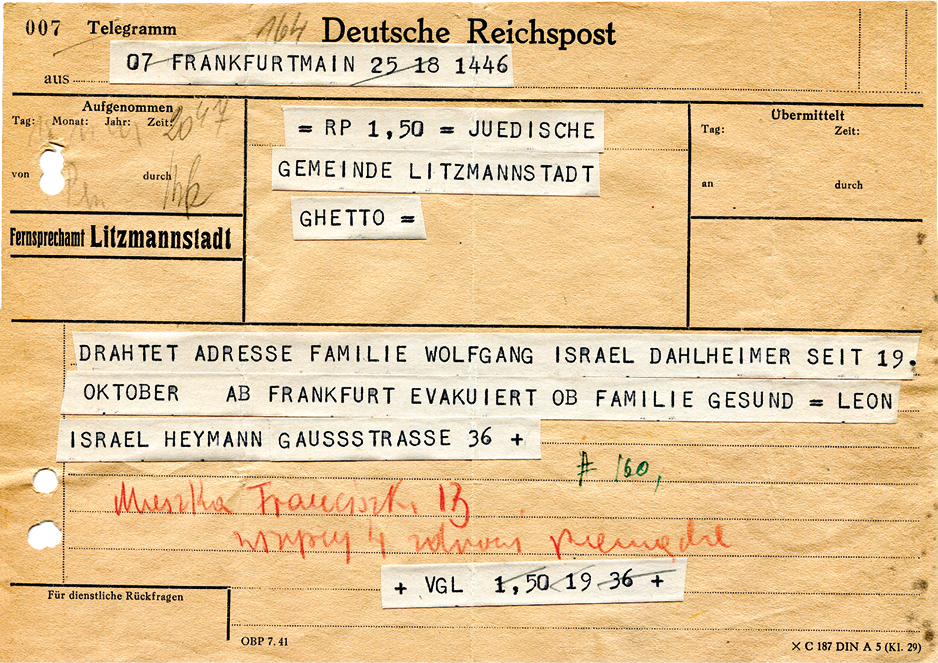
Telegrams asking about deportees from autumn 1941. Notes by Jewish officials
(Spungen Family Fundation)
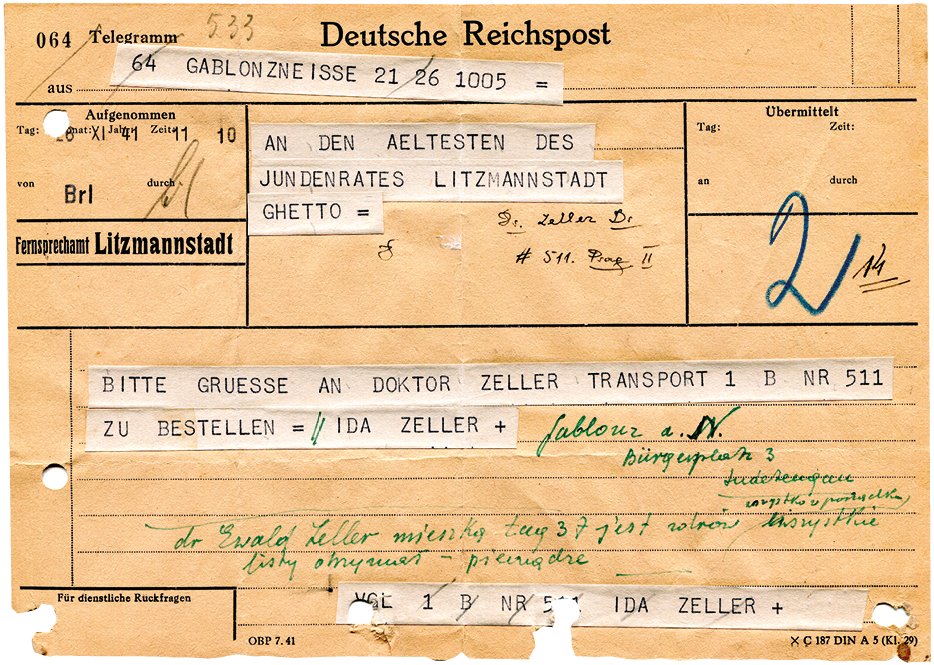
Telegrams asking about deportees from autumn 1941. Notes by Jewish officials
(Spungen Family Fundation)
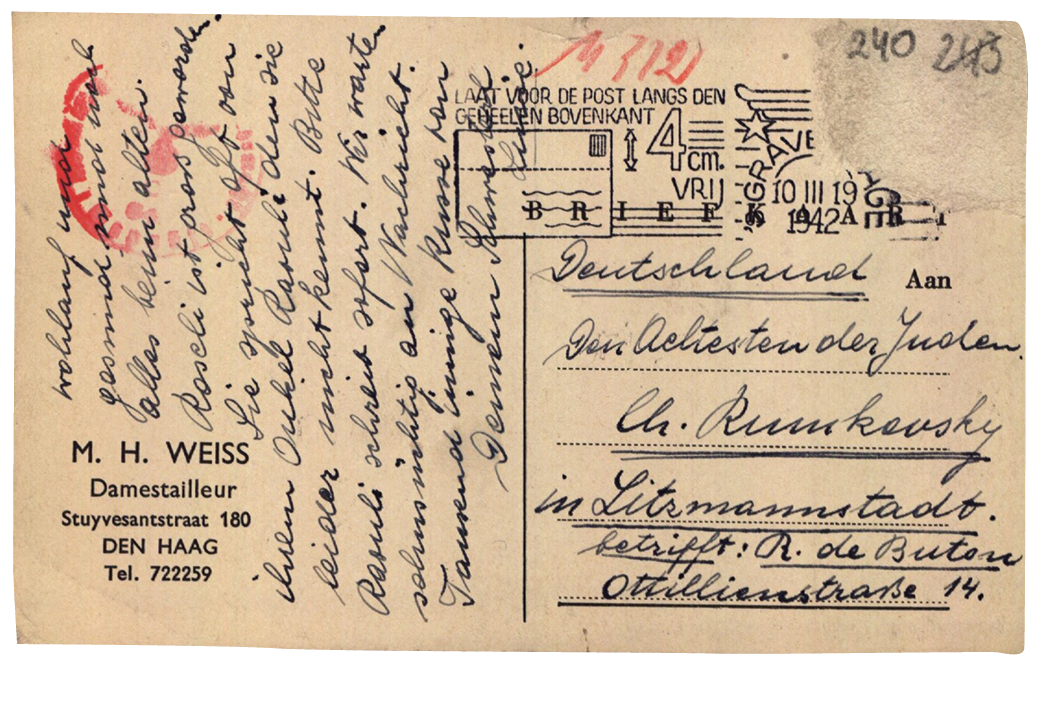
Postcard sent to ghetto
(Archiwum Państwowe w Łodzi)
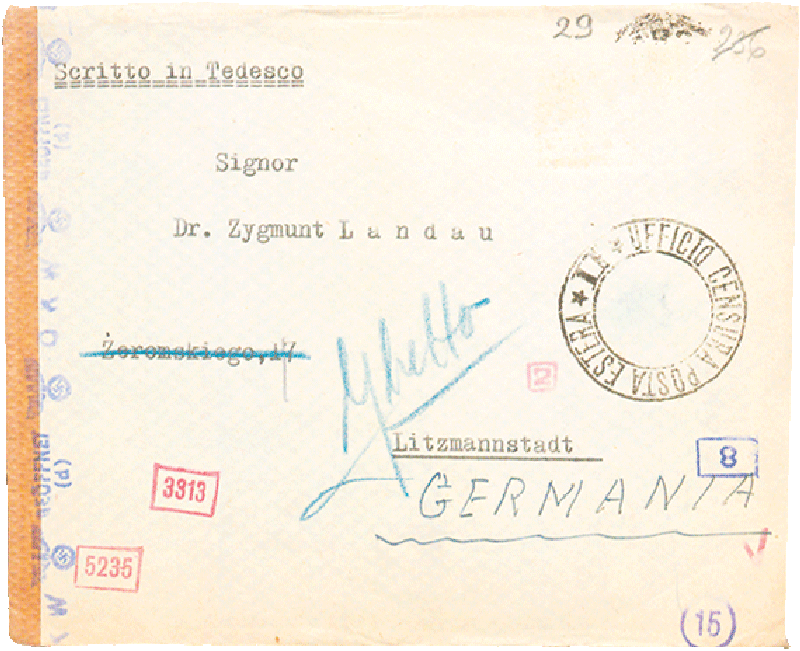
A letter redirected to the ghetto
(Archiwum Państwowe w Łodzi)
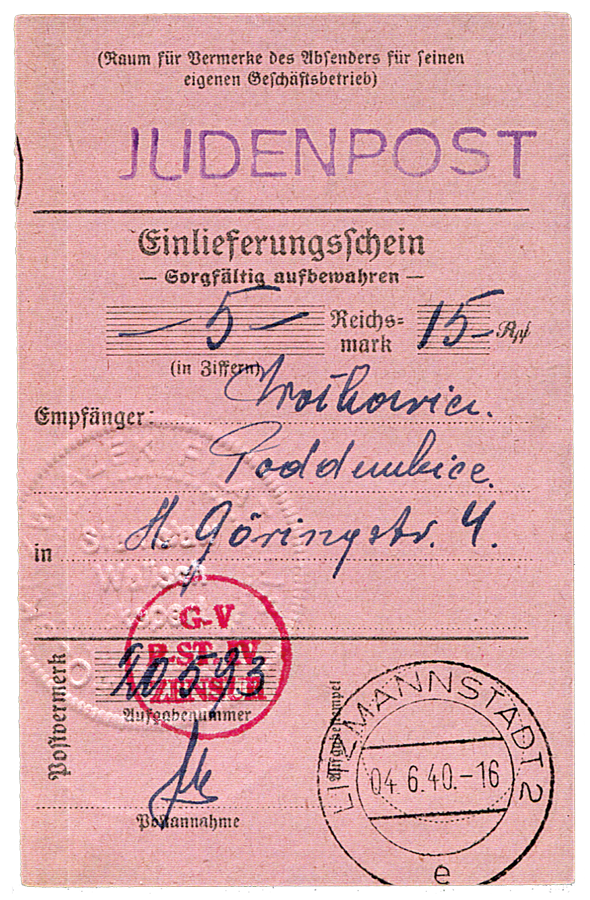
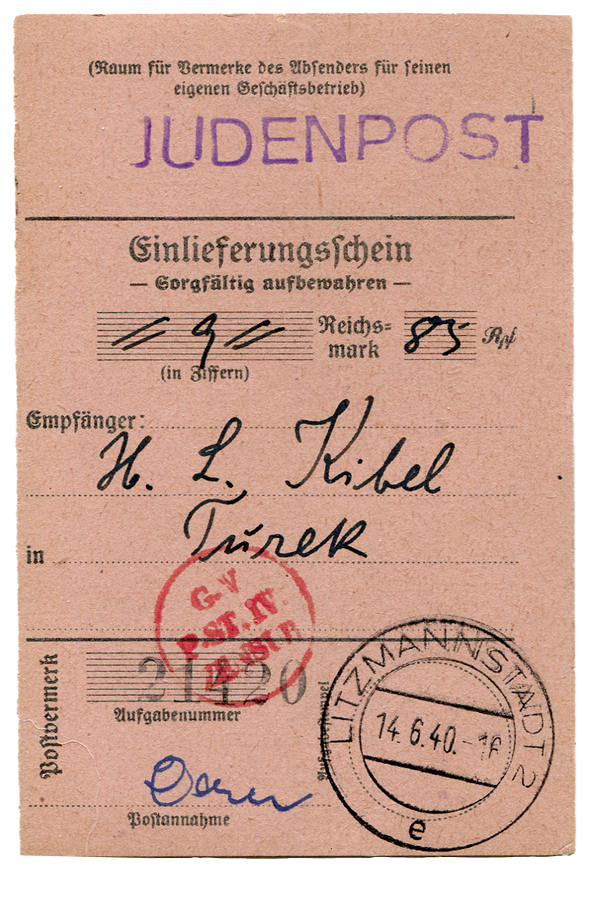
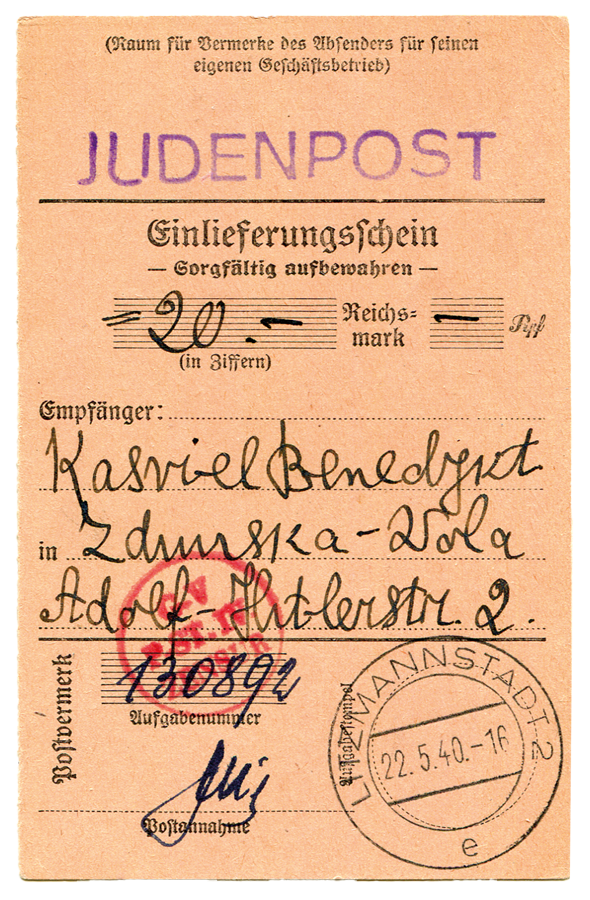
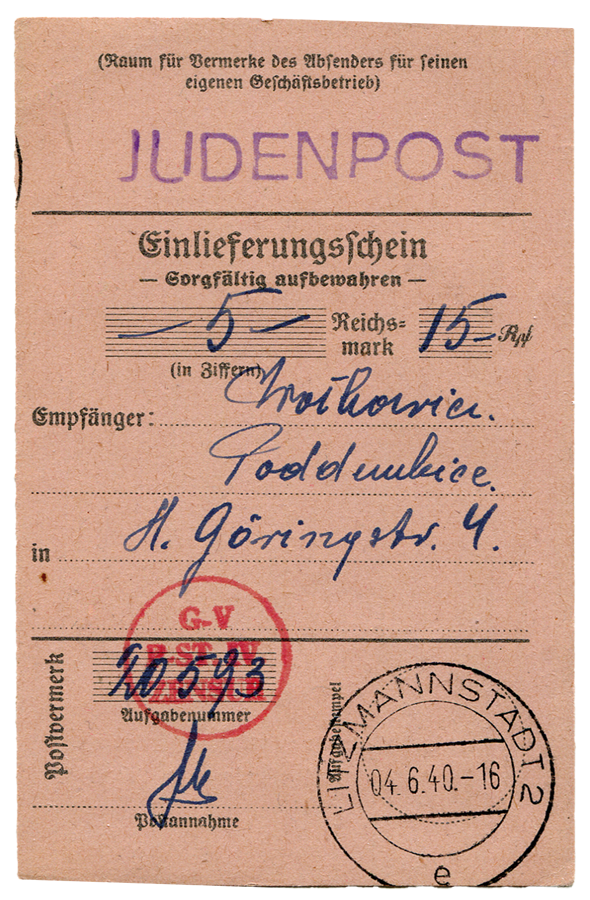
Money order stubs
(Spungen Family Foundation)