foto: Walter Genewein /
© Jüdisches Museum Frankfurt am Main
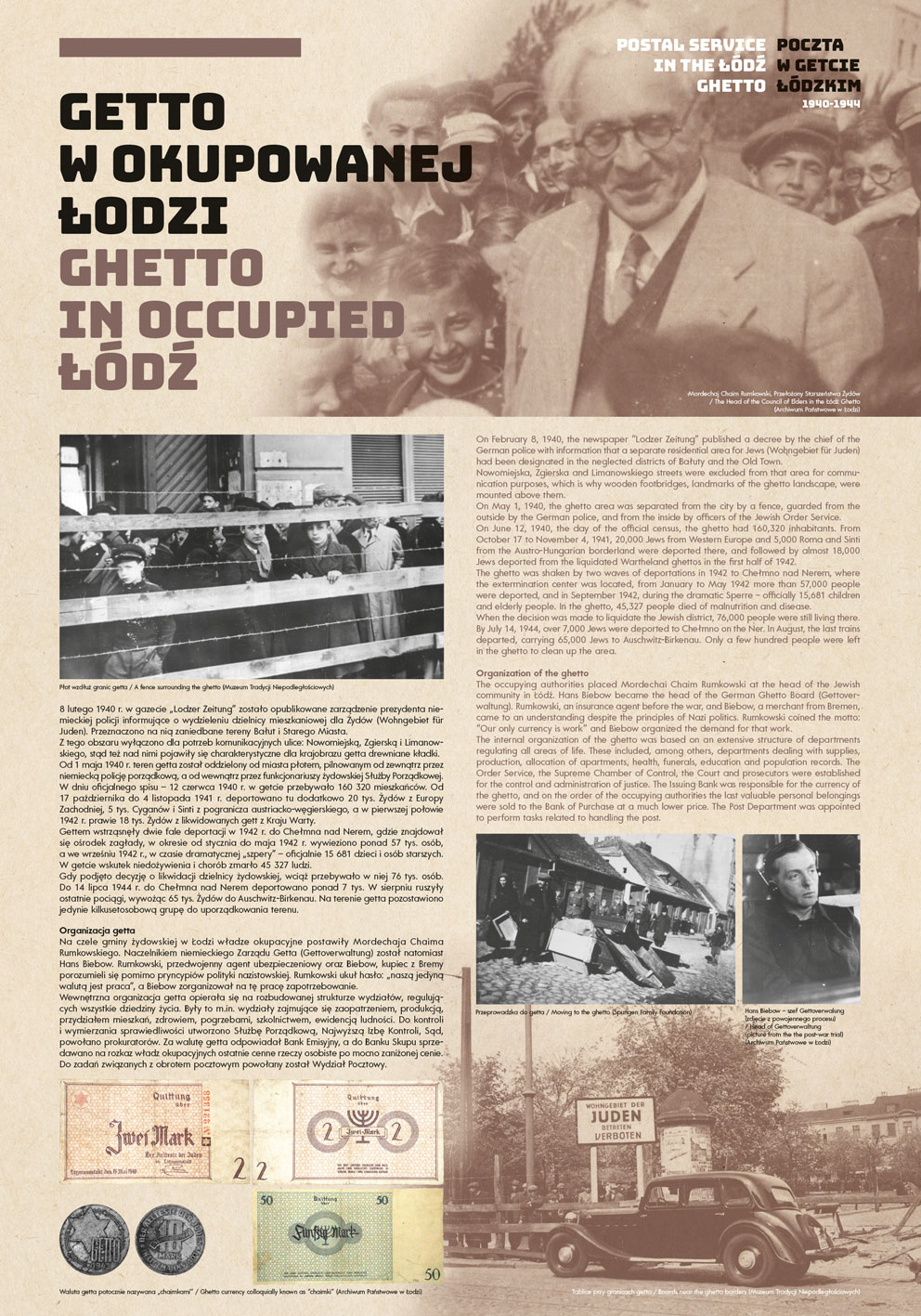
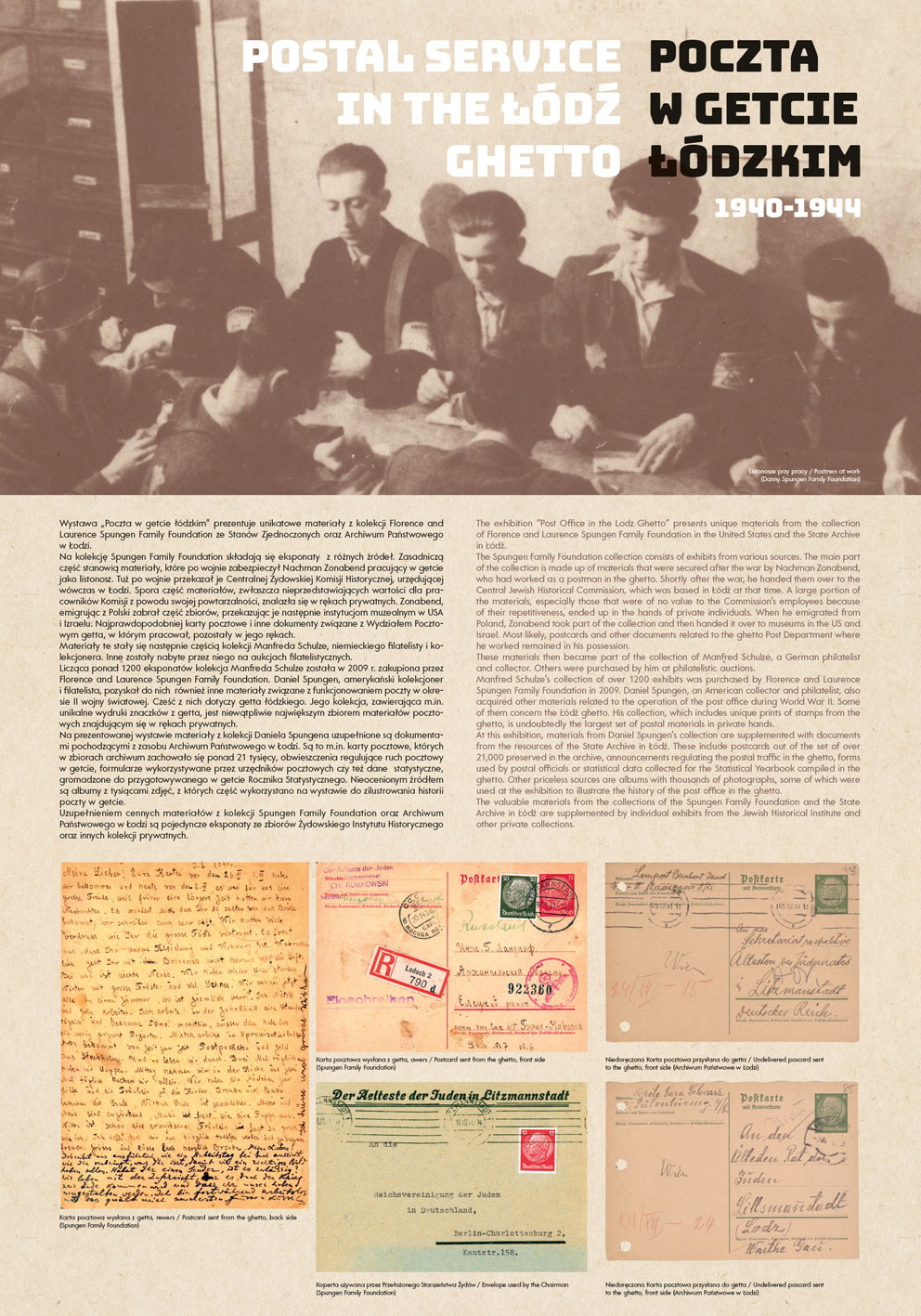
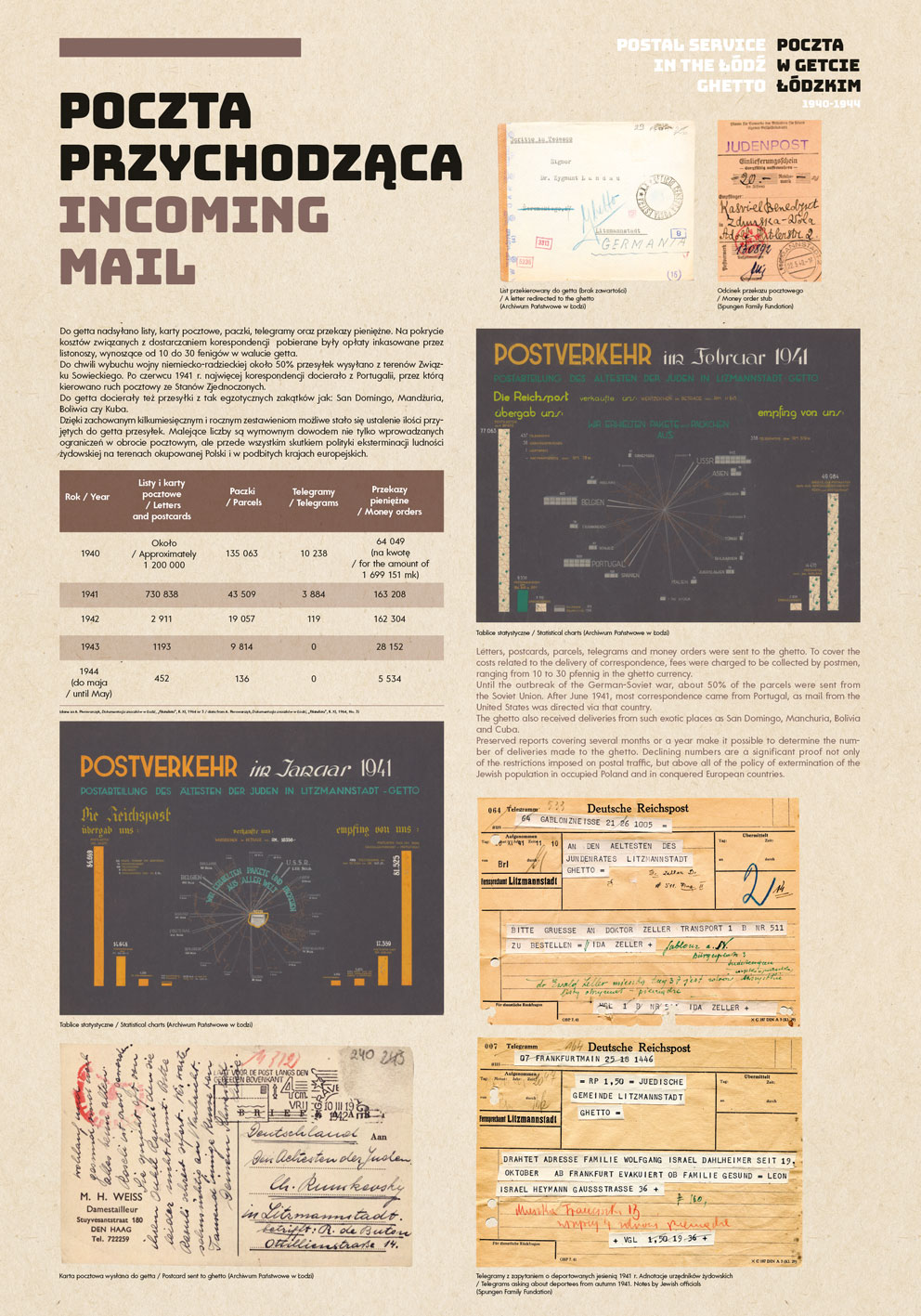
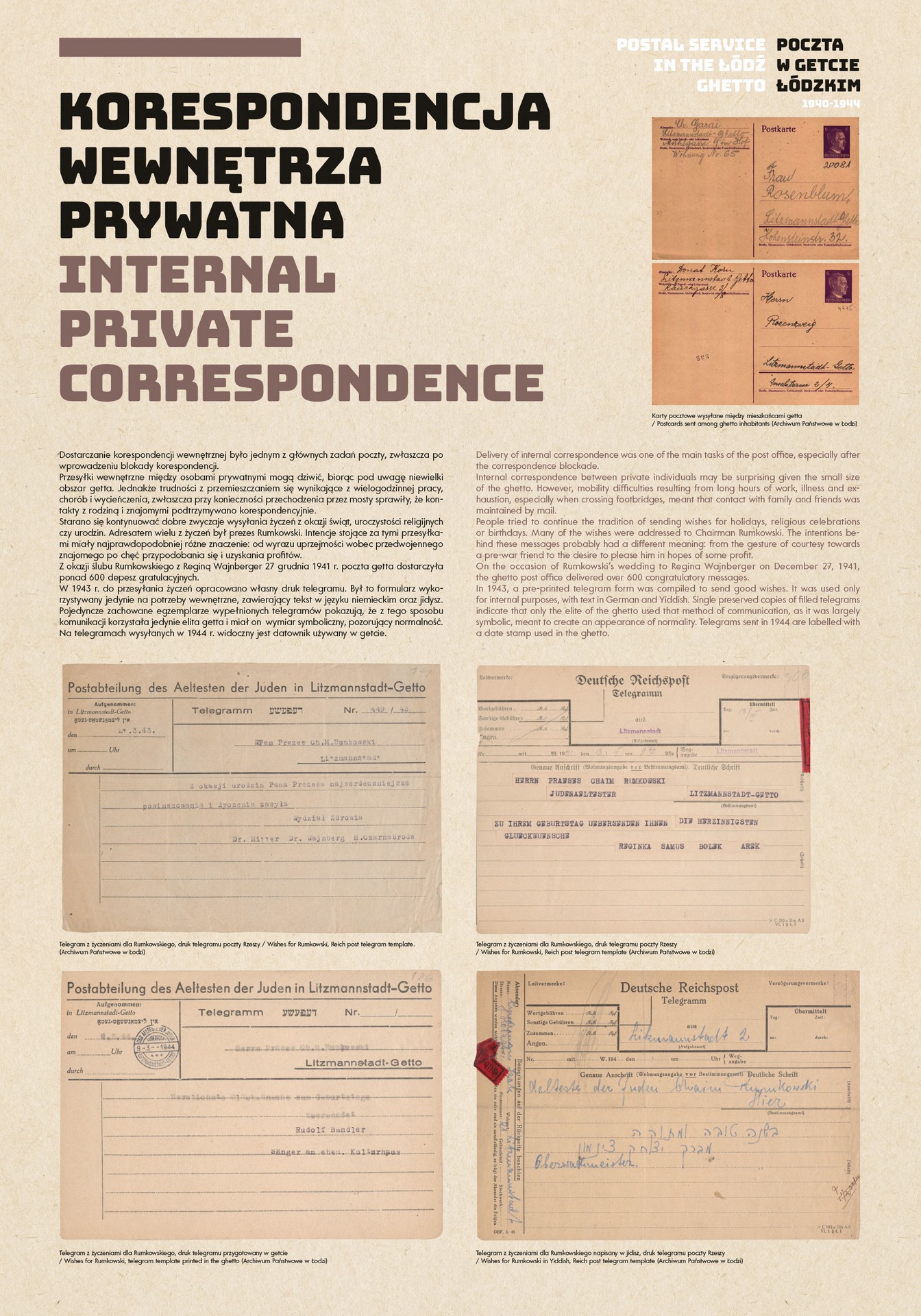
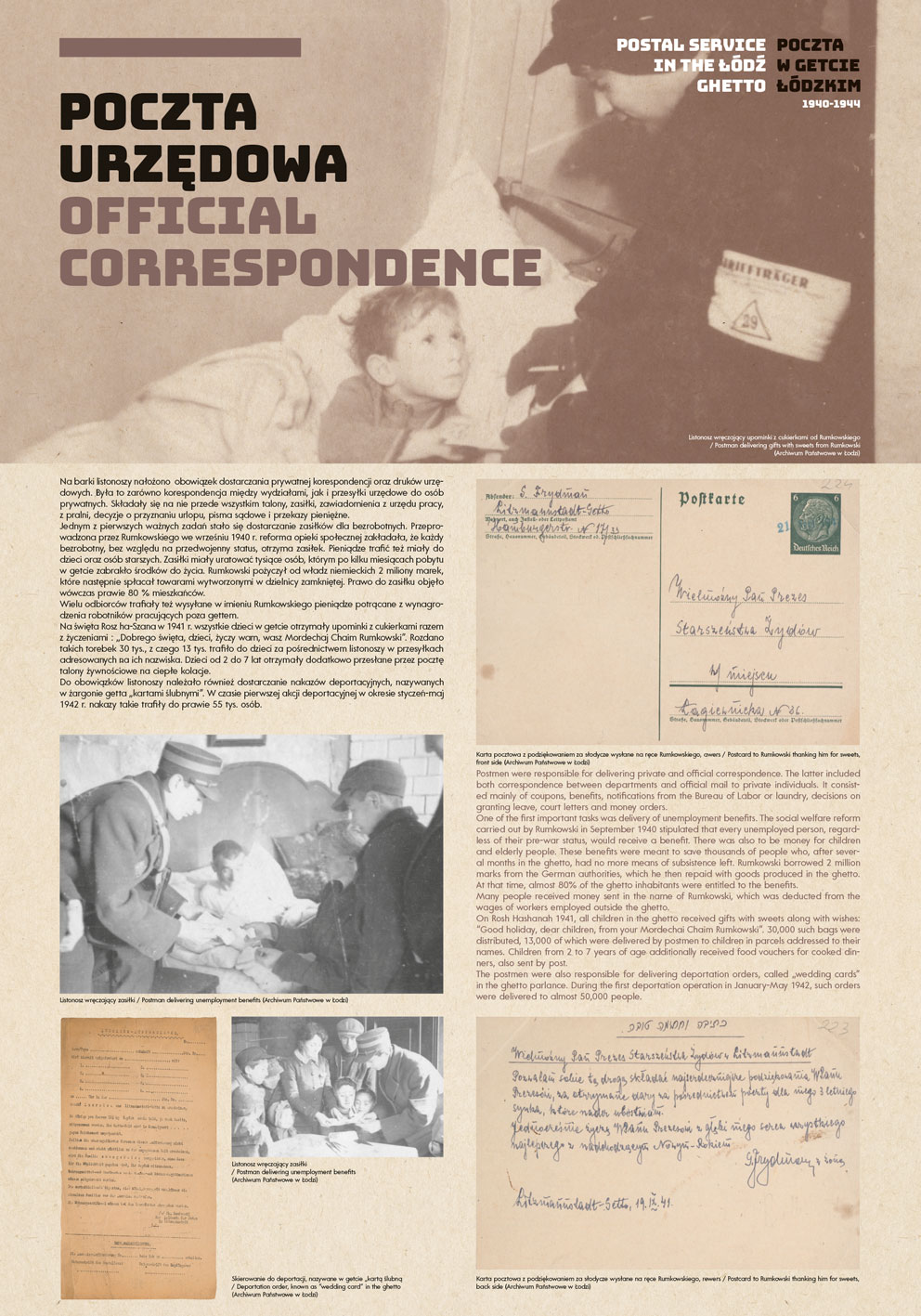
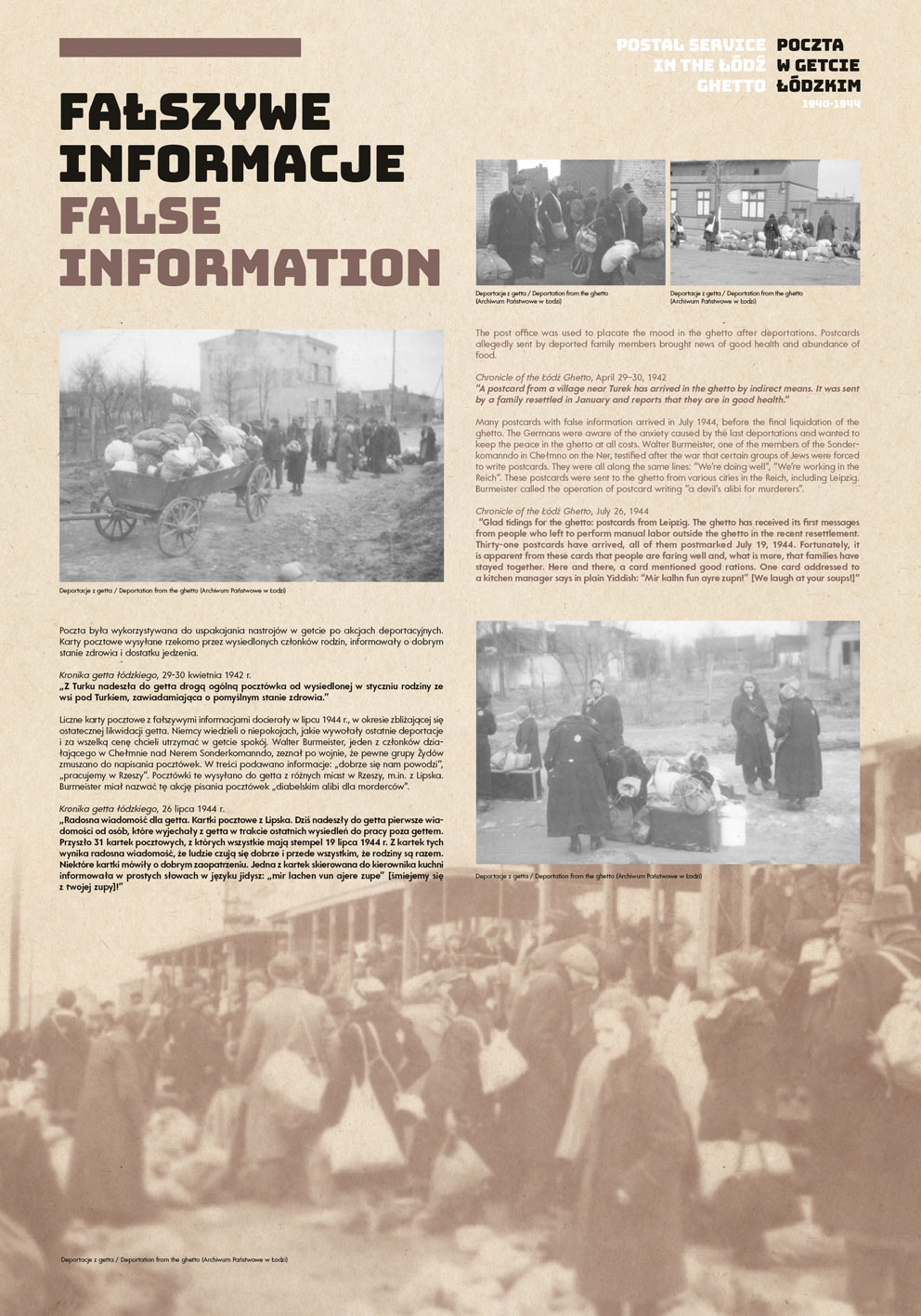
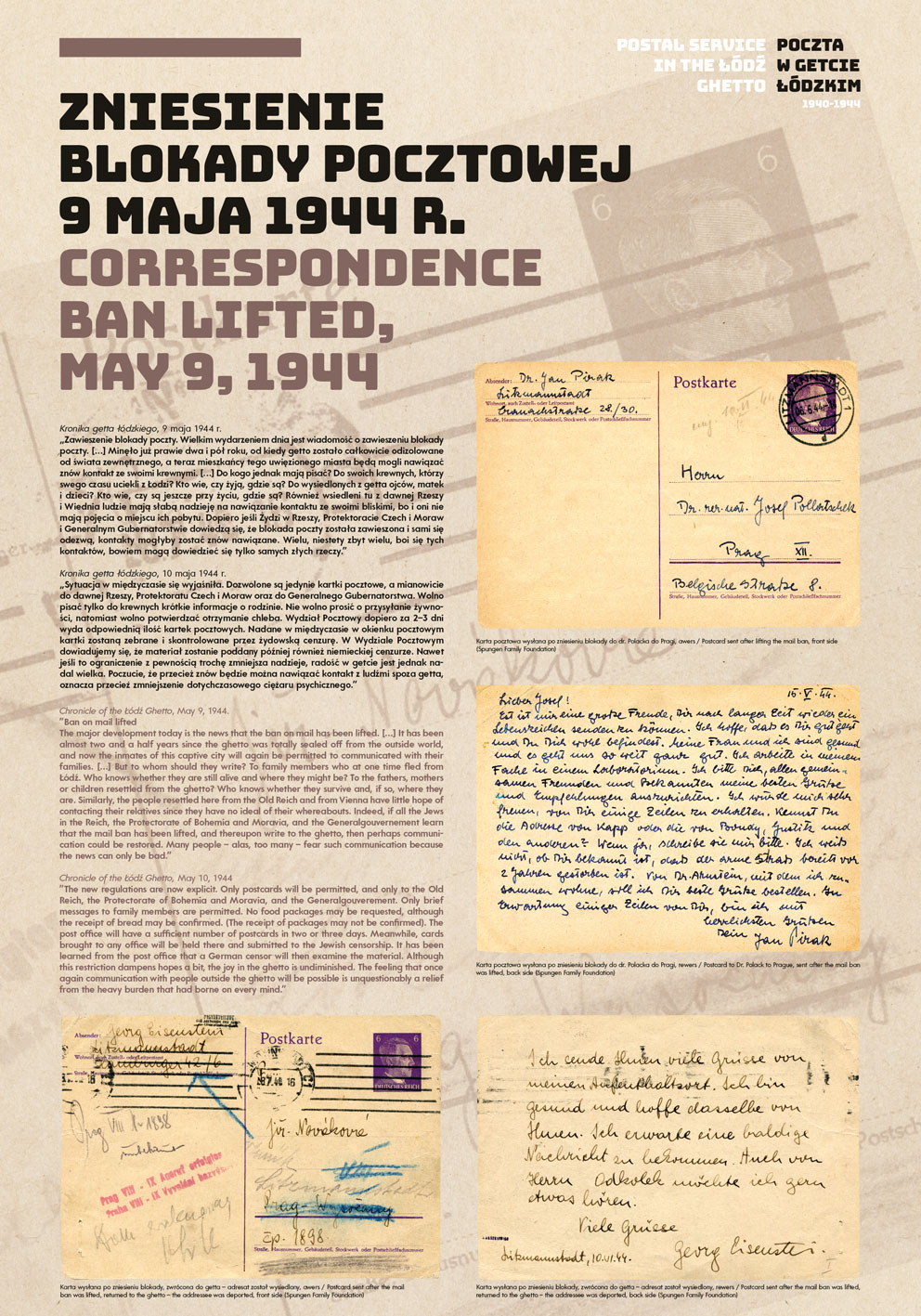
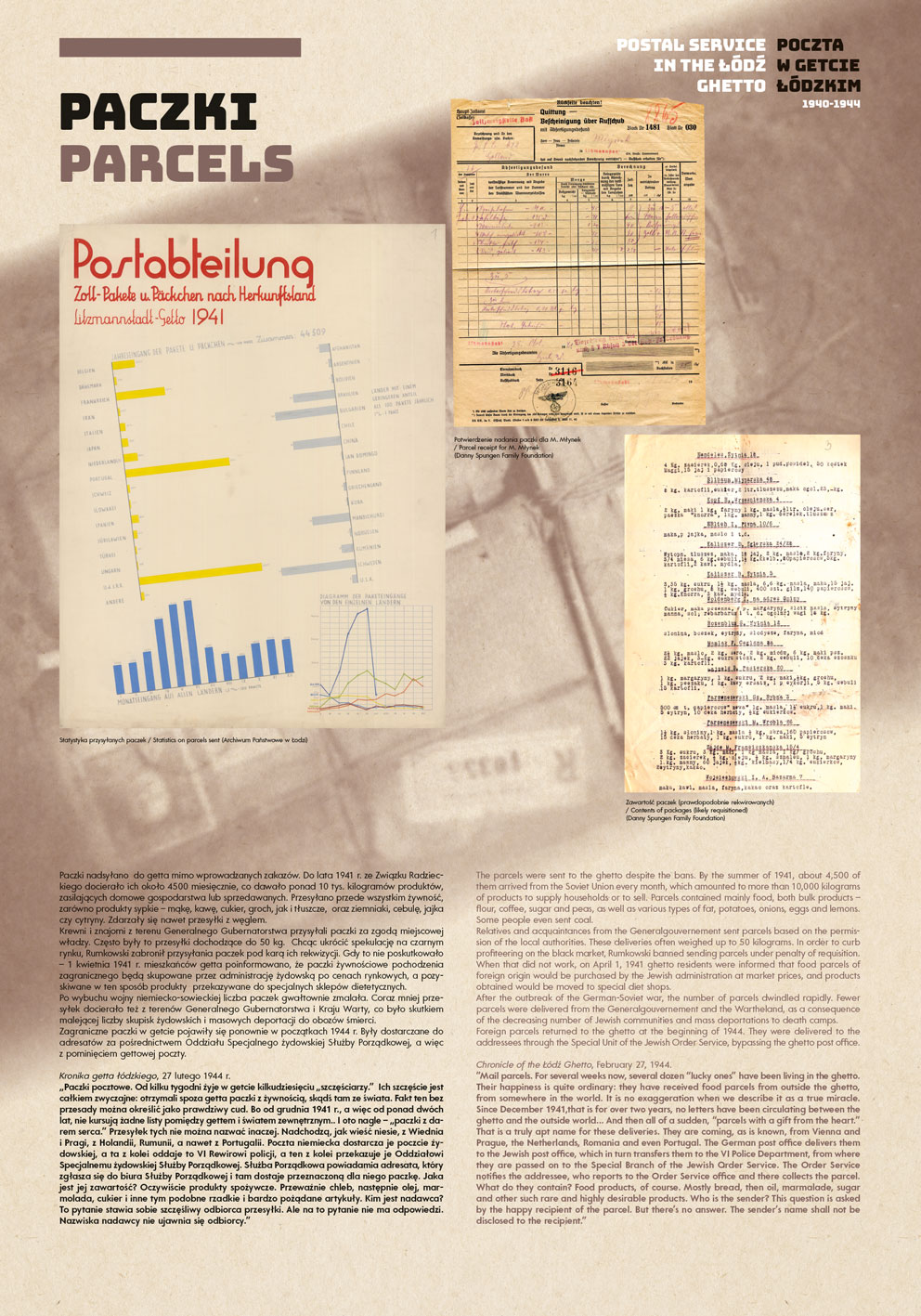
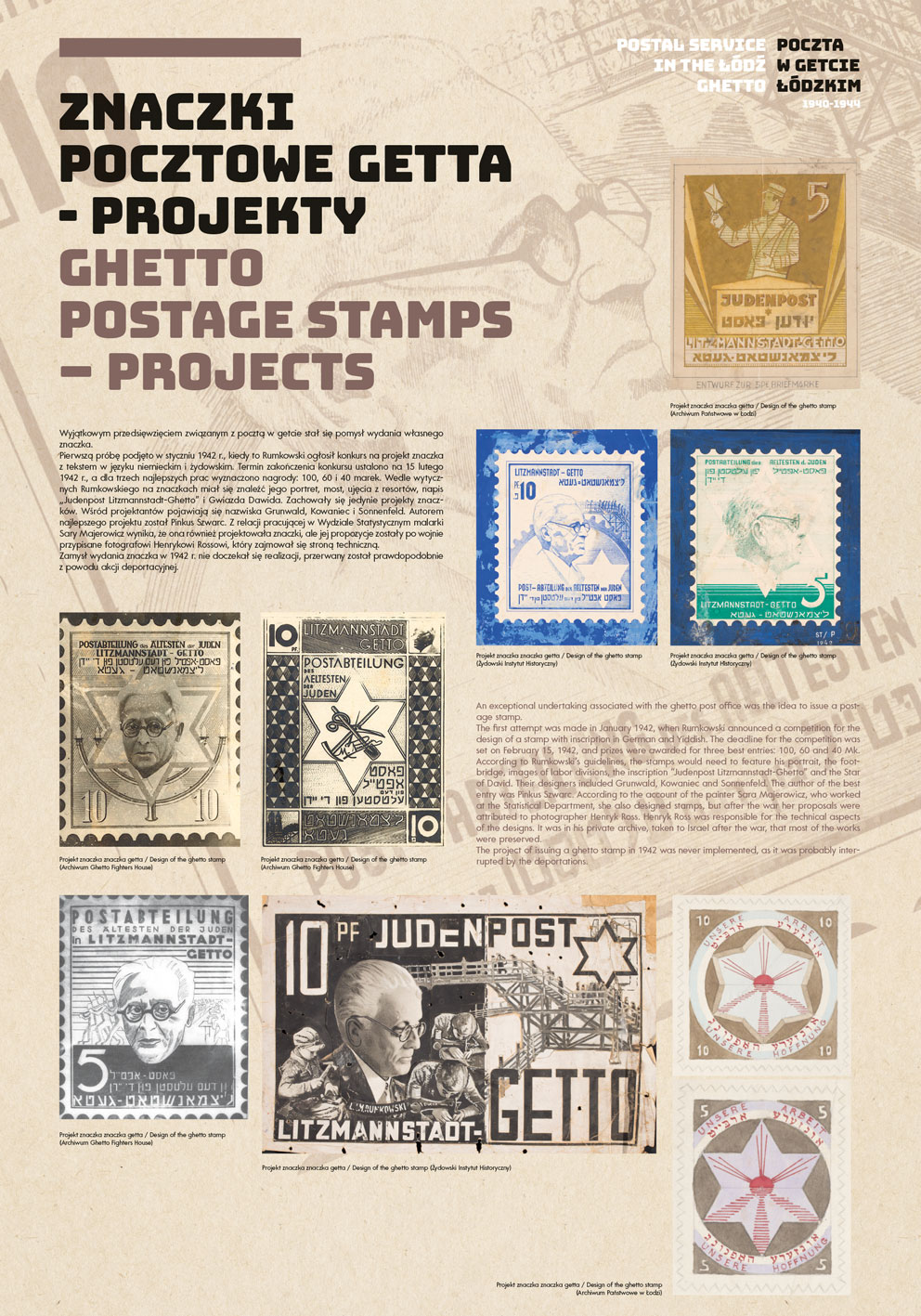
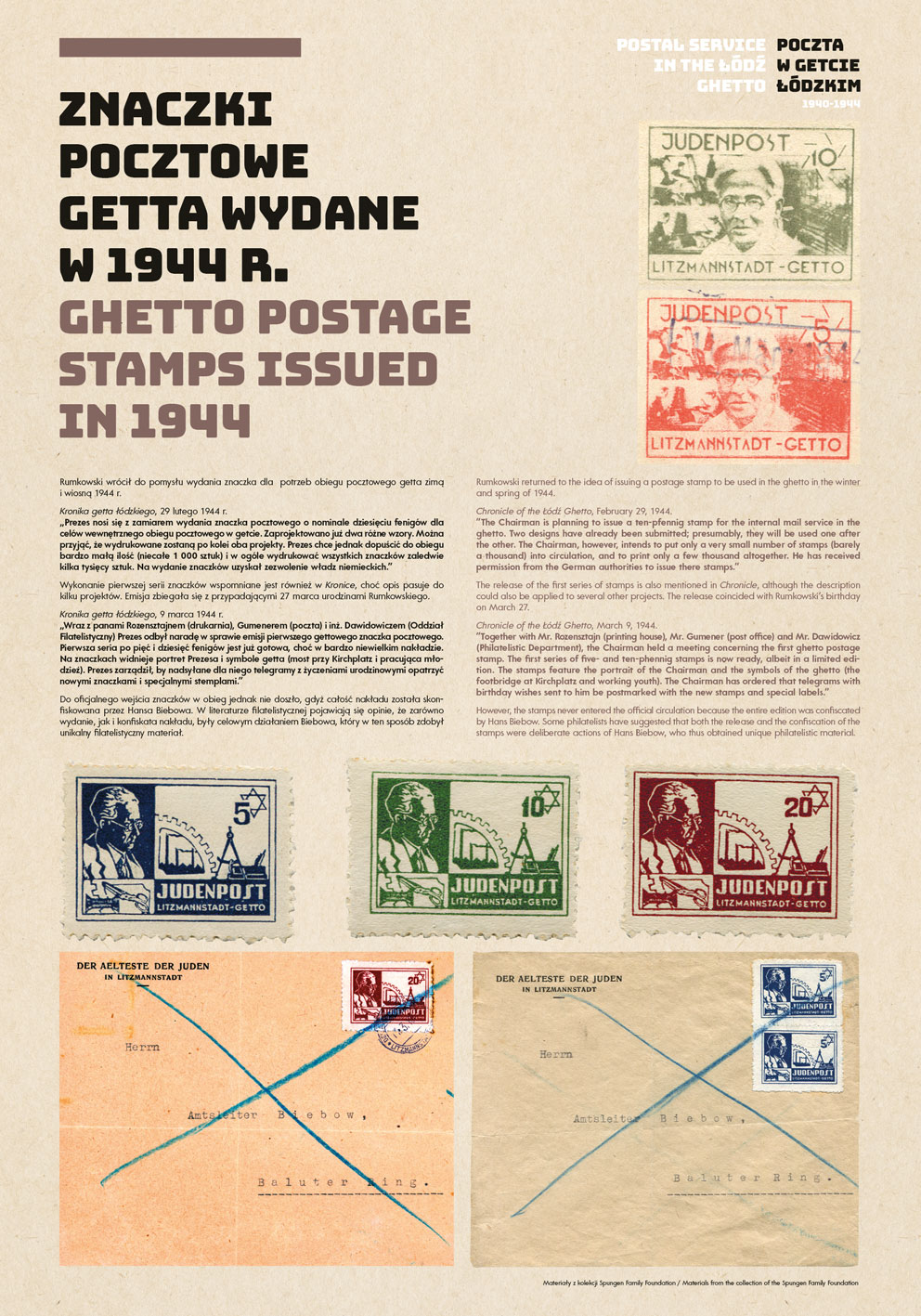
The website “Post in the Lodz Ghetto” presents unique materials from the collections of the Florence and Laurence Spungen Family Foundation in the United States and the State Archives in Lodz.
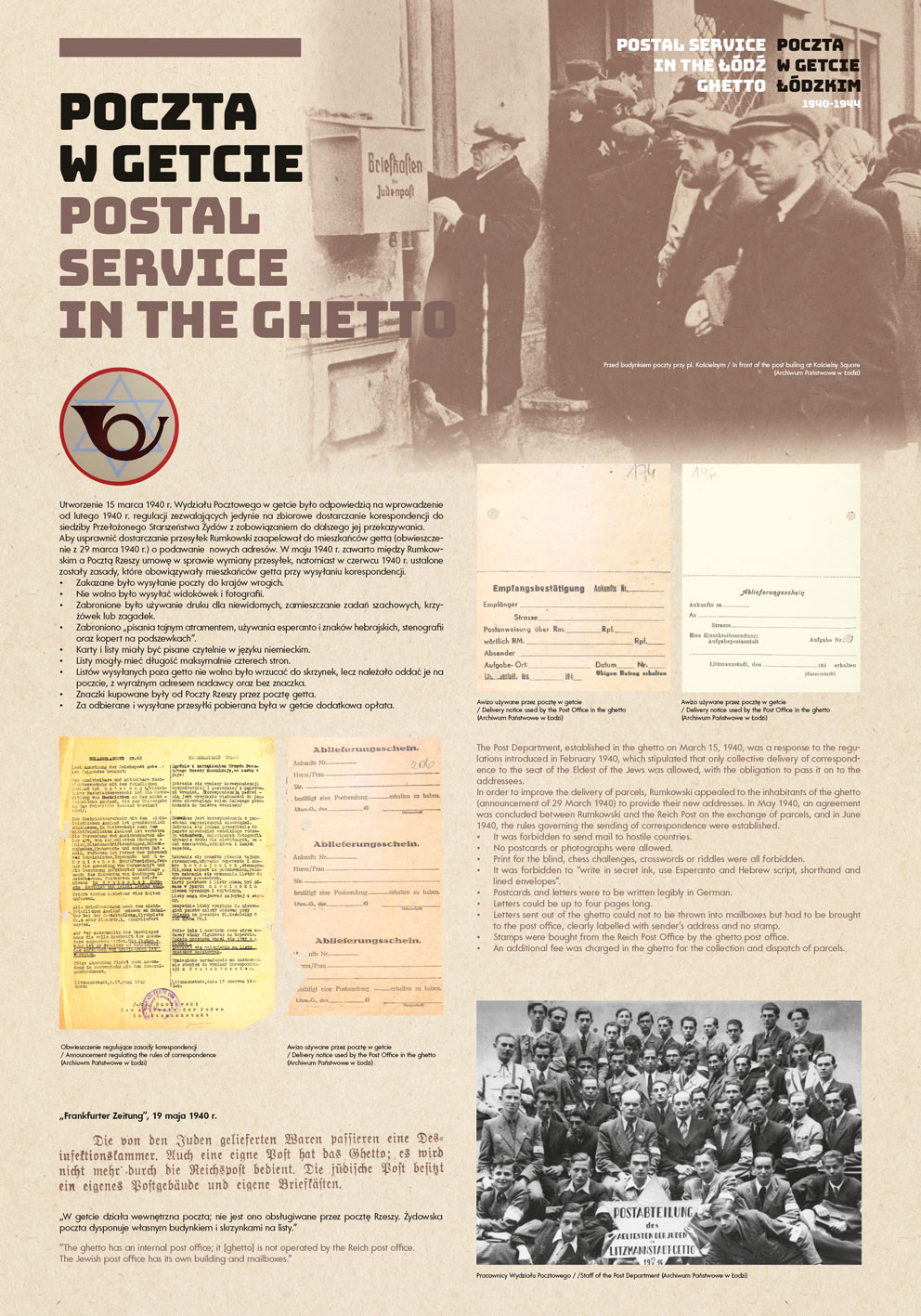
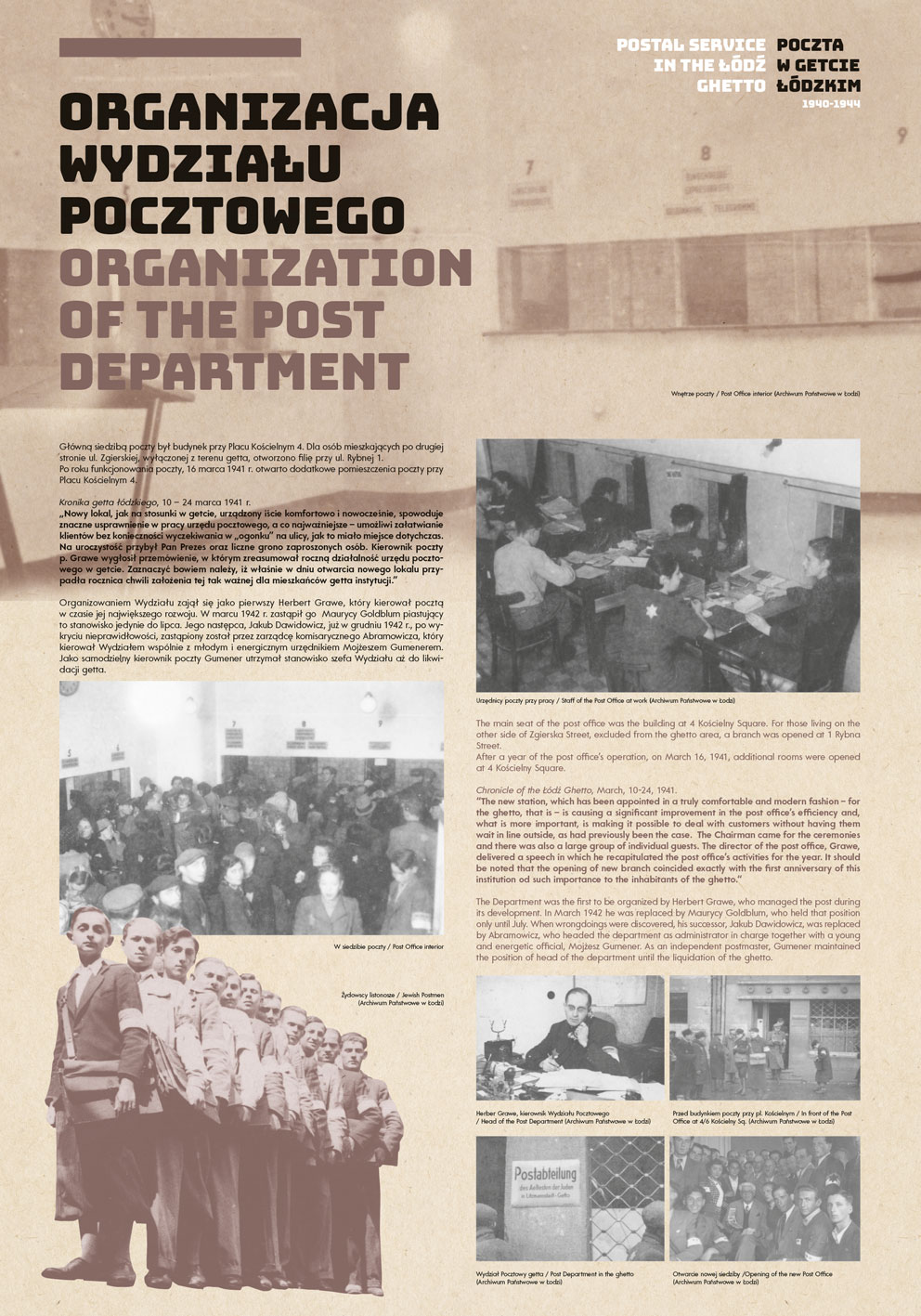
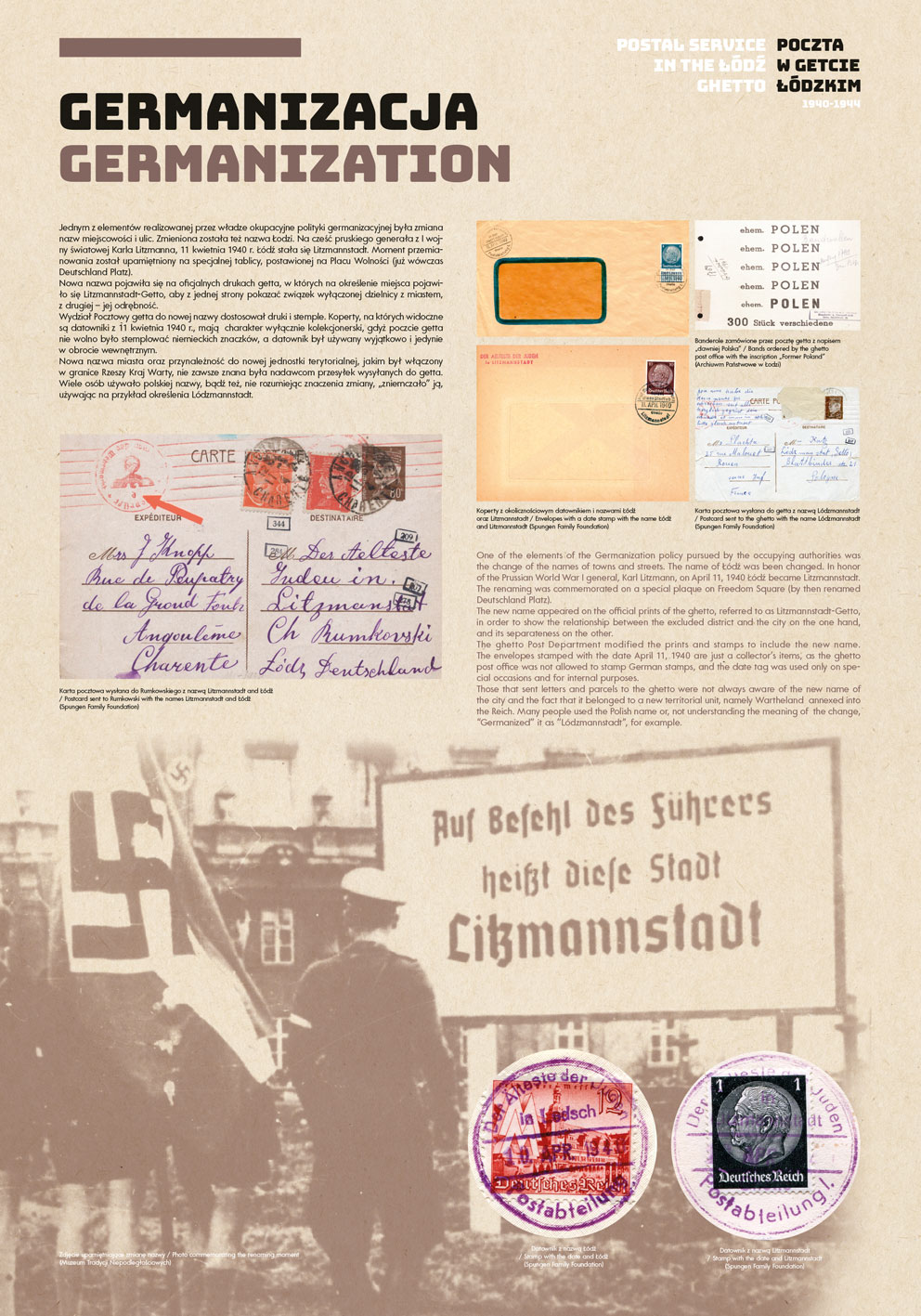
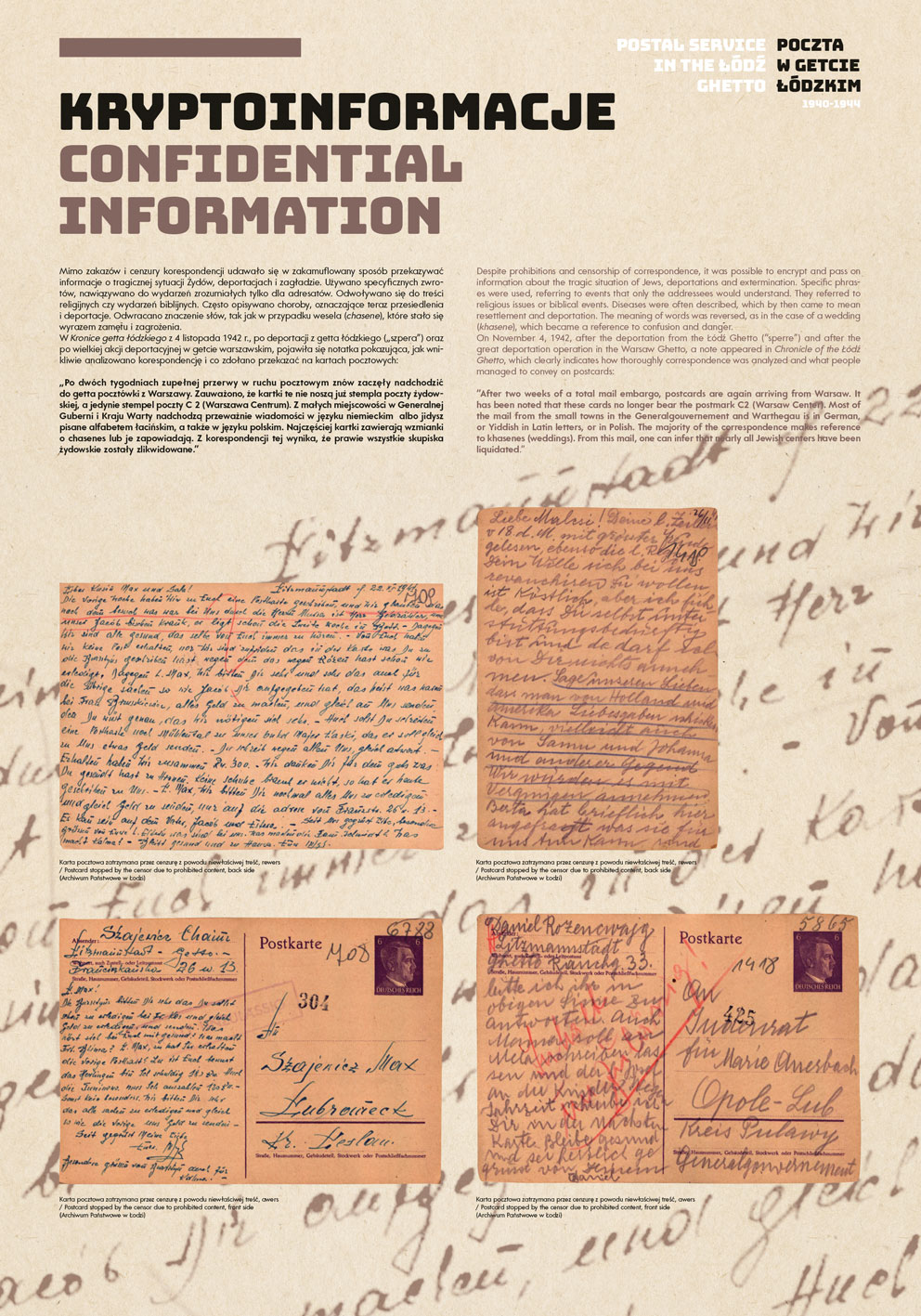
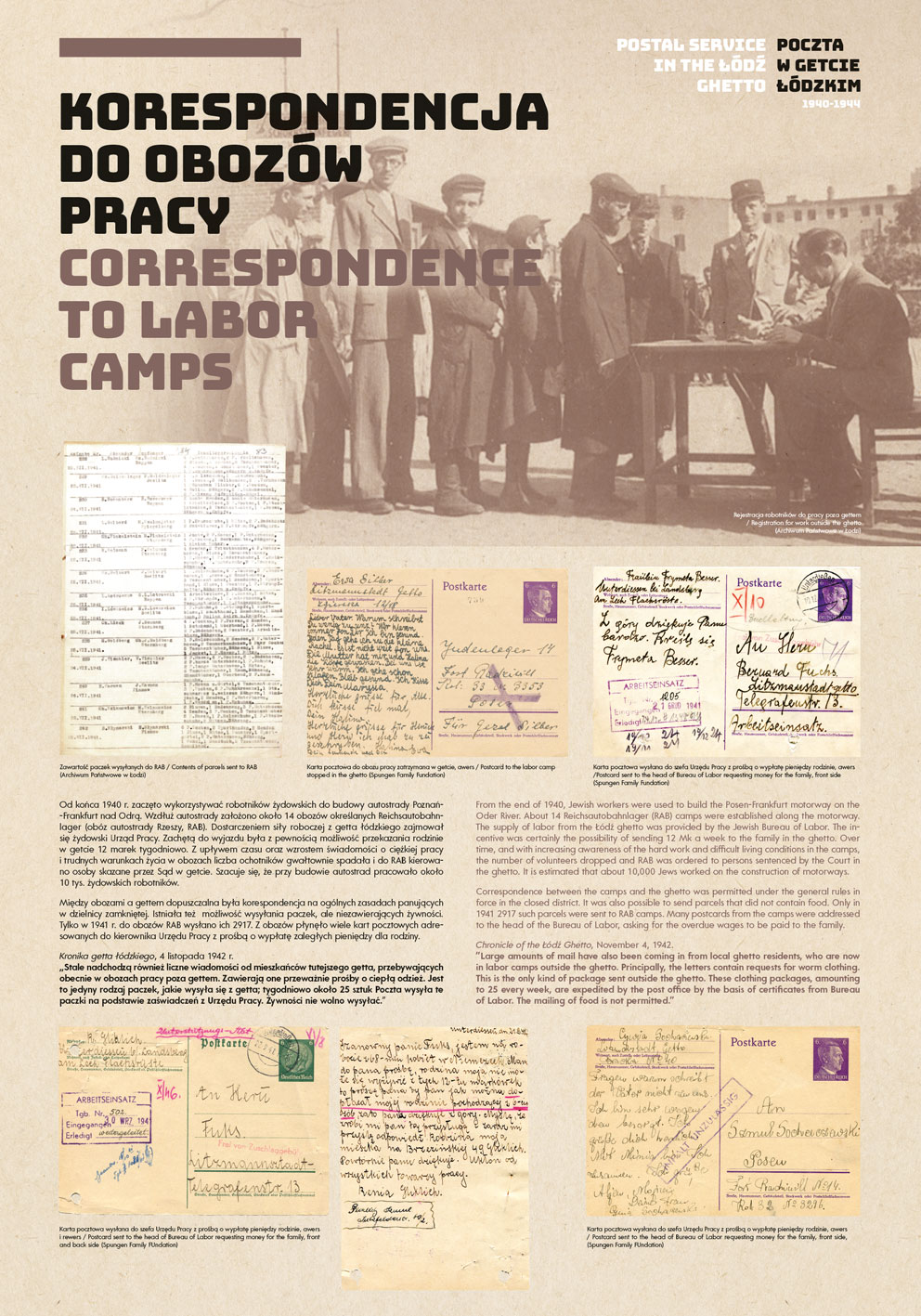
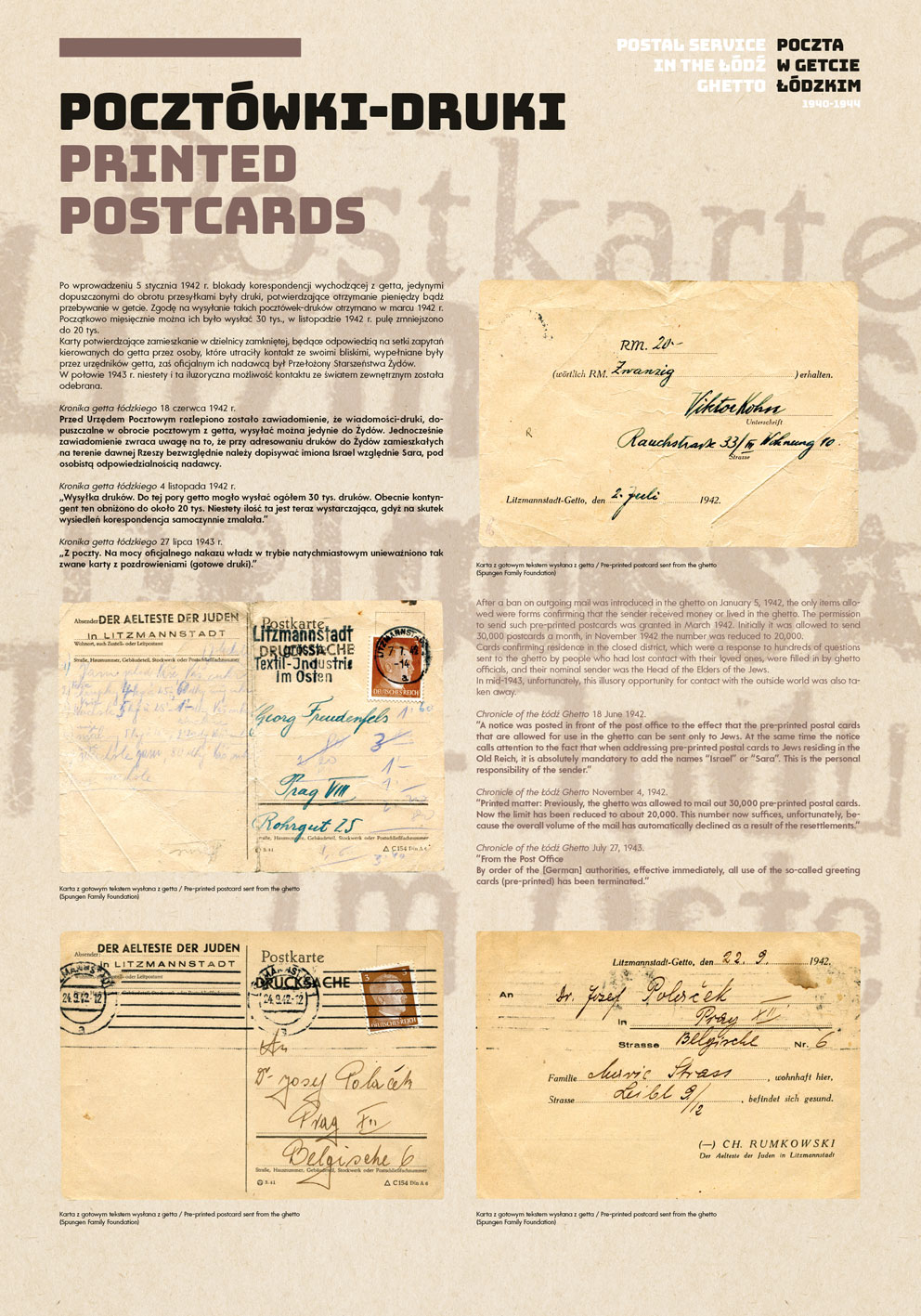
The authors of the project were guided by the idea of using the most representative documents and photographs to show the functioning of the post office in the Lodz Ghetto, while at the same time illuminating some aspects of the daily life of the Jewish quarter in occupied Lodz.
Most of the materials presented on the site were used in a panel exhibition opened in 2019 at the State Archives in Lodz. The site's design is based on the panels prepared at that time, supplemented with additional information and new illustrations.
Spungen Family Foundation
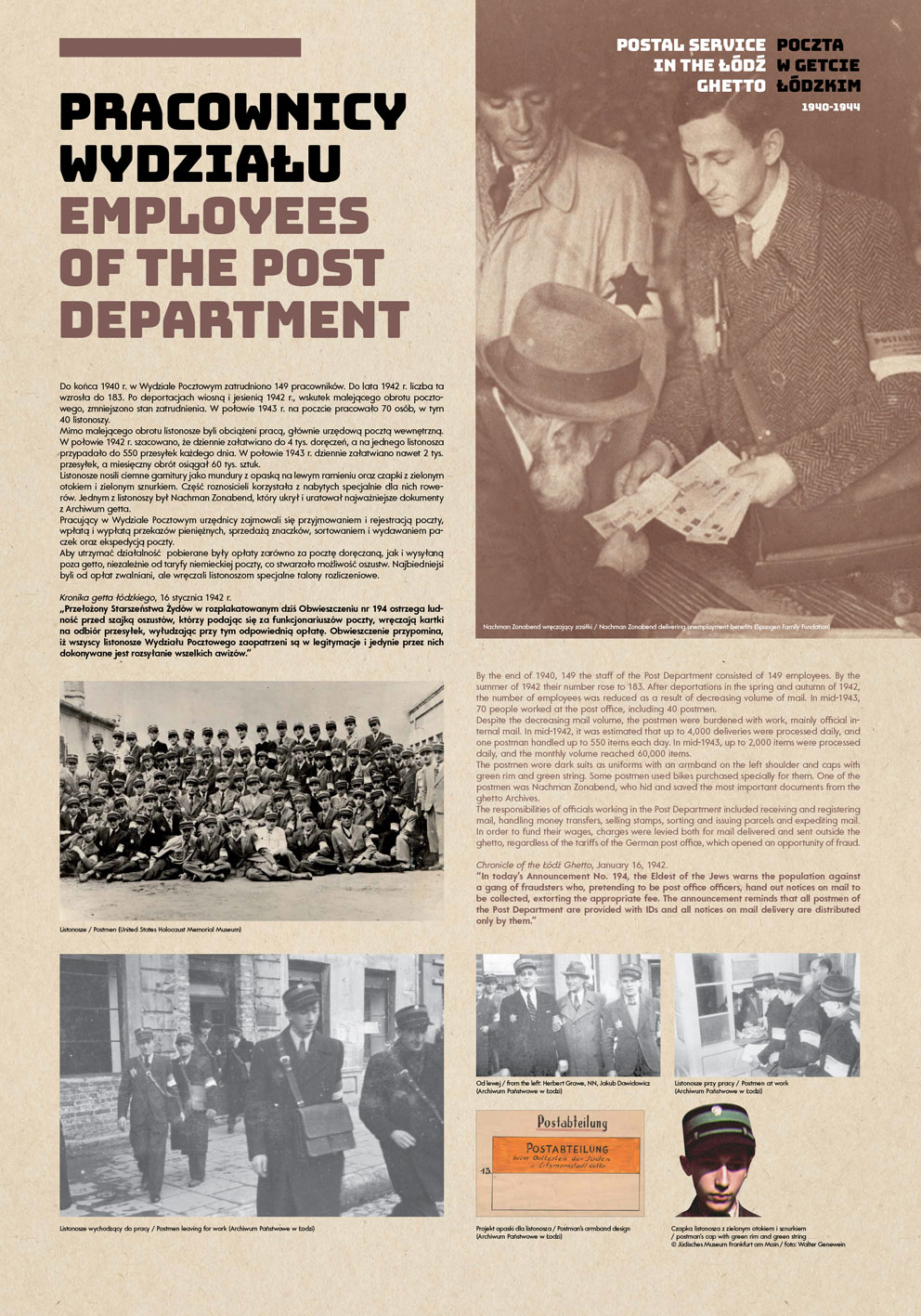
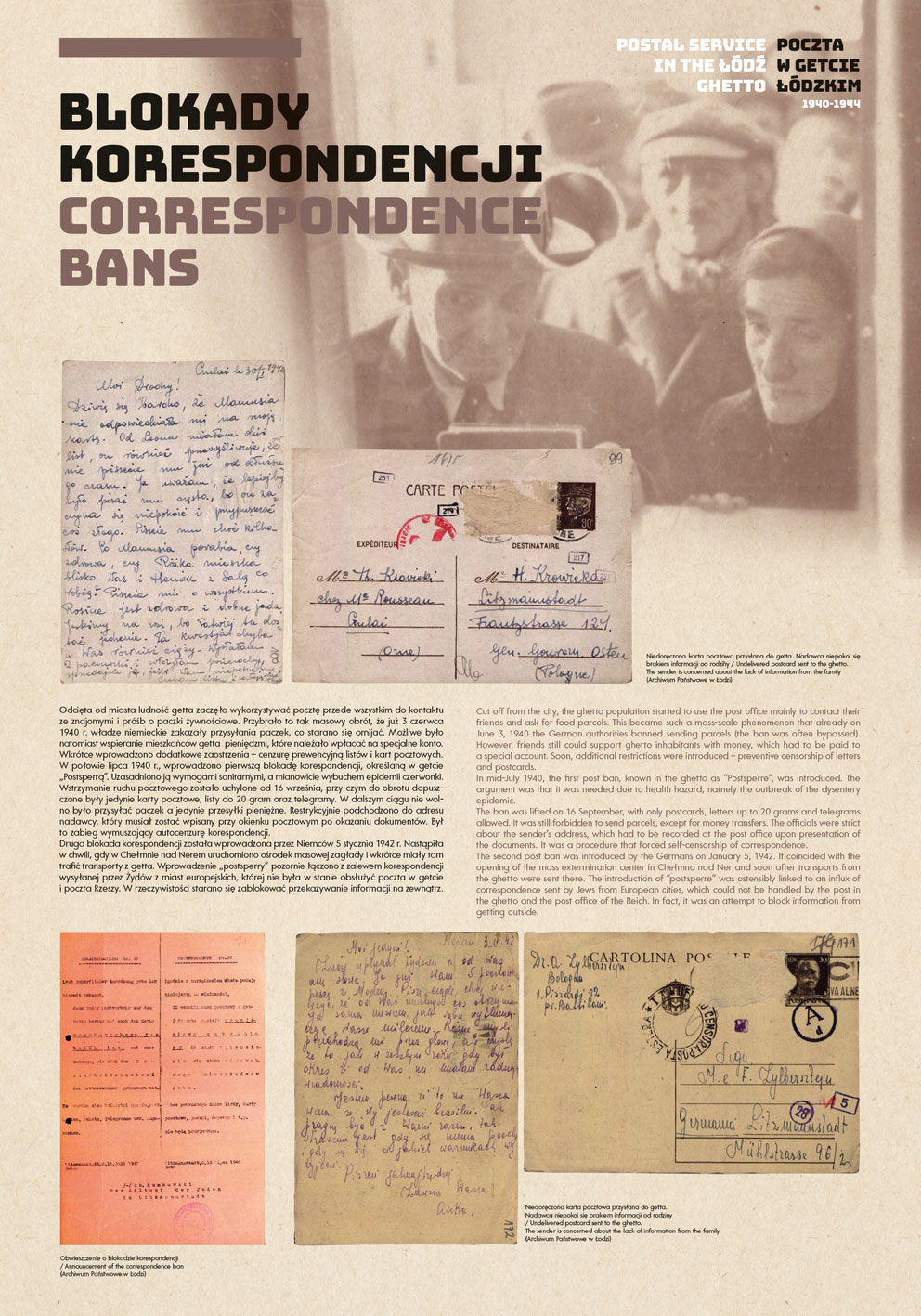
The Spungen Family Foundation collection consists of exhibits from various sources. The main part of the collection is made up of materials that were secured after the war by Nachman Zonabend, who had worked as a postman in the ghetto. Shortly after the war, he handed them over to the Central Jewish Historical Commission, which was based in Łódź at that time. A large portion of the materials, especially those that were of no value to the Commission’s employees because of their repetitiveness, ended up in the hands of private individuals. When he emigrated from Poland, Zonabend took part of the collection and then handed it over to museums in the US and Israel. Most likely, postcards and other documents related to the ghetto Post Office where he worked, remained in his possession. These materials then became part of the collection of Manfred Schulze, a German philatelist and collector.
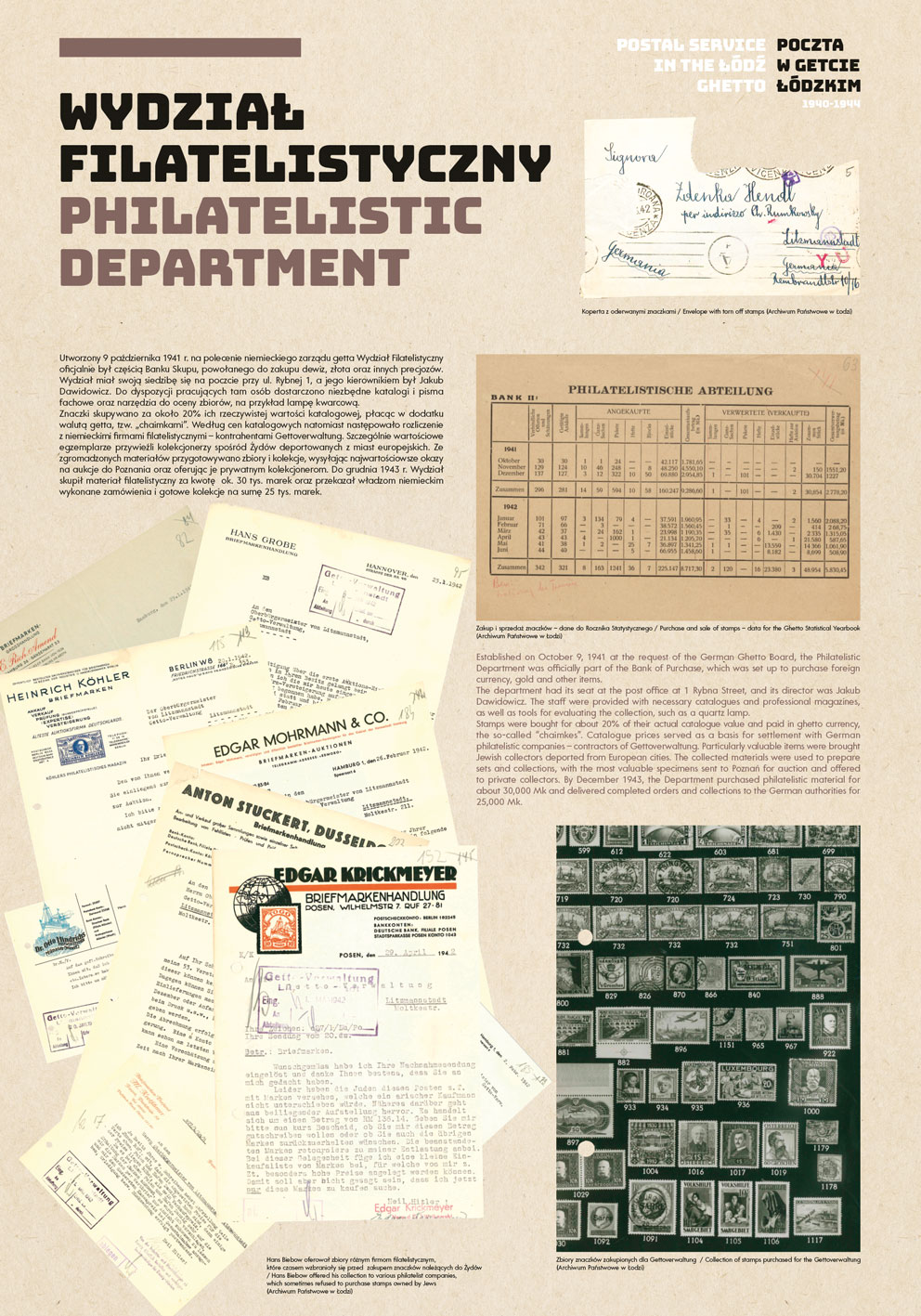
Manfred Schulze’s collection of over 1200 exhibits was purchased by Florence and Laurence Spungen Family Foundation in 2009. Daniel Spungen, an American collector and philatelist, has expanded the collection with more materials related to the operation of the postal service during World War II. Some of them concern the Łódź ghetto. His collection, which includes unique prints of stamps from the ghetto, is undoubtedly the largest set of postal materials in private hands.
State Archive in Lodz
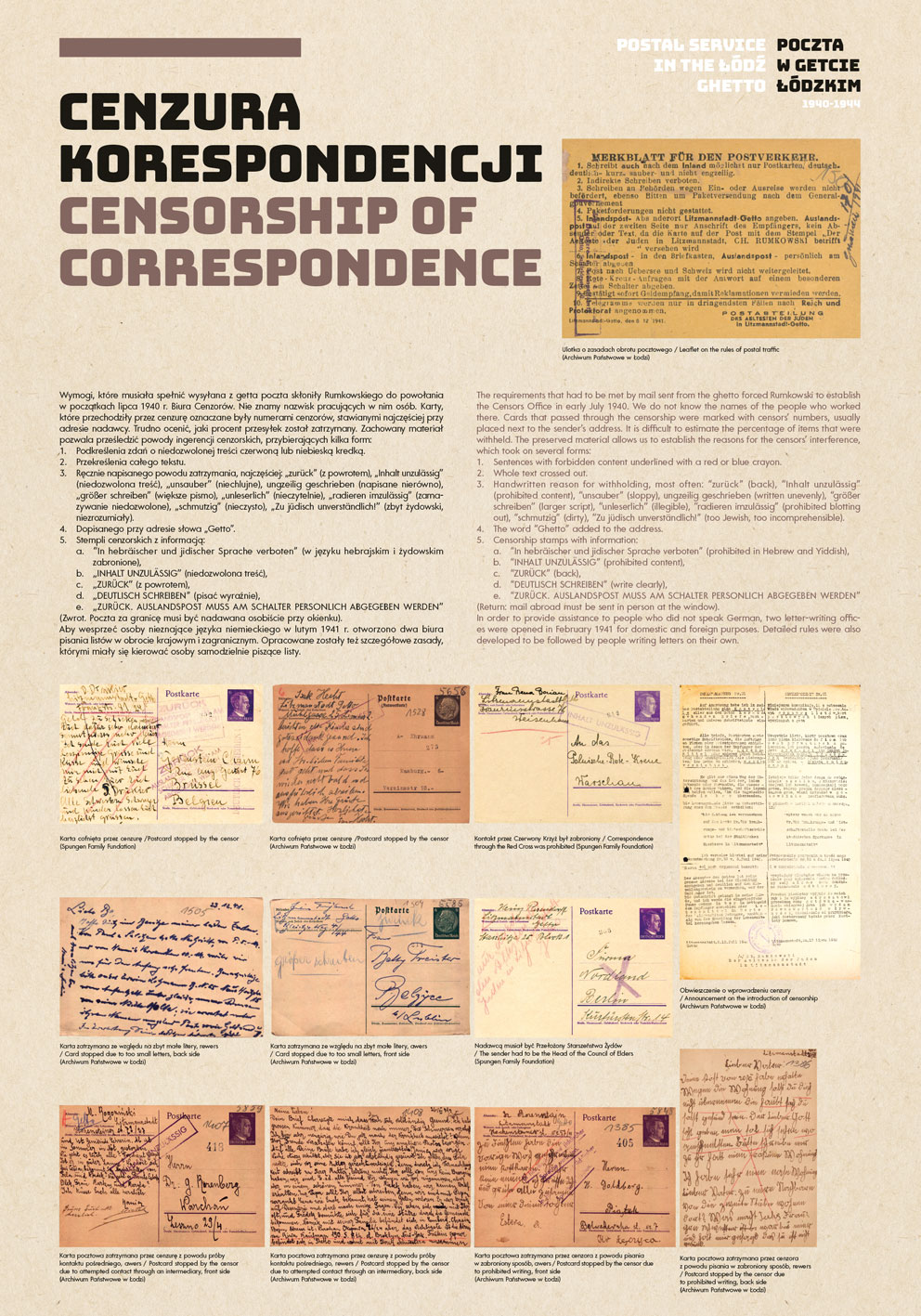
The State Archive in Lodz houses a collection of documents, photographs and artifacts from the Lodz Ghetto, numbering over a million pages. The collection also includes materials related to the operation of the postal service, including more than 21,000 postcards that were not mailed from the ghetto, notices regulating postal traffic in the ghetto, forms used by postal clerks and statistical data collected for the Statistical Yearbook being prepared in the ghetto. Albums with thousands of photographs, some of which were used in the exhibition to illustrate the history of the ghetto postal service, are an invaluable source.
Complementing the valuable materials from the collections of the Spungen Family Foundation and the State Archives in Lodz are exhibits from the collections of the Jewish Historical Institute, the Archives of the Kibbutz of Ghetto Fighters, the Yad Vashem Archives and the Jewish Museum in Frankfurt. We would like to thank these institutions for making their collections available.
It is not possible for us to present the full collection of postcards preserved in both collections. Those shown on the website are representative and their purpose is to demonstrate the research possibilities inherent in both collections.
Ewa Wiatr
Danny Spungen
For questions and comments, please contact: judaica@uni.lodz.pl